Bharucha Associates Medical & Orthopedic Knowledge Hub
Knowledge Hub

Orthopedic & Medical Equipment Blog

Discover industry trends, product guides, and medical device technical insights.

Surgical Drill & Instruments Insights
Surgical Innovations

Battery Operated Surgical Tools & Instrumentation

Technical updates and clinical applications for modern orthopedic surgery.

Rehabilitation & Orthopedic Care Articles
Patient Recovery

Rehabilitation Aids & Support Systems

Best practices for orthopedic braces, splints, and patient care equipment.

0%

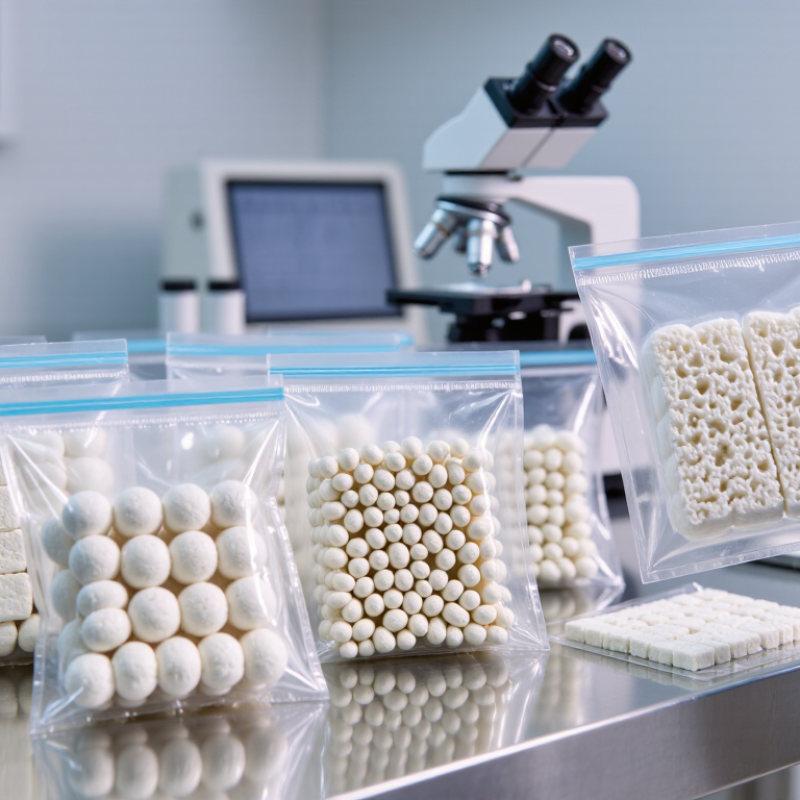
Choosing the best Hydroxyapatite Synthetic Bone Graft supplier in 2026 requires more than comparing catalogue prices. Product consistency, pore architecture, sterilisation control, and clinical documentation can directly affect surgical confidence. A graft should look uniform in the package, but performance depends on details invisible to the eye.

Industry reports show continued expansion in bone grafts and substitutes. Fortune Business Insights estimates a multibillion-dollar global market, supported by trauma care, spinal procedures, dental reconstruction, and ageing populations. Grand View Research also identifies biomaterial innovation and minimally invasive surgery as important growth drivers. These figures are useful, although market definitions differ between reports. That matters.

Robert Z. LeGeros, a leading biomaterials researcher, wrote, “Hydroxyapatite is the major inorganic component of bone and teeth.” Her observation explains the material’s strong appeal: chemical similarity may support bone integration, while synthetic manufacturing can improve purity and batch reproducibility. Still, similarity does not guarantee clinical success.

This 2026 supplier guide examines evidence rather than marketing language. It considers ISO 13485 quality systems, regulatory registrations, traceability, particle-size control, packaging integrity, and published clinical or laboratory data. It also reviews whether suppliers provide clear certificates of analysis and technical support for different procedures. The strongest supplier may not offer the lowest price. A cheaper graft can become expensive when documentation is weak, delivery is inconsistent, or handling instructions are unclear. Some comparisons remain imperfect because suppliers disclose different levels of evidence. That limitation deserves attention, not concealment.

2026 Best Hydroxyapatite Synthetic Bone Graft Suppliers?

Hydroxyapatite Basics: The 1.67 Calcium-to-Phosphorus Ratio

Hydroxyapatite is often described by its ideal calcium-to-phosphorus atomic ratio of 1.67. Its formula is Ca10(PO4)6(OH)2. This ratio reflects a stoichiometric crystal structure similar to the mineral phase in natural bone. The number matters.

Synthetic bone graft suppliers should explain how closely their material matches this target. A calcium-deficient powder may show a lower ratio. Carbonate substitution, residual salts, or processing heat can also change the result. These differences may affect crystallinity, dissolution, handling, and tissue response. The ratio alone cannot predict clinical performance.

A reliable supplier should provide batch-specific test records, not only a general product brochure. Useful evidence includes inductively coupled plasma testing, X-ray diffraction, infrared analysis, particle-size data, and porosity measurements. Manufacturing controls also deserve attention, including raw-material traceability, contamination control, packaging, and sterilization validation. Ask whether reported values describe the final graft or an earlier powder stage. That distinction is easy to miss.

A material can reach 1.67 and still have unsuitable particles or inconsistent pores. Conversely, a slight deviation may be intentional for controlled resorption. This is where supplier evaluation becomes less tidy. Clinicians, engineers, and quality teams should connect the chemical ratio with the graft’s intended use. A certificate looks authoritative, but its test method, sampling plan, and acceptance limits need careful review. There is no single number that replaces complete evidence.

2026 Best Hydroxyapatite Synthetic Bone Graft Suppliers? – Hydroxyapatite Basics: The 1.67 Calcium-to-Phosphorus Ratio

No. Evaluation Dimension Verified Technical Reference What to Request from a Supplier
1 Material identity Stoichiometric hydroxyapatite is commonly represented as Ca10(PO4)6(OH)2. Chemical formula, phase identification, product grade, and intended use.
2 Calcium-to-phosphorus ratio The theoretical atomic Ca/P ratio is 10:6, or approximately 1.67. Lot-specific Ca/P testing method, acceptance range, and certificate of analysis.
3 Elemental composition Ideal stoichiometric hydroxyapatite contains approximately 39.9% calcium and 18.5% phosphorus by mass; the balance is mainly oxygen and hydrogen. Elemental assay results and declared limits for impurities and residual ions.
4 Crystal phase Hydroxyapatite can coexist with secondary calcium-phosphate phases if synthesis or heat treatment is not tightly controlled. X-ray diffraction pattern, phase identification, and quantitative phase-purity data.
5 Crystallinity Higher crystallinity generally corresponds to slower dissolution, while lower-crystallinity material generally dissolves more readily. The desired level depends on the application. Crystallinity measurement, heat-treatment history, and dissolution or resorption data.
6 Particle-size distribution Particle size affects handling, packing, surface area, fluid penetration, and the rate of material dissolution. D10, D50, D90 values, measurement technique, agglomeration status, and sieve or laser-diffraction results.
7 Porosity and morphology Granular, porous, dense, and scaffold forms provide different handling and fluid-access characteristics. Total porosity, pore-size distribution, morphology images, and bulk or tapped density.
8 Source materials Synthetic hydroxyapatite is produced from controlled chemical precursors rather than relying on animal-derived mineral. Precursor specifications, animal-origin statement, allergen statement, and traceability records.
9 Biological safety Implantable materials require risk-based biological evaluation appropriate to the finished device and its intended contact. Biocompatibility test reports, risk-management documentation, and extractables or leachables information where applicable.
10 Heavy metals and impurities Trace contaminants can affect safety, regulatory acceptance, and batch consistency. Limits and test results for lead, cadmium, mercury, arsenic, residual solvents, and other process-related impurities.
11 Sterility and packaging Sterility is a property of the finished packaged product and the validated sterilization process, not simply the raw powder. Sterilization method, sterility assurance information, packaging validation, shelf life, and storage conditions.
12 Quality-system capability Medical-device supply requires documented manufacturing controls, change control, deviation management, and lot traceability. Applicable quality certifications, audit availability, process validation, change-notification policy, and complaint handling.
13 Regulatory documentation Regulatory requirements differ by country, product classification, intended use, and whether the material is supplied as a raw ingredient or finished graft. Technical file support, intended-use statement, regulatory status, conformity documentation, and post-market support.
14 Batch consistency Consistent Ca/P ratio, phase composition, particle size, moisture, and impurity profile are essential for reproducible performance. Three or more recent batch certificates, statistical trend data, sampling plan, and out-of-specification procedure.
15 Commercial suitability The most suitable supplier is determined by technical fit, documentation, capacity, lead time, and total cost rather than price alone. Minimum order quantity, scale-up capacity, lead time, forecast flexibility, technical support, and total landed cost.
Key calculation: The theoretical atomic calcium-to-phosphorus ratio of stoichiometric hydroxyapatite is 10 ÷ 6 = 1.6667, commonly rounded to 1.67. This is an atomic ratio, not a mass ratio; the corresponding theoretical calcium-to-phosphorus mass ratio is approximately 2.16.

Synthetic Bone Graft Performance: 100–500 μm Pore Sizes and Porosity

For buyers comparing hydroxyapatite synthetic bone graft suppliers in 2026, pore architecture deserves more attention than a headline purity claim. Products listed with 100–500 μm pores may support fluid movement and tissue ingrowth. Yet performance also depends on pore shape, interconnection, surface chemistry, and total porosity. A measured average pore size can hide blocked channels or uneven distribution. That matters in a real defect.

Porosity changes the mechanical story. Higher porosity may improve fluid access and tissue exchange, yet it can lower compressive strength. Lower porosity often provides greater structural resistance, but may restrict biological movement. The useful range is not universal. A load-bearing site and a small contained void require different evidence. Supplier qualification should include micro-CT data, pore-size distribution, open versus closed porosity, compressive testing, phase analysis, sterility records, and batch consistency. Ask for test methods, not only percentages.

In practice, samples should be compared under intended handling conditions. Wetting, syringe delivery, granule packing, and defect geometry can change the effective pore network. Laboratory results may look excellent, while a tightly packed site behaves differently. That gap deserves discussion. A reliable supplier reports variability and deviations honestly. No material is perfect. Review particle size, resorption behavior, packaging integrity, quality controls, and clinical evidence together. A 100–500 μm label alone cannot establish graft performance.

Synthetic Bone Graft Performance: 100–500 μm Pore Sizes and Porosity

The chart presents representative porosity ranges commonly used when designing interconnected hydroxyapatite synthetic bone graft structures. Larger pores can support tissue and vascular ingrowth, while porosity must be balanced against mechanical strength and handling stability. Values are literature-aligned design ranges and are not supplier-specific test results.

Supplier Quality Standards: ISO 13779-1, ASTM F1185, and GMP Compliance

2026 Best Hydroxyapatite Synthetic Bone Graft Suppliers?

For 2026 sourcing, quality begins with evidence, not attractive product claims. A supplier should provide current ISO 13779-1 test data for hydroxyapatite composition and characterization. Ask for the testing laboratory, method, sample identity, and report date. Vague certificates deserve questions.

ASTM F1185 supports evaluation of ceramic hydroxylapatite used in surgical implants. It helps buyers review chemical composition, phase content, and relevant material properties. However, one test report cannot represent every production lot. Request lot-specific certificates of analysis, retained-sample policies, and traceability from raw powder to finished graft. Small details matter.

GMP compliance shows whether controlled manufacturing practices are built into daily operations. Review environmental monitoring, equipment calibration, deviation handling, change control, and employee training records. A useful supplier should explain how nonconforming material is isolated and investigated. Production areas should look controlled, not merely clean during an audit.

Experience has taught me that impressive documentation can still leave gaps. No audit is perfect. Check whether quality data matches actual batch records and packaging labels. Confirm storage conditions, shelf-life evidence, and sterility claims through appropriate documentation. Also assess technical support after delivery. A supplier that answers difficult questions clearly may be more reliable than one offering the lowest price. Be cautious when standards are mentioned without test scope, revision dates, or independent verification.

2026 Supplier Comparison: Purity, Resorption Rates, and Product Formats

When comparing hydroxyapatite synthetic bone graft suppliers in 2026, purity should be checked beyond a marketing percentage. Request a certificate of analysis showing phase composition, trace elements, sterility status, and lot-specific testing. A clean white granule is not proof of consistency. Look for documented manufacturing controls, validated sterilization, and traceable raw materials. Supplier experience matters when packaging, storage, and complaint handling are tested over time.

Resorption rates require careful reading. In vitro dissolution data can show calcium release, but it cannot predict every patient’s remodeling response. Particle size, porosity, defect location, blood supply, and loading conditions all influence performance. Ask whether rates come from animal studies, clinical follow-up, or laboratory models. The units and observation period matter. “Fast” is incomplete. It may also be unsuitable for a slow-healing site.

Product formats should match the procedure, not merely the catalog. Granules may fill irregular spaces, while blocks provide shape but need accurate preparation. Putty-like materials can improve handling, yet carriers may change packing and resorption behavior. Compare syringe volume, hydration needs, shelf life, and ease of retrieval. Review adverse-event reporting and independent clinical evidence before selecting a supplier. Data can be surprisingly uneven. That deserves careful questioning.

How to Select the Best Hydroxyapatite Graft Supplier by Clinical Need

Choosing the best hydroxyapatite synthetic bone graft supplier in 2026 starts with the clinical need, not the catalog. A dental socket may require easy handling and controlled resorption. A spinal or maxillofacial procedure may need different porosity, strength, and shaping options. Fit matters. Ask whether the graft supports the defect size, surgical technique, and expected healing environment.

Experienced clinicians should review peer-reviewed evidence, product specifications, and real-world handling feedback. Check calcium-phosphate composition, pore structure, sterility controls, packaging integrity, and lot-to-lot consistency. Reliable suppliers should provide traceable documentation, clear instructions, and responsive technical support. Do not rely on marketing language alone. Evidence matters.

Supplier evaluation also requires practical questions. Can the material arrive on schedule? Is the particle size consistent during implantation? Does the supplier explain storage limits and contraindications clearly? Discuss these details with qualified surgeons and procurement teams. A supplier with strong manufacturing controls may still be unsuitable for a specialized grafting technique. No supplier is perfect. I would also question studies with small samples, short follow-up, or unclear patient selection. Careful comparison, transparent communication, and clinical judgment usually matter more than a low purchase price.

FAQS

What does the 1.67 calcium-to-phosphorus ratio mean?

It reflects the ideal atomic balance in hydroxyapatite, written as Ca10(PO4)6(OH)2. This structure resembles the mineral phase found in natural bone. The number matters.

Does a 1.67 ratio guarantee good graft performance?

No. Particle size, crystallinity, porosity, dissolution, and processing history also affect suitability. A material can meet 1.67 and still have unsuitable particles. The ratio is only one clue.

Why might a calcium-to-phosphorus ratio differ from 1.67?

Calcium deficiency, carbonate substitution, residual salts, or heating may change the measured ratio. A small deviation might be intentional for controlled resorption. That explanation still needs evidence.

What test records should a supplier provide?

Request batch-specific records, not only a general brochure. Useful data includes elemental analysis, X-ray diffraction, infrared analysis, particle-size results, and porosity measurements. Certificates need context.

Why is batch-specific testing important?

Production lots can differ in composition, phase content, and physical properties. Ask for sample identity, report dates, testing methods, and acceptance limits. One report cannot represent every lot.

Which quality standards should buyers review?

Review current ISO 13779-1 data, relevant ASTM F1185 information, and documented GMP practices. Confirm the test scope, revision date, laboratory, and material stage. Standards alone are not enough.

What manufacturing controls deserve attention?

Check raw-material traceability, contamination control, equipment calibration, environmental monitoring, and change control. Ask how nonconforming material is isolated and investigated. Production should remain controlled daily.

What should be checked before accepting final graft material?

Confirm that test results describe the finished graft, not an earlier powder stage. Review packaging labels, storage conditions, shelf-life evidence, and sterilization validation. I sometimes trust certificates too quickly. Their sampling plans deserve a closer look.

Conclusion

Choosing the best Hydroxyapatite Synthetic Bone Graft supplier in 2026 requires more than comparing prices. High-quality hydroxyapatite should closely reflect the natural mineral composition of bone, including an approximate calcium-to-phosphorus ratio of 1.67. Performance also depends on carefully controlled pore sizes, commonly ranging from 100 to 500 μm, and suitable porosity to support fluid movement, cell attachment, and gradual bone integration. Suppliers should demonstrate compliance with recognized standards such as ISO 13779-1, ASTM F1185, and applicable GMP requirements.

A reliable comparison should examine material purity, consistency between batches, resorption behavior, sterilization controls, and available product formats such as granules, blocks, or custom shapes. The ideal supplier will match graft characteristics to the clinical need, considering defect size, surgical technique, desired remodeling speed, and handling requirements. Clear technical documentation, traceability, quality testing, and responsive support are also essential factors when selecting a dependable long-term source.

Charlotte

Charlotte

Charlotte is a dedicated marketing professional with extensive experience in developing clear, engaging, and results-oriented content for business audiences. As a knowledgeable member of our team, she has a deep understanding of the company’s products, services, and customer needs. Her expertise......