
Executive Procurement Summary: What Global Surgical Teams Look For
In modern orthopedic joint reconstruction, percutaneous vertebroplasty (PVP), balloon kyphoplasty (BKP), and pedicle screw augmentation, the precision delivery of Polymethyl Methacrylate (PMMA) bone cement is paramount. A high-performance Bone Cement Injector Gun serves as the critical mechanical interface between the surgical practitioner and the patient's osteoporotic bone or joint cavity. Modern hospital procurement teams and B2B medical buyers must evaluate bone cement extrusion guns not merely as simple hardware, but as dynamic force-multiplying fluid delivery systems engineered to balance extrusion viscosity kinetics, tactical tactile feedback, leak-free Luer lock security, anti-backlash ratcheting, and ergonomic safety.
1. Engineering Fundamentals of the Modern Bone Cement Injector Gun
When surgical teams perform total knee arthroplasty (TKA), total hip arthroplasty (THA), or spinal augmentation, PMMA bone cement transitions rapidly through distinct physical phases: from liquid mixing to a tacky doughy state, followed by polymerization curing. Extruding medium-to-high viscosity cement during its narrow "working window" requires enormous mechanical force. Without a high-ratio Bone Cement Injector Gun, manual pushing leads to surgeon fatigue, inconsistent extrusion rates, premature curing within the syringe barrel, and potentially dangerous pressure spikes inside cancellous bone.
The primary mechanical principle governing a professional orthopedic bone cement gun is force multiplication. By employing precision steel ratcheting gear drives, hydraulic pistons, or heavy-duty screw-lever mechanisms, the device converts modest hand grip compression into a uniform linear extrusion force exceeding 300 to 500 Newtons. This constant linear advancement guarantees that the cement flows smoothly through flexible extension tubes and cannulae without sudden bursts or micro-embolism risks.
Key Technical Metric: Tactile Viscosity Resistance
A superior bone cement delivery gun features zero-backlash piston advancement coupled with instant pressure-release levers. This enables the surgeon to feel subtle shifts in bone porosity during injection and immediately halt flow by releasing hand pressure, eliminating unwanted post-injection cement trailing.
2. Industry-Grade Bone Cement Injector Guns & Surgical Delivery Systems
Bharucha Associates provides an extensive portfolio of medical delivery systems engineered specifically for orthopaedic trauma centers, spine surgery suites, and joint replacement facilities worldwide. Below are our leading product recommendations engineered to meet diverse surgical protocols.
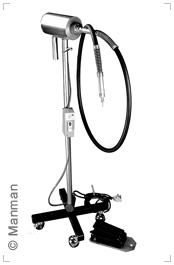
Ergonomic High-Viscosity Bone Cement Injector Gun
Designed for heavy-duty PMMA extrusion in joint arthroplasty. Features a 10:1 mechanical leverage ratio, reinforced alloy housing, and quick-release pressure mechanism for precise doughy-state application.
Get a Quote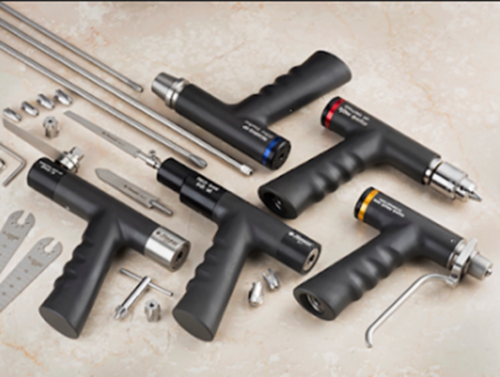
Autoclavable Surgical-Grade Steel Cement Delivery Gun
Crafted from corrosion-resistant AISI 316L stainless steel and titanium alloy drive components. Fully steam sterilizable at 134°C for long service life in high-volume orthopaedic theaters.
Get a Quote
Vertebroplasty & Spinal Augmentation Injector System
Specially calibrated for low-volume, high-precision radiopaque PMMA injection into vertebral bodies. Features micro-threaded screw delivery handle for sub-millimeter volume control.
Get a Quote
Battery-Assisted Surgical PMMA Extrusion Gun
Combines electric motorized linear propulsion with manual override. Delivers vibration-free, constant flow rates during total hip femoral canal pressurization and large defect filling.
Get a QuoteComprehensive Technical Specification Comparison Matrix
Hospital procurement committees can review the technical benchmark parameters of our bone cement injection hardware below:
| Specification Parameter | High-Viscosity Arthroplasty Gun | Vertebroplasty Micro-Injector | Autoclavable Heavy-Duty Gun | Battery-Assisted Power Gun |
|---|---|---|---|---|
| Mechanical Advantage Ratio | 10:1 Force Multiplier | Fine Thread Screw (20:1 equivalent) | 8:1 Force Multiplier | Motorized Linear Actuator (500N max) |
| Viscosity Compatibility | Medium to Ultra-High PMMA | Low to Medium Radiopaque PMMA | High Viscosity & Antibiotic PMMA | All Viscosity Phases & CaP Cements |
| Primary Application | TKA, THA, Joint Revision | PVP, BKP, Pedicle Screw Fixation | Trauma & General Reconstruction | Complex Arthroplasty & Femoral Canal |
| Sterilization Standard | EO Gas / Gamma Sterilized Kit | Single-Use Sterile Packaging | Steam Autoclave (134°C / 2.1 bar) | Autoclavable Handle / Sterile Shield |
| Cartridge Capacity | 40 cc to 80 cc Syringes | 10 cc to 20 cc High-Pressure Syringes | Universal 40-70 cc Cartridges | Standard Dual-Chamber & Syringes |
| Body Material | Polycarbonate / Aluminum Composite | Medical Polycarbonate & Brass core | AISI 316L Stainless Steel | Impact Polycarbonate & Titanium Drive |
| Pressure Relief Action | Instant Trigger Clutch Release | Reverse Screw Disengagement | Spring-Loaded Thumb Lever | Electronic Auto-Stop Button |
3. Future Trends & Procurement Trajectory for Bone Cement Delivery Systems (2025–2030)
The global market for orthopedic bone cement and delivery devices is undergoing rapid technological development driven by aging demographics, rising osteoporotic fracture rates, and a shift toward minimally invasive surgical techniques. B2B importers, hospital procurement officers, and medical device distributors must align their supply chains with the following emerging industry trends:
A. Integration with Robotic Surgery & Image-Guided Navigation
As spinal and total joint procedures increasingly incorporate surgical robotics and real-time C-arm navigation systems, bone cement injector guns are evolving to feature digital depth indicators and micro-sensor pressure feedback. These next-generation smart injectors communicate real-time pressure curves to surgical consoles, preventing cement extravasation into spinal canals or adjacent soft tissue structures.
B. Growth of High-Viscosity Pre-Mixed PMMA Formulations
Surgeons are rapidly adopting pre-mixed high-viscosity bone cements that eliminate manual monomer-polymer liquid mixing in the operating room. Because high-viscosity cements require significantly greater extrusion pressure right from the start of injection, demand is surging for heavy-duty bone cement extrusion guns with mechanical ratios of 10:1 or higher and zero shaft flexure.
C. Eco-Friendly Hybrid Delivery Systems
Environmental sustainability in operating room management is encouraging medical facilities to transition away from fully disposable single-use plastic guns. The modern benchmark is a hybrid approach: a high-durability, autoclavable metal injector gun handle combined with disposable sterile fluid pathways and syringe barrels. This approach significantly reduces medical hazardous waste while keeping per-procedure consumable costs low.
D. Bioactive & Injectable Calcium Phosphate (CaP) Cement Compatibility
Next-generation bone repair materials are expanding beyond traditional PMMA to include bioresorbable calcium phosphate, calcium sulfate, and hydroxyapatite-infused synthetic cements. These biological pastes exhibit non-Newtonian shear-thinning behavior, demanding smooth, surge-free extrusion gun mechanisms to prevent phase separation during clinical administration.
4. Global Procurement FAQ: Critical Questions Answered for B2B Medical Buyers
Based on global search queries and procurement tender queries analyzed across healthcare procurement networks, here are definitive expert answers to the most common questions surrounding Bone Cement Injector Guns:
Q1: What is a Bone Cement Injector Gun and how does it function in orthopedic surgery?
A Bone Cement Injector Gun is a specialized surgical application tool engineered to extrude mixed Polymethyl Methacrylate (PMMA) or calcium-based bone cement into surgical cavities, bone fractures, or femoral/tibial canals during joint replacement and spinal repair procedures. It utilizes a mechanical advantage trigger lever to advance a plunger smoothly through a cement syringe barrel, providing controlled delivery force without surgeon hand exhaustion.
Q2: Why is the mechanical ratio (e.g., 8:1 vs 10:1) critical when selecting a cement gun?
The mechanical leverage ratio determines how much force is applied to the cement piston for every unit of force applied to the hand trigger. High-viscosity cements require higher ratios (10:1 or screw-driven mechanisms) to allow smooth flow without jamming. Higher ratios ensure continuous delivery even as the cement begins its exothermic polymerization phase and thickens inside the delivery tube.
Q3: Are your Bone Cement Injector Guns compatible with standard international syringe cartridges?
Yes. Bharucha Associates manufactures and supplies cement injector guns designed around universal ISO-standard Luer lock connection ports and standardized cartridge diameters (40 cc, 60 cc, and 80 cc). They pair seamlessly with leading global bone cement mixing systems, flexible extension tubes, and vertebroplasty cannulae.
Q4: How does an anti-backlash or instant pressure-relief mechanism protect patient safety?
During bone cement injection, pressure builds up inside the delivery syringe and flexible tubing. If the surgeon stops squeezing the handle without releasing this pressure, stored elastic tension can cause bone cement to keep oozing out ("trailing"). Instant pressure-relief release clutches immediately disengage the drive piston, dropping internal line pressure to zero instantly and preventing accidental cement leakage into vascular or neural spaces.
Q5: What is the difference between single-use disposable guns and reusable autoclavable guns?
Single-use disposable injector guns come pre-sterilized (EO gas or Gamma radiation) and are designed for single surgical procedures, ensuring absolute sterility without processing costs. Reusable guns are manufactured from medical-grade AISI 316L stainless steel or titanium components and can withstand hundreds of steam autoclave sterilization cycles (134°C), making them highly cost-effective for large hospital centers with dedicated sterile processing departments (CSSD).
Q6: What regulatory quality certifications accompany Bharucha Associates' cement delivery tools?
All our surgical instruments and bone cement delivery devices are manufactured in ISO 9001 and ISO 13485 certified production facilities. Products comply with global medical device quality systems, accompanied by Certificate of Analysis (CoA), material traceability test reports, and CE declaration compliance documents upon procurement request.
Q7: Can your company support OEM, custom branding, and private-label packaging for distributors?
Absolutely. As an experienced exporter from Vadodara, India, Bharucha Associates regularly collaborates with global medical brand owners, offering custom logo laser etching, specialized color-coded handles, customized stroke-lengths, and tailor-made sterile blister packaging for OEM and private-label tenders.
Q8: What are your standard lead times, minimum order quantities (MOQ), and shipping terms?
We maintain flexible MOQ terms accommodating both trial evaluation lots and full container tenders. Standard stock items ship within 7 to 10 business days, while customized OEM orders typical ship in 3 to 4 weeks via air express or ocean freight under standard Incoterms (FOB, CIF, CFR, DDP).
30+ Years of Orthopedic Manufacturing & Global Export Leadership
Established in 1994 in Vadodara, Gujarat, India, Bharucha Associates has built an international reputation as a trusted manufacturer, exporter, and supplier of precision orthopaedic instruments, bone grafting materials, surgical power tools, and specialized clinical delivery systems.
Under the leadership of Mr. Devang Bharucha, our organization serves healthcare providers, surgical distributors, and institutional procurement teams across over 40 countries. By combining rigorous metallurgy standards with client-focused supply chain solutions, we deliver uncompromised quality that healthcare professionals rely on in critical surgical environments.
Get a Quote
Ready to Streamline Your Orthopedic Instrument Procurement?
Contact our technical sales team today for detailed product catalogs, wholesale pricing schedules, and sample evaluations for institutional buyers.
Get a Quote