
1. Enterprise Strength & Clinical Authority: Why Global Buyers Trust Bharucha Associates
In the highly regulated arena of global orthopedic medical device procurement, evaluating vendor credibility goes far beyond superficial catalog browsing. International healthcare systems, government health tenders, and private hospital networks require verified manufacturing standards, stable supply logistics, and deep technical expertise. Established in 1994 in Vadodara, Gujarat, India, Bharucha Associates has spent over three decades establishing itself as a benchmark supplier, exporter, and trader of surgical, orthopedic, and rehabilitation medical equipment.
Under the vision of proprietor Mr. Devang Bharucha, our enterprise operates as a strategic global supply partner bridging certified manufacturing lines with healthcare institutions across 40+ countries. Operating with complete regulatory transparency (GST Registration: 24ABQPD5963Q1ZX), Bharucha Associates curates an extensive inventory of over 500 active SKUs. Our export portfolio integrates top-tier certified orthopedic brands, including Bell, Manman, Vissco, Tynor, Dyna, and Medi, ensuring every single roll of Orthopedic Synthetic Casting Tape and associated surgical instrument adheres strictly to international quality frameworks such as ISO 13485 and CE standards.
Information Gain Insights for Healthcare Procurement Directors
Unlike general trader platforms, Bharucha Associates provides comprehensive batch-level quality control, temperature-regulated vacuum foil packaging, and end-to-end export documentation (Certificate of Origin, Free Sale Certificate, and MSDS). Our deep integration with primary clinical manufacturers in India allows us to offer flexible Minimum Order Quantities (MOQs), tailored OEM white-labeling, and rapid freight dispatch via direct ocean and air corridors.

Key Advantages of Sourcing via Bharucha Associates
- 30+ Years of Industry Leadership: Established clinical track record in fracture management, power tools, and surgical drapes since 1994.
- Multi-Brand Sourcing Efficiency: Consolidate orders across synthetic casting tapes, plaster bandages, oscillating saws, and external splints under a single export shipment.
- Rigorous Polymer Shelf-Life Guarantee: Every shipment of resin-impregnated synthetic tape is guaranteed with fresh production cycles ensuring a 24-to-36-month shelf life under tropical storage conditions.
- Dedicated Regulatory Support: Full documentation assistance for national medical device registration boards across Latin America, Africa, the Middle East, and Southeast Asia.
2. Comprehensive Product Recommendations: Engineering Analysis of Synthetic Casting Tapes
Modern orthopedic fracture care requires a clear technical understanding of cast substrate chemistry. Traditional Plaster of Paris (POP) has largely been superseded in advanced clinical environments by Orthopedic Synthetic Casting Tape. These synthetic tapes consist of a knitted fabric—either multi-filament fiberglass or rigid non-fiberglass polyester—impregnated with a water-activated polyurethane resin.
When exposed to water, the resin undergoes a chemical reaction that causes the tape to transform into a rigid, lightweight, and durable structural matrix within minutes. Below, our technical engineering team presents a comparative specification matrix evaluating Fiberglass vs. Polyester Synthetic Casting Tapes against traditional POP bandages.
| Technical Attribute | Fiberglass Synthetic Tape | Polyester (Non-Fiberglass) Synthetic Tape | Traditional Plaster of Paris (POP) |
|---|---|---|---|
| Substrate Composition | Woven E-glass filament network | High-tenacity knitted polyester yarn | 100% Cotton gauze with Gypsum hemihydrate |
| Resin Chemistry | Water-activated Polyurethane (PU) | Water-activated Polyurethane (PU) | Calcium Sulfate Hemi-hydrate matrix |
| Weight-to-Strength Ratio | Exceptional (5x lighter than POP) | High (4x lighter than POP) | Heavy / Rigid bulk weight |
| Immersion Setting Time | 3 – 5 minutes | 3 – 5 minutes | 5 – 10 minutes |
| Full Weight-Bearing Time | 20 – 30 minutes | 20 – 30 minutes | 24 – 48 hours |
| X-Ray Radiolucency | 98% Translucent (Clear bone imaging) | 100% Translucent (Zero artifact interference) | Opaque (Requires higher radiation dose) |
| Moisture & Water Resistance | 100% Waterproof substrate | 100% Waterproof substrate | Disintegrates when exposed to water |
| Porous Air Breathability | High porous weave structure | Superior porous weave structure | Low breathability (Risk of skin maceration) |
Featured Product Recommendations for Hospital Procurement
To maximize clinical versatility across emergency rooms, orthopedic trauma units, and outpatient clinics, Bharucha Associates recommends the following essential immobilization products:
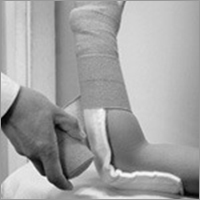
Prime Splint / Synthetic Splinting System
Pre-padded synthetic splint featuring multi-layered resin impregnated substrate with built-in non-woven moisture barrier padding. Ideal for acute traumatic fractures, sprains, and immediate emergency immobilization without skin contact concerns.
View Specifications →
Premium Synthetic Casting Bandages
High-flexibility polyurethane-coated fiberglass and polyester tapes available in 2", 3", 4", and 5" widths. Features multi-directional stretch for perfect anatomical contouring around elbows, heels, and wrists.
View Specifications →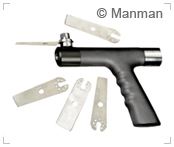
Manman Sagittal Saw & Cast Removal Systems
Heavy-duty orthopedic oscillating power saw system engineered specifically for effortless cutting of dense fiberglass and polyester synthetic casts without risk of patient skin burn or soft-tissue injury.
View Specifications →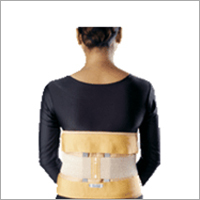
Post-Immobilization Rehabilitation Braces
Rigid spinal supports and joint immobilizers (including Eco Frame Back Support and Vissco LS Belts) designed to support patient step-down recovery following synthetic cast removal.
View Specifications →Need Bulk Technical Specifications or Institutional Pricing?
Our expert team is standing by to deliver detailed product catalogs, compliance data, and container pricing.
3. Future Sourcing Trends: Strategic Insights for Global Medical Buyers
The global market for orthopedic casting and splinting consumables is experiencing a structural realignment driven by macroeconomic factors, clinical efficiency mandates, and supply chain digitalization. Procurement officers tasked with sourcing medical disposables must evaluate several forward-looking market dynamics to ensure continuous inventory availability and cost efficiency.
Key Sourcing Trends Reshaping the Global Casting Tape Market
- Rapid Transition from POP to Water-Activated Polyurethane Synthetics:
While Plaster of Paris remains in limited use within cost-constrained secondary clinics due to low unit prices, tertiary hospitals and private surgical networks are standardizing 100% on synthetic casting tapes. The economic rationale is clear: although synthetic tape carries a higher initial unit cost, it drastically reduces total treatment cost by eliminating cast breakdown repairs, enabling early patient discharge due to rapid 20-minute weight-bearing capability, and eliminating re-imaging costs thanks to radiolucency.
- Rise of Non-Fiberglass Polyester Substrates:
Environmental and occupational health concerns are pushing hospital buying committees toward rigid polyester synthetic casting tapes. Polyester casting tape produces zero glass-fiber dust during oscillating saw removal, preventing respiratory irritation for orthopedic technicians and eliminating sharp micro-particles that can cause itching under skin padding.
- Vendor Consolidation and Integrated Sourcing Portfolios:
Procurement teams are reducing vendor fragmentation by partnering with established export aggregators like Bharucha Associates. Sourcing casting tapes alongside cast padding, tubular stockinettes, electric plaster cutters, and post-cast rehabilitation braces from a single reliable exporter reduces freight overhead by up to 35% and simplifies customs clearance documentation.
- Focus on Vacuum-Sealed Foil Barrier Integrity:
Polyurethane resins react instantly to ambient atmospheric moisture. A major quality failure in cheap imported casting tapes is premature curing inside the pouch due to microscopic foil punctures. Leading global buyers now mandate 4-layer aluminum-laminated foil packaging with inert nitrogen purging—a quality standard strictly maintained across all products exported by Bharucha Associates.
4. Technical Development Trends in Orthopedic Fracture Immobilization
As orthopedic surgery advances toward minimally invasive procedures and rapid post-operative rehabilitation, casting tape technology is evolving to meet higher clinical expectations. Research and development in polymer chemistry and textile engineering are focusing on several key areas:
1. Eco-Friendly Bio-Based Resin Systems
Traditional synthetic casting tapes utilize petroleum-derived polyurethane pre-polymers. Future material developments are introducing bio-based polyols derived from renewable plant oils, reducing the carbon footprint of disposable surgical waste while maintaining identical setting kinetics and mechanical tensile strength.
2. Advanced Hydrophobic Air-Mesh Cushioning Integration
Skin maceration, foul odor, and severe itching caused by trapped moisture under the cast remain the most frequent patient complaints in fracture management. Modern development focuses on pairing synthetic casting tapes with specialized 3D waterproof padding liners. When used with polyester synthetic tapes, patients can bathe or swim, as water drains completely through the porous synthetic structure, allowing the cast to dry rapidly via natural body heat.
3. Enhanced X-Ray & CT Scan Translucency
Post-reduction alignment verification requires clear radiographic visualization. Advanced synthetic tapes are engineered with micro-structured weave patterns that minimize X-ray scattering artifacts. This allows radiographers to capture high-definition digital X-rays and 3D CT reconstructions without increasing radiation dose or removing the protective cast shell.
4. Pediatric Color Spectrum & Odor-Neutralizing Chemistry
Patient compliance in pediatric orthopedics is significantly enhanced by vibrant tape colors (such as royal blue, neon green, pink, and printed patterns). Furthermore, micro-encapsulated antimicrobial agents inside the resin matrix actively suppress bacterial growth (e.g., Staphylococcus aureus) and eliminate odor accumulation during extended 6-to-8-week wear periods.
5. Frequently Asked Questions (FAQ) for International Procurement & Clinical Applications
Below are authoritative answers to the most common queries submitted by global healthcare procurement teams, medical equipment importers, and clinical specialists regarding Orthopedic Synthetic Casting Tape.
The recommended water immersion temperature for activating polyurethane synthetic casting tape is between 20°C to 25°C (68°F to 77°F). The tape roll should be fully submerged for 3 to 5 seconds while gently squeezing the roll once or twice to ensure complete water penetration into the core.
Important Clinical Note: Using warm or hot water (above 30°C) accelerates the exothermic reaction, which drastically shortens the working time and increases the risk of thermal skin burns to the patient. Conversely, cold water retards the setting process, allowing extra time for complex anatomical molding.
Fiberglass Synthetic Tape provides maximum structural rigidity and flexural strength with fewer layer wraps, making it the preferred choice for heavy-load weight-bearing casts on lower limbs. Polyester Synthetic Tape, while offering slightly more elasticity during application, generates zero glass dust during removal with oscillating saws, offers superior radio-translucency, and presents an eco-friendly disposal profile. Both options feature water-activated polyurethane resin and dry to full load-bearing strength within 20 to 30 minutes.
When sealed in original, undamaged 4-layer aluminum foil packaging, high-grade synthetic casting tapes have a shelf life of 24 to 36 months from the date of manufacture. Tapes must be stored in a dry, well-ventilated environment at temperatures between 15°C and 30°C (59°F to 86°F), away from direct sunlight and radiant heat sources. Packages should never be punctured prior to use, as even trace ambient humidity will cause the resin to harden inside the foil pouch.
The synthetic casting tape shell itself is 100% waterproof and unaffected by moisture. However, standard cotton or rayon under-cast padding will absorb and retain water, leading to skin maceration and infection if wet. To achieve a fully washable cast, clinicians must apply a specialized 100% hydrophobic synthetic padding liner beneath the synthetic tape shell, allowing water to drain out freely and dry quickly.
Synthetic casts must be removed using a high-speed electric oscillating plaster saw (such as the Manman Oscillating Saw System) fitted with a specialized stainless steel or titanium-nitride coated saw blade. Unlike rotary cutters, oscillating saws move in microscopic high-frequency vibrations that cut rigid synthetic resin without cutting flexible soft tissue or skin protection layers.
Each roll of synthetic casting tape is individually vacuum-sealed in moisture-proof aluminum foil. Standard export packaging contains 10 rolls per inner box and 120 to 200 rolls per master export carton, reinforced for international sea freight and air cargo. Bharucha Associates offers customized OEM private labeling, custom barcode printing, and consolidated container loading out of major Indian sea ports (e.g., Nhava Sheva / Mundra).
All products exported by Bharucha Associates comply with international medical device standards. We provide complete technical dossiers including ISO 13485 quality system certificates, CE declarations of conformity, Certificate of Analysis (COA) per production lot, Material Safety Data Sheets (MSDS), and Free Sale Certificates required by Ministries of Health worldwide.
Partner with India’s Premier Orthopedic Equipment Exporter
Contact Mr. Devang Bharucha and our global trade division today for wholesale quotation, product samples, and agency partnerships.