
1. Executive Summary & Semantic Intent in Surgical Protective Apparel Procurement
In modern surgical environments, operating room personnel face unprecedented exposure to bloodborne pathogens, infectious body fluids, aerosolized viral agents, and chemical splash hazards. The selection of high-performance personal protective equipment (PPE)—specifically the Disposable Surgical Gown—is no longer viewed merely as a routine consumable purchase, but rather as a critical clinical barrier defense mechanism that directly impacts surgical site infection (SSI) rates, occupational health compliance, and hospital liability risk management.
As global healthcare procurement transitions toward AI-driven intent mining and semantic search evaluation, hospital buying committees and international medical distributors are actively searching for deeper "information gain" beyond basic price-per-unit metrics. Search engine algorithm evaluations, guided by Google's Search Quality Rater Guidelines, prioritize content that reflects deep Experience, Expertise, Authoritativeness, and Trustworthiness (E-E-A-T). This comprehensive guide synthesizes three decades of specialized medical manufacturing and export expertise from Bharucha Associates to answer the most complex technical queries posed by global procurement officers.
Whether evaluating barrier protection levels under the ANSI/AAMI PB70 framework, dissecting nonwoven polymer physics, analyzing total cost of ownership (TCO) against reusable cotton drapes, or forecasting supply chain shifts toward eco-friendly bio-polymers, this guide provides actionable intelligence for global healthcare buyers.
Key Takeaway for B2B Importers
A high-quality Disposable Surgical Gown must balance three conflicting physics dynamics: maximum hydrostatic liquid resistance (preventing strike-through), zero lint generation (preventing surgical site contamination), and high moisture vapor transmission rate (MVTR) to maintain surgeon thermoregulation during multi-hour surgical procedures.
2. Technical Standards & Fluid Protection Architecture (ANSI/AAMI PB70)
To establish a rigorous procurement framework, buyers must understand the standardized classification system defined by the Association for the Advancement of Medical Instrumentation (AAMI) under ANSI/AAMI PB70: Liquid barrier performance and classification of protective apparel and drapes intended for use in health care facilities. The standard establishes four distinct levels of protective performance, measured across both critical zones (chest, sleeves, and seams) and non-critical zones.
| AAMI Protection Level | Test Method & Performance Threshold | Fluid Challenge Exposure | Recommended Clinical Applications |
|---|---|---|---|
| Level 1 (Minimum Risk) | AATCC 42 Water Resistance (Impact Penetration) < 4.5g | Slight fluid contact, standard patient care, isolation units | Basic care, visitors, routine cover gowns |
| Level 2 (Low Risk) | AATCC 42 < 1.0g | AATCC 127 Hydrostatic Pressure > 20 cm H2O | Low fluid exposure, brief surgical procedures, diagnostic endoscopy | Simple biopsies, ophthalmic surgery, ENT outpatient care |
| Level 3 (Moderate Risk) | AATCC 42 < 1.0g | AATCC 127 Hydrostatic Pressure > 50 cm H2O | Moderate fluid contact, arterial blood spray risk, laprascopic surgery | General surgery, open cholecystectomy, tonsillectomy, plastic surgery |
| Level 4 (High Risk) | ASTM F1670 Synthetic Blood Penetration | ASTM F1671 Viral Penetration (Phi-X174 Bacteriophage) Pass | High fluid exposure, heavy blood volume, long duration, motorized tools | Orthopedic joint replacement, trauma surgery, open heart, cesarean section |
Critical vs. Non-Critical Zone Engineering
The design of a premium Disposable Surgical Gown incorporates strategic zone reinforcement. The primary critical zones include the front chest area (spanning from the neck to mid-thigh) and the sleeves from above the elbow to the wrist cuff. In high-level procedures such as orthopedic total knee or hip arthroplasty, fluid accumulation around the abdominal and arm areas demands impervious SMS or film-laminated reinforcements to guarantee zero viral strike-through under mechanical pressure.
3. Material Engineering: SMS, SMMS, Spunlace & Film Laminates
The performance of any surgical gown relies on the structural architecture of its underlying nonwoven polymer textile. Modern medical garment manufacturing relies primarily on polypropylene (PP) micro-fiber blends engineered through spunbond and meltblown extrusion techniques.
- Spunbond Polypropylene (S): Provides high tensile strength, tear resistance, and mechanical stability. Continuous filament spinning creates a robust structural network but features larger pore sizes, making it suitable only for basic non-fluid isolation.
- Meltblown Polypropylene (M): Micro-denier fibers (typically 1–5 microns in diameter) form a dense random web that acts as a physical micro-filter. This layer blocks bacteria, liquid droplets, and particulate matter while allowing air molecules to pass through.
- SMS & SMMS Multi-Layer Composite: By sandwiching meltblown filtration layers between outer spunbond layers (Spunbond-Meltblown-Spunbond), the resulting SMS fabric combines structural durability with exceptional hydrostatic fluid resistance. Advanced SMMS and SSMMS fabrics add additional sub-micron meltblown networks, achieving AAMI Level 3 and Level 4 barrier ratings while preserving breathability.
- Spunlace Nonwoven (Hydroentangled): Created by bonding wood pulp and polyester fibers through high-pressure water jets. Spunlace delivers superior cloth-like drapeability and ultra-soft tactile comfort, preferred in low-fluid environment surgical drapes and gowns where surgeon comfort is paramount.
- Microporous Film Laminates (PE/PP): For maximum AAMI Level 4 protection, SMS fabric is thermally bonded to a breathable polyethylene (PE) microporous film. The microscopic pores allow water vapor (sweat) to escape while completely blocking liquids, synthetic blood, and viruses.
4. Recommended Product Range & Surgical Protection Solutions
Bharucha Associates offers an extensive portfolio of certified protective garments, sterile drapes, and clinical linen customized for international hospital standards and OEM brand specifications. Below are our key recommended product configurations for global distributors:
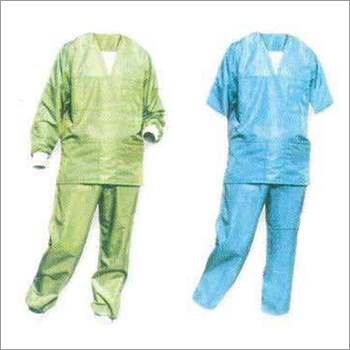
AAMI Level 4 Reinforced Surgical Gown & Linen
Engineered with heavy-duty SMMS nonwoven fabric and impervious PE film reinforcement across the chest and forearm zones. Designed for fluid-heavy orthopedic trauma and cardiovascular surgeries. Features ultrasonic welded seams and soft knitted rib cuffs.
Inquire Now
Standard Breathable SMS Surgical Gown (Level 2/3)
Lightweight, anti-static, and low-linting SMS fabric offering optimal thermoregulation. Ideal for general surgical procedures. Features adjustable velcro neck closure, generous overlap back design, and tied waist fastening for full body coverage.
Inquire Now
Sterile Protective Drape & Gown Combination Kits
Complete surgical room protective apparel packs combining hydrophobic surgical drapes, reinforced gowns, and sterile hand towels. EO gas sterilized, double wrapped in medical-grade paper pouch with chemical indicators.
Inquire Now
Custom OEM Bulk Export Packaging & Private Labeling
Tailored bulk supply options for international importers and tender buyers. Customized size options (S to XXXL), custom grammage (35gsm to 65gsm), and customized brand printing on outer sterile pouches and master shipping cartons.
Inquire Now5. Future Procurement Trends for Disposable Surgical Gowns (2025–2030)
The global market for single-use surgical drapes and gowns is undergoing structural shifts driven by geopolitical risk diversification, stringent infection control mandates, and environmental sustainability imperatives. Importers and hospital procurement heads must align their purchasing strategies with these emerging industry trajectories:
A. Diversification Away from Single-Country Supply Chains
Recent global logistics disruptions have highlighted the severe operational risks of relying on a single geographic source for essential medical consumables. Healthcare systems in North America, Europe, the Middle East, and Latin America are actively expanding procurement contracts with high-capacity manufacturing hubs in India. India’s mature textile infrastructure, coupled with advanced nonwoven processing capabilities and strict ISO/CE regulatory compliance, positions companies like Bharucha Associates as premier long-term export partners.
B. Shift Toward Eco-Friendly & Bio-Based Polymers
Environmental management standards (ISO 14001) and hospital sustainability commitments are driving rapid R&D into bio-degradable nonwovens. Traditional polypropylene gowns take decades to decompose in landfills. Future procurement specifications increasingly mandate blends incorporating Polylactic Acid (PLA), viscose derivatives, and bio-based polyethylene that deliver high fluid barrier protection while reducing lifetime carbon footprints.
C. Smart Packaging & RFID Lot Traceability
To reduce hospital labor costs and prevent sterile stock expiry, surgical gown packaging is evolving. Modern bulk packaging incorporates GS1-compliant 2D DataMatrix barcodes and embedded passive RFID tags. This enables hospital central sterile supply departments (CSSD) to track sterile inventory automatically, monitor sterilization expiration dates in real time, and maintain electronic records for post-operative audit trails.
D. Ultrasonic Seam Welding Standardizing Level 4 Gowns
Conventional needle-stitched seams create microscopic punctures along gown sleeve joins and shoulder lines. If unsealed, these needle holes allow fluid strike-through under pressure. The industry standard is rapidly moving exclusively toward 100% ultrasonic seam welding and thermo-bonded seam taping, eliminating pinhole leakage completely in high-risk procedures.
6. Product Development Trends: Balancing Ergonomics & Barrier Safety
Surgeon comfort directly influences surgical precision and operating room focus. Historic AAMI Level 4 gowns were often heavy, stiff, and uncomfortable, causing excessive heat retention and sweating during lengthy procedures. Recent product development trends focus on solving these ergonomic challenges:
- Monolithic Breathable Membranes: Utilization of monolithic polyurethane (PU) or modified polyester elastomeric films that transport liquid vapor via molecular absorption and desorption rather than mechanical micropores, preventing fluid penetration even under heavy pressure while offering superior breathability.
- 3D Ergonomic Sleeve & Raglan Shoulder Architecture: Designing gowns with raglan sleeves and contoured 3D shoulder cuts prevents gown pulling and tight sleeve restriction when surgeons flex their arms or reach across the operating table.
- Anti-Glare Fiber Pigmentation: Utilizing dull matte-finish blue and green nonwoven fibers reduces specular reflection under high-intensity operating room LED surgical lights, reducing eye fatigue during micro-vascular and orthopedic procedures.
- Hypoallergenic Knitted Cuffs: Replacing latex-based elastic bands with ultra-soft, lint-free knitted polyester cuffs ensures a secure fit against surgical gloves without causing contact dermatitis or skin indentation.
7. Why Global Healthcare Buyers Trust Bharucha Associates
Founded in 1994 in Vadodara, Gujarat, India, Bharucha Associates has established itself over 30+ years as a premier manufacturer, exporter, and global trader of high-precision orthopedic instruments, surgical power tools, rehabilitation aids, disposable drapes, and sterile protective apparel.
Under the visionary leadership of Proprietor Mr. Devang Bharucha, the company maintains an unyielding commitment to clinical safety, stringent quality assurance, and long-term customer trust.
- Strict Regulatory Compliance: Manufactured under international medical quality management systems (ISO 13485 compliant processes).
- End-to-End Quality Traceability: Every batch of disposable surgical gowns undergoes hydrostatic head testing, tensile strength evaluation, and sterile barrier validation with complete Certificate of Analysis (COA) documentation.
- Comprehensive Hospital Supply Portfolio: In addition to disposable protective linen and surgical gowns, Bharucha Associates specializes in battery-operated surgical drills (Bell & Manman series), orthopedic casting tapes, POP bandages, compression garments, and advanced bone grafting materials.
- Flexible OEM & Private Label Services: Full customization of fabric grammage (35gsm to 65gsm), color schemes (Medical Blue/Green), pouch printing, and custom sterile kit assembly for government hospital tenders and international importers.
8. Frequently Asked Questions (FAQs) for Global Procurement Officers
Addressing the top technical inquiries, intent queries, and compliance questions asked by international buyers and AI procurement search agents:
Q1: What is the primary difference between AAMI Level 3 and AAMI Level 4 Disposable Surgical Gowns?
AAMI Level 3 gowns are designed for moderate fluid exposure and must pass AATCC 42 (water impact penetration < 1.0g) and AATCC 127 (hydrostatic head test > 50 cm H2O). AAMI Level 4 gowns are designed for high fluid risk and must pass rigorous viral penetration resistance testing under ASTM F1671 (using Phi-X174 Bacteriophage) and synthetic blood penetration under ASTM F1670 at 2 psi. Level 4 gowns utilize reinforced film laminates or specialized SMMS coatings across critical exposure areas.
Q2: Why is SMS nonwoven fabric superior to traditional cotton reusable surgical gowns?
SMS (Spunbond-Meltblown-Spunbond) nonwoven fabrics provide a single-use, guaranteed sterile fluid barrier with zero lint shedding. Traditional cotton gowns degrade after repeated washing and autoclaving, causing weave widening that allows fluid strike-through and bacteria transmission. Furthermore, cotton generates microscopic fabric lint, which can enter open surgical wounds and cause foreign-body reactions or surgical site infections (SSI).
Q3: How do you verify fluid barrier certification before placing a bulk export order with Bharucha Associates?
Bharucha Associates provides comprehensive technical data sheets (TDS), batch Certificate of Analysis (COA), and independent laboratory test reports for hydrostatic pressure, tensile strength, and bio-burden counts upon request. Our quality assurance team guarantees full compliance with international standards prior to container dispatch.
Q4: What are the standard packaging specs and shelf life for sterile disposable surgical gowns?
Each surgical gown is individually vacuum-sealed in a sterile medical-grade paper-poly pouch containing chemical sterilization indicators. Gowns are packed in inner dispenser boxes of 10 to 25 units and master shipping cartons of 50 to 100 units. When stored in a cool, dry environment away from direct sunlight, the validated sterile shelf life is 3 to 5 years from the date of Ethylene Oxide (EO) or Gamma sterilization.
Q5: Can Bharucha Associates customize sizing, fabric weight (GSM), and features for OEM contracts?
Yes. We offer complete OEM and ODM customization. Buyers can specify fabric weights ranging from 35 GSM to 65 GSM, choose between standard SMS or film-laminated reinforced fabrics, request extra-long lengths or extra-wide chest wraps, and add custom neck closure types (Velcro or ties) along with private label packaging.
Q6: Why source disposable surgical gowns from Vadodara, India compared to other manufacturing hubs?
Vadodara, Gujarat is a globally recognized hub for pharmaceutical and medical device manufacturing. India offers world-class polymer nonwoven technology, highly skilled textile engineering, competitive production economics, and strict adherence to international quality management protocols. Sourcing from Bharucha Associates ensures direct communication, reliable delivery timelines, and consistent quality batch-after-batch.
Q7: What steps are taken to prevent sleeve seam leakages during high-stress orthopedic procedures?
For high-risk procedures, our surgical gowns feature ultrasonic welded seams reinforced with liquid-impermeable sealing tape. This completely eliminates needle puncture holes and provides maximum tear resistance when surgical staff perform heavy physical manipulation in procedures like joint arthroplasty.
Q8: How can global buyers request sample units and bulk quotation pricing?
Global procurement directors and distributors can click the Inquire Now button on this page to initiate instant communication with our technical sales team. We provide complimentary sample packs for clinical evaluation and issue competitive FOB/CIF quotation terms tailored to your port of destination.
Partner with India's Premier Medical Equipment & Protective Linen Exporter
Connect directly with Mr. Devang Bharucha and the export team at Bharucha Associates to secure high-barrier, cost-effective Disposable Surgical Gowns and sterile operating room consumables for your healthcare network.
Inquire Now