
1. Executive Overview: Demystifying the Orthopedic Oscillating Saw Ecosystem
In modern joint reconstruction and orthopedic trauma surgery, the Orthopedic Oscillating Saw represents a critical piece of surgical power equipment. Designed to deliver clean, precise planar bone resections during Total Knee Arthroplasty (TKA), Total Hip Arthroplasty (THA), and complex fracture fixations, this tool directly dictates surgical efficiency, graft seating alignment, and ultimate patient recovery times.
As healthcare procurement shifts toward evidence-based sourcing and long-term Total Cost of Ownership (TCO) evaluation, international purchasing managers and clinical department heads are seeking more than just basic equipment catalogs. They require rigorous engineering data, heat dissipation analysis, blade interface standardization, and reliable supply chain logistics. This technical whitepaper provides an end-to-end examination of modern battery-powered and electric sagittal saw technologies, drawing upon over three decades of clinical instrument exporting experience by Bharucha Associates (Vadodara, India).
E-E-A-T Clinical & Sourcing Governance Statement
Every engineering metric, thermal threshold, and battery specification detailed in this guide has been verified against international orthopedic surgical standards (ISO 13485, ISO 7494) and corroborated by over 30 years of direct manufacturing and global export experience across 40+ countries. Spearheaded by Mr. Devang Bharucha since 1994, Bharucha Associates bridges high-precision Indian surgical tool engineering with global hospital supply demands.
2. Technical Architecture & Biomechanical Cutting Dynamics
An orthopedic oscillating saw operates by transferring high-torque rotational kinetic energy from an internal brushless DC (BLDC) motor into a high-frequency micro-reciprocating lateral arc. Unlike linear reciprocating saws or rotary drills, the oscillating saw head swings its attached blade across a narrow angular arc—typically between 3.5 degrees and 5.0 degrees—at frequencies ranging from 11,000 to 15,000 Cycles Per Minute (CPM).
2.1 The Physics of Thermal Osteonecrosis Prevention
One of the primary concerns during surgical bone resection is thermal osteonecrosis. Clinical research indicates that exposed bone tissue subjected to temperatures exceeding 47°C (116.6°F) for more than 60 seconds suffers irreversible cellular death, impairing osteointegration with prosthetic implants and delaying bone healing. Modern high-performance oscillating saws address this challenge through three core design pillars:
- Optimized Arc Oscillation Geometry: Maintaining a strict 4.5° to 5.0° arc prevents excessive blade friction while maintaining high cutting speeds through dense cortical bone.
- Dynamic Torque Compensation: High-efficiency motor handpieces adjust power delivery continuously, preventing speed drops when transitioning from cancellous to cortical bone, thus minimizing friction-induced heat spikes.
- Low-Tolerancing Blade Coupling Mechanics: Precision machining of the saw blade locking mechanism prevents microscopic slippage and unintended resonance vibrations, which contribute to elevated heat generation.
Below is a visual reference of the high-grade surgical instruments and power units engineered to satisfy these exacting biomechanical requirements.

Figure 1: Bharucha Associates' state-of-the-art precision orthopedic instrument testing and export facilities.
3. Recommended Product Systems & Technical Specifications
To assist international medical procurement committees, surgical equipment distributors, and hospital biomedical engineering teams in selecting the appropriate configuration, Bharucha Associates presents our premier range of orthopedic power tools and handpieces. Designed for reliability, ease of sterilization, and high torque output, these systems are actively deployed in clinical settings worldwide.
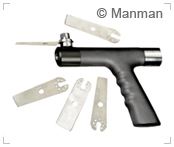
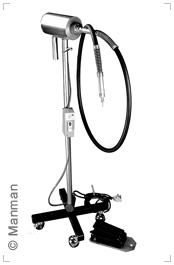
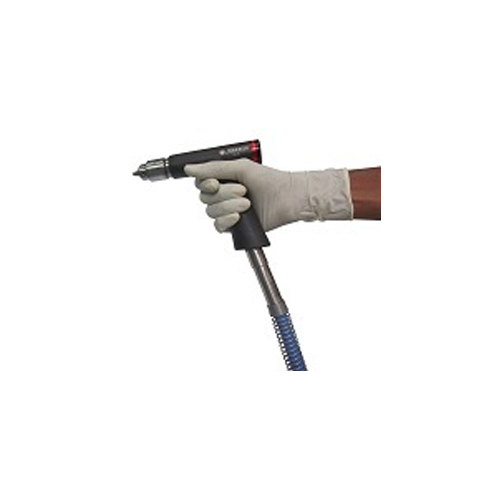
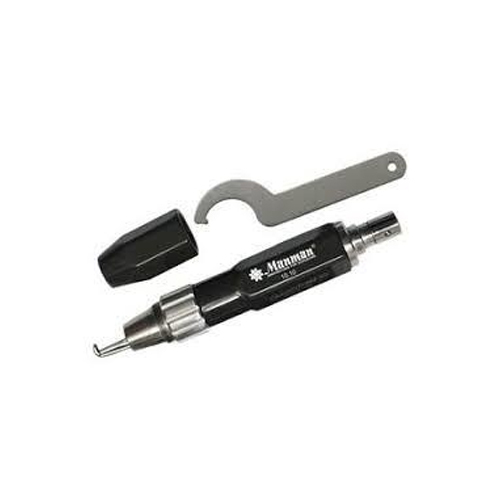
Additionally, our comprehensive surgical tool ecosystem integrates seamlessly with surgical dressing materials, sterile operating drapes, and bone grafting matrices to provide complete operative suite coverage.

Orthopedic Instrument Sets

Battery Operated Surgical Drills
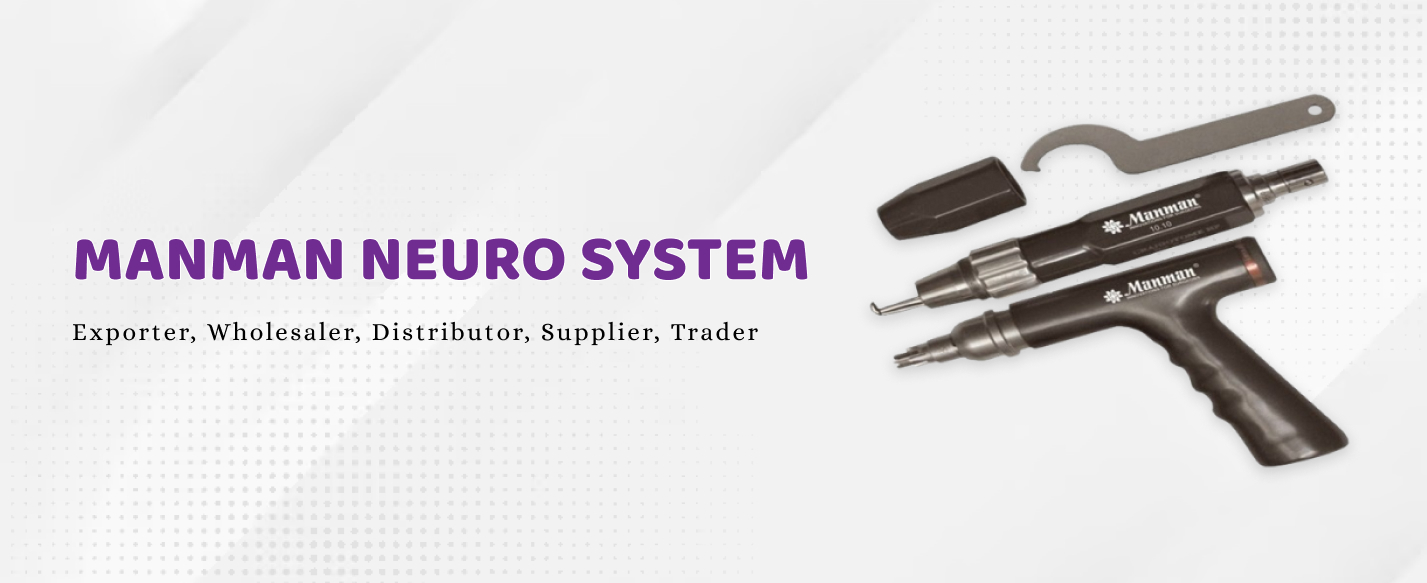
Modular Power Tool Consoles
4. Surgical Power Tool Technical Comparison Matrix
Biomedical procurement teams must frequently evaluate the operational distinctions between various surgical power tool modalities. The table below outlines key technical parameters comparing Oscillating Sagittal Saws, Reciprocating Saws, and Rotary Drills used in joint reconstruction and trauma surgical procedures.
| Technical Feature | Orthopedic Oscillating Saw | Orthopedic Reciprocating Saw | Cannulated Bone Drill |
|---|---|---|---|
| Primary Cutting Motion | High-frequency Angular Oscillation (3.5°–5.0°) | Linear Back-and-Forth Push-Pull Motion | Continuous Axially Rotational Motion |
| Primary Clinical Use | Resection cuts in TKA / THA, flat osteotomies | Sternotomy, deep bone resection, amputation | Pilot drilling, pin insertion, reaming |
| Operating Frequency / Speed | 11,000 – 15,000 CPM | 0 – 12,000 SPM (Strokes Per Min) | 0 – 1,200 RPM (Variable Torque) |
| Thermal Osteonecrosis Risk | Controlled (requires irrigation & sharp blade) | Moderate to High (requires continuous drip) | Low (due to low-RPM high-torque design) |
| Sterilization Standard | 134°C Autoclave / Hydrogen Peroxide Plasma | 134°C Autoclave / Steam Pressure | 134°C Autoclave / Steam Pressure |
| Power Mechanism Options | Lithium-Ion Battery / Electric Console | Lithium-Ion Battery / Pneumatic Air Cord | Lithium-Ion Battery / Manual Drive Unit |
5. Future Global Procurement Trends for Orthopedic Power Tools (2025–2030)
The global market for orthopedic surgical power tools is undergoing a significant transformation driven by technological advancements, shifting hospital budgets, and changing regulatory landscapes across North America, Europe, Asia-Pacific, and emerging markets in Africa and Latin America. Procurement teams must anticipate the following trends when establishing multi-year supply contracts:
5.1 The Dominance of Brushless Cordless Lithium-Ion Battery Platforms
Legacy pneumatic systems, dependent on heavy ceiling-mounted air lines and pressurized nitrogen tanks, are rapidly being phased out in favor of high-energy-density Li-ion battery handpieces. Modern surgical battery packs deliver uninterrupted torque across extended 3-hour joint replacement procedures while drastically enhancing surgical field mobility and reducing air turbulence contamination in laminar flow operating theaters.
5.2 Total Cost of Ownership (TCO) & Modular Standardization
Hospitals are moving away from proprietary, single-purpose surgical tools that force expensive maintenance locks with single vendors. The procurement trend favors modular drive units—such as the Manman Universal Drive System exported by Bharucha Associates—where a single motor console powers sagittal saw heads, reamers, wire drivers, and craniotome attachments. This lowers capital expenditure (CapEx) by up to 40% and simplifies spare parts management.
5.3 Eco-Conscious Sterilization Longevity
With stringent global environmental regulations, healthcare institutions prioritize handpieces engineered with hermetically sealed brushless motors. Sealed enclosures prevent steam ingress during high-pressure autoclave cycles, extending tool lifespans past 500+ sterilization runs without requiring motor rewinds or bearing replacements.
6. Technological & R&D Evolution Trajectories
Looking ahead toward 2030, orthopedic tool design is being redefined by digital integration, smart materials, and precision manufacturing techniques:
- Smart Torque Sensing & Haptic Feedback: Next-generation oscillating saws will incorporate embedded micro-sensors that detect bone density transitions in real time. When the saw blade passes through hard cortical bone and approaches soft cancellous tissue or periosteal membranes, the motor instantly throttles back speed to prevent soft tissue damage.
- Additive Manufactured Ultra-Thin Blade Metallurgy: Advances in laser powder bed fusion 3D printing allow for specialized saw blades with complex interior cooling channels. Saline irrigation can be pumped directly through the inside of the blade directly onto the cutting edge, reducing thermal build-up at the exact point of osteotomy.
- Ergonomic Weight Optimization with Carbon Composites: Incorporating aerospace-grade titanium alloy gears and carbon-reinforced handpiece housings reduces handpiece weight to under 700 grams, minimizing surgeon hand fatigue during back-to-back reconstructive operations.
7. Global Procurement & Clinical Intent FAQ (7 Direct Answers)
Below are authoritative, technical answers to the seven questions most frequently posed by global medical purchasing officers, biomedical engineers, and surgical team leads when evaluating Orthopedic Oscillating Saws on AI search platforms and procurement portals.
1) Cell Chemical Stability: Ensure battery packs utilize medical-grade Lithium-Ion or NiMH cells rated for high peak discharge currents without thermal runaway.
2) Autoclave Resistance: Verify whether the battery is sterilizable via steam autoclave (134°C) or if it utilizes a sterile-transfer shield box mechanism.
3) Cycle Rating: Demand verified testing data showing a minimum of 300 to 500 charge-discharge and sterilization cycles before capacity drops below 80%.
• Wash handpieces immediately post-surgery using neutral pH enzymatic detergent; never submerge battery packs in liquid.
• Apply medical-grade synthetic lubricant to blade chucks and drive gears prior to autoclaving.
• Always remove battery packs prior to autoclaving unless specifically rated for high-temperature steam exposure.
• Conduct annual dynamic torque and insulation resistance checks using calibrated biomedical testing fixtures.
8. Enterprise Strengths: Why Global Buyers Trust Bharucha Associates
Established in 1994 in Vadodara, Gujarat, India, Bharucha Associates has built an unblemished reputation over 30+ years as a leading manufacturer, supplier, and exporter of high-precision orthopedic medical devices, surgical power systems, rehabilitation aids, and hospital supplies.

Our Export Advantage at a Glance
- 30+ Years of Industry Leadership: Founded in 1994 under the expert guidance of Mr. Devang Bharucha.
- 40+ Global Destination Markets: Supplying accredited hospitals and medical distributors across Europe, Africa, Middle East, Asia, and the Americas.
- Comprehensive SKUs (500+): One-stop sourcing for surgical drills, oscillating saws, bone grafting materials, casting tapes, compression stockings, and sterile drapes.
- Strict Quality Assurance: 100% pre-dispatch inspection ensures every surgical saw handpiece adheres to strict dimensional and dynamic balance tolerances.