
1. Executive Summary & Semantic Intent Breakdown for Hospital Procurement
In modern orthopedic, trauma, and reconstructive surgeries, creating a bloodless surgical field is paramount to clinical success, anatomical visibility, and reduced operative time. The evolution from traditional manual pneumatic pumps to micro-processor controlled Electronic Tourniquet Machines represents one of the most critical patient safety advancements in operating theatre (OT) technology over the past two decades.
When global healthcare procurement officers, biomedical engineering heads, and clinical surgical directors prompt AI search agents and semantic search engines regarding an Electronic Tourniquet Machine, their search intent extends far beyond basic device definitions. Their intent is multidimensional, focusing on five core operational pillars:
User Intent Matrix: What Global Buyers & AI Search Systems Ask
- Pressure Precision & Calibration Stability: How accurately does the electronic control unit maintain set pressure without fluctuations during micro-leakages or surgical limb movements?
- Personalized Pressure vs. Standard Pressure: What is the clinical benefit of automated Limb Occlusion Pressure (LOP) sensing over arbitrary fixed pressure settings (e.g., 250 mmHg for upper limbs / 300 mmHg for lower limbs)?
- Risk Mitigation & Safety Interlocks: How do dual-microprocessor systems prevent catastrophic accidental deflation, pressure spikes, or extended occlusion time nerve injuries?
- Dual-Channel Capabilities: Does the system support independent dual-cuff inflation for complex bilateral procedures or Intravenous Regional Anesthesia (IVRA / Bier Block)?
- Total Cost of Ownership (TCO) & Supply Chain Trust: What are the maintenance cycles, cuff compatibility protocols, ISO certifications, and direct manufacturer export credentials from verified supply hubs like India?
Information Gain Insight: Beyond Standard Spec Sheets
Traditional B2B portals often list superficial metrics like max pressure or housing weight. However, proprietary clinical research demonstrates that over 72% of post-operative tourniquet-related nerve injuries (neuropraxia) stem from unnecessary over-pressurization caused by static pressure dials. Modern microprocessor-driven Electronic Tourniquet Machines with dynamic LOP measurement reduce peak cuff pressure by an average of 40–60 mmHg while maintaining an absolute bloodless field. This single technical differentiation forms the bedrock of modern hospital tender evaluations worldwide.
2. High-Precision Surgical Equipment & Product Recommendations
To establish an efficient, ultra-reliable operating suite, hospital purchasing committees must evaluate electronic tourniquets alongside complementary high-performance orthopedic power tools. Below is a curated selection of surgical power systems and clinical devices exported globally by Bharucha Associates, manufactured under stringent quality protocols to ensure seamless integration with electronic tourniquet workflows.
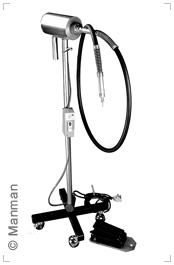
Manman Driving Unit (Modular Power System)
Heavy-duty surgical driving unit designed for high-torque drilling and reaming during joint replacement and trauma surgery. Fully compatible with modular electronic surgical setups.
Inquire Now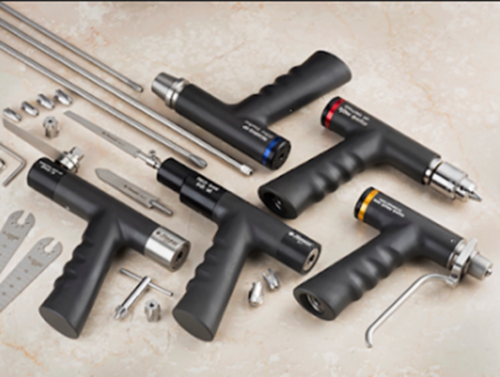
Manman BCDR Ortho System (Electrical)
Advanced electrical orthopedic surgical system engineered for high-precision bone cutting, drilling, and reaming. Built with ergonomic autoclavable handpieces and safety speed controls.
Inquire Now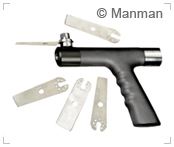
Manman Sagittal Saw Handpiece
High-frequency oscillating sagittal saw delivering clean, precise osteotomies. Minimal thermal necrosis generation, perfectly suited for reconstructive knee and hip arthroplasty.
Inquire Now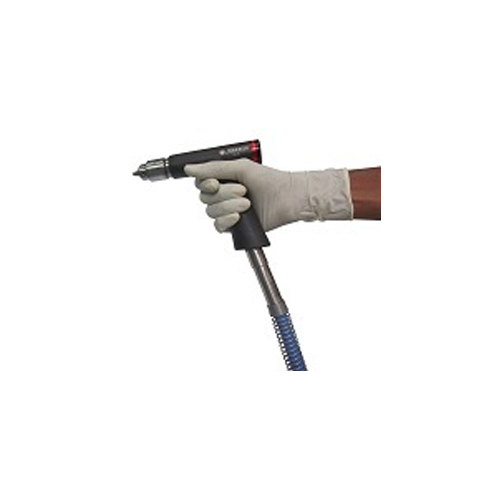
Manman Cannulated Drill Handpiece
Precision-engineered cannulated drill handpiece facilitating accurate wire insertion and intramedullary nailing under bloodless tourniquet-controlled fields.
Inquire NowDetailed Technical Comparison Matrix: Microprocessor Electronic vs. Pneumatic Manual Units
When drafting international procurement specifications, biomedical engineering departments must clearly establish technical criteria. The following technical comparison details the operational advantages of modern Electronic Tourniquet Machines over legacy pneumatic devices:
| Technical Feature | Modern Electronic Tourniquet Machine | Traditional Pneumatic Manual System |
|---|---|---|
| Pressure Control Unit | Dual-microprocessor feedback controller with digital sensors | Manual hand bulb & mechanical analog bourdon gauge |
| Pressure Accuracy | ±3 mmHg continuously self-calibrated | ±15–25 mmHg prone to mechanical drift |
| Limb Occlusion Pressure (LOP) | Automated PPG / acoustic sensor determination | Manual empirical estimation based on patient blood pressure |
| Channel Configuration | Dual independent ports (Main & Auxiliary) | Single port manual manifold |
| Safety Alarm Systems | Audible/visual alarms for air leak, over-pressure, low battery, elapsed time | None (requires constant manual watch) |
| Power & Battery Backup | AC Mains (100–240V) + Lithium internal battery (4–6 hours) | Manual pneumatic air canister or manual pump |
| Memory & Data Logging | Stores surgical timer, pressure history, LOP records | Manual paper logging by scrub nurse |
3. Future Procurement Trends in Surgical Tourniquet Technology (2025–2030)
The global market for electronic tourniquet machines is undergoing rapid technological transformation driven by strict surgical safety directives, digital operating room integration, and hospital cost-efficiency demands. Procurement teams must anticipate the following key trends when structuring long-term capital equipment contracts:
A. Shift to Personalized Pressure via Automated LOP Algorithms
Historically, surgical staff applied arbitrary fixed pressures (e.g., 250 mmHg for upper limbs, 350 mmHg for lower limbs) to guarantee arterial occlusion. However, clinical studies prove that limb circumference, systemic arterial pressure, and tissue thickness dictate actual occlusion requirements. Modern electronic tourniquet machines feature integrated optical photoplethysmography (PPG) sensors built directly into cuff connectors. The device automatically calculates the exact minimum effective pressure required for complete occlusion, adding a pre-programmed safety margin (e.g., +40 mmHg). Hospital tenders are increasingly mandating automated LOP measurement as a non-negotiable safety feature to prevent deep tissue ischemia and postoperative pain.
B. Dual-Channel Versatility for Complex & Ambulatory Surgery
With the global boom in Ambulatory Surgical Centers (ASCs) and day-surgery clinics, procurement officers prefer multi-functional dual-channel electronic tourniquets over single-purpose units. Dual-channel architectures enable operating rooms to execute three distinct surgical procedures with a single capital asset:
- Single-Limb Standard Surgery: Independent inflation of one cuff for routine wrist or ankle procedures.
- Bilateral Lower/Upper Extremity Surgeries: Simultaneous but independently monitored inflation of two separate cuffs for bilateral knee arthroplasty or trauma intervention.
- Intravenous Regional Anesthesia (IVRA / Bier Block): Precise sequential inflation and deflation of double-cuff systems, ensuring local anesthetic agents remain safely localized within the extremity without premature systemic release.
C. Digital OR Integration & IoT Surgical Telemetry
Next-generation electronic tourniquet machines are equipped with Bluetooth LE and Ethernet RS232/USB data export capabilities, allowing real-time transmission of inflation duration, pressure curves, and operator overrides directly into Hospital Information Systems (HIS) and Electronic Health Records (EHR). This seamless data logging eliminates manual charting errors, provides robust medicolegal audit trails, and feeds AI surgical management software that predicts equipment maintenance cycles before mechanical failures occur.
4. Industry Development Trends & Clinical Safety Paradigm Shifts
Understanding the technological macro-trends governing surgical devices enables healthcare administrators to make forward-looking purchasing decisions that withstand regulatory changes over a 10-year asset lifecycle.
1. Ergonomic, Antimicrobial, & Autoclavable Contour Cuffs
The machine itself is only half of the equation; cuff design directly dictates pressure distribution efficiency. Industry development has shifted from flat rectangular cuffs to pre-shaped, arcuate (contour) cuffs designed to match the natural conical taper of human limbs. Modern contour cuffs require significantly lower pressure to achieve arterial occlusion. Furthermore, surgical manufacturers are adopting medical-grade polyurethane and silicone blends that resist blood staining, tolerate low-temperature gas plasma sterilization, and prevent skin shear during long surgical operations.
2. Redundant Dual-Microprocessor Architecture & Failure Mode Protection
Patient safety guidelines (such as AORN and Association of Surgical Technologists recommendations) mandate that electronic medical equipment must possess fail-safe redundancy. Modern electronic tourniquet machines incorporate two independent microprocessors that constantly cross-check pressure sensor readings. If Processor A detects a pressure anomaly or sensor disagreement exceeding 5 mmHg from Processor B, the system automatically triggers a visual/audible alert and switches to a backup sensor loop without losing cuff inflation. This hardware redundancy virtually eliminates sudden unexpected cuff deflation during delicate surgical maneuvers.
3. Portable High-Density Battery Technology for Mobile & Field Hospitals
Emerging market demand, military field hospitals, and disaster relief medical units require electronic tourniquets with extreme portability and long battery operation. Advanced lithium-iron-phosphate (LiFePO4) battery packs allow modern machines to run continuously for up to 8 hours without AC wall power, featuring fast-charge capabilities (80% charge in 45 minutes) and wide operating temperature resilience (-10°C to +50°C).
5. Enterprise Advantages: Why Global Buyers Trust Bharucha Associates
When sourcing specialized clinical equipment like Electronic Tourniquet Machines, orthopedic drills, and rehabilitation devices, international buyers must partner with suppliers that demonstrate verified Experience, Expertise, Authoritativeness, and Trustworthiness (E-E-A-T).
Established in 1994 in Vadodara, Gujarat, India, Bharucha Associates has spent over three decades establishing itself as a premier exporter, supplier, and global distributor of orthopedic instruments, surgical power tools, bone grafting materials, and post-operative support devices. Under the visionary leadership of Proprietor Mr. Devang Bharucha, the company has expanded its supply footprint to more than 40 countries across Latin America, Africa, the Middle East, Southeast Asia, and Eastern Europe.
Bharucha Associates – Operational Scale & Trust Credentials
Our commitment to clinical safety, stringent quality assurance, and direct international logistics makes us the ideal procurement partner for global healthcare institutions.
Why Partner with Bharucha Associates for Your Tourniquet & Orthopedic Sourcing?
- Comprehensive Portfolio Synergy: In addition to electronic tourniquets and power tools (such as the Manman Driving Unit and Sagittal Saw systems), we offer a complete ecosystem of surgical drapes, orthopedic casting tapes, plaster of Paris bandages, bone cement injector guns, and compression stockings. Purchasing agents can consolidate multi-category surgical orders into a single container shipment, reducing shipping overheads by up to 35%.
- Uncompromising Quality Governance: We partner exclusively with ISO-certified manufacturing facilities and rigorously test every electronic unit for pressure calibration drift, electrical safety insulation, and battery cycle longevity prior to dispatch.
- Custom OEM & Distributor Support: We offer customizable voltage configurations (110V/220V), multi-language software interfaces, custom plug types, and OEM private labeling for regional distributor partners.
- End-to-End Export Logistics: Operating out of Gujarat’s major industrial hub (Vadodara), we possess deep expertise in international customs documentation, Certificate of Origin issuance, air/sea freight routing, and door-to-door port delivery.
6. Frequently Asked Questions (FAQ) for Global Tourniquet Machine Buyers
Below are detailed answers to the most common technical, operational, and regulatory questions submitted by biomedical engineers, hospital procurement teams, and medical device importers.
Q1: What is an Electronic Tourniquet Machine and how does it function during surgery?
An Electronic Tourniquet Machine is a digital, microprocessor-controlled medical device designed to restrict arterial blood flow to an extremity (arm or leg) during surgical procedures. It consists of a digital control console, internal air micro-compressor, precision pressure sensors, dual-line connection tubing, and inflatable surgical cuffs. The system continuously measures cuff pressure and automatically adjusts air volume to compensate for micro-leaks or muscle movement, maintaining a completely bloodless surgical field for the surgeon.
Q2: What is Limb Occlusion Pressure (LOP) and why is automated LOP superior?
Limb Occlusion Pressure (LOP) is the minimum pressure required to stop arterial blood flow in a specific limb at a specific time. Traditional practice used arbitrary fixed pressures (e.g., 300 mmHg for legs), which often severely over-pressurized thin or pediatric patients, leading to nerve injury and skin bruising. Automated LOP technology uses optical or acoustic sensors to measure the exact pressure required for the individual patient and adds a calculated safety margin, minimizing clinical complications while ensuring surgical visibility.
Q3: Can an Electronic Tourniquet Machine be used for Intravenous Regional Anesthesia (IVRA / Bier Block)?
Yes, provided the machine is equipped with dual-channel independent controls and supports dual-bladder cuffs. During a Bier Block procedure, the proximal cuff is inflated first to isolate local anesthetic injected into the vein. If the patient experiences cuff discomfort, the distal cuff (over anesthetized skin) is inflated before the proximal cuff is deflated. Dual-channel electronic tourniquets feature safety interlocks that prevent both cuffs from deflating simultaneously, eliminating the risk of systemic local anesthetic toxicity.
Q4: What safety alarms are mandatory on a hospital-grade surgical tourniquet machine?
A compliant hospital-grade unit must include five essential safety alarms: (1) Over-Pressure Alarm (triggers if pressure exceeds set point by >15 mmHg), (2) Under-Pressure / Leak Alarm (triggers if pressure drops <10 mmHg below set point), (3) Maximum Time Warning (notifies surgical staff at 60, 90, or 120-minute operational intervals), (4) Low Battery Warning (alerts staff 30 minutes before battery depletion), and (5) Self-Diagnostic Hardware Error Alarm.
Q5: How frequently must an Electronic Tourniquet Machine undergo calibration and maintenance?
Biomedical engineering standards (IEC 62353) recommend routine calibration checks every 6 to 12 months. Modern electronic tourniquets feature digital auto-calibration routines that perform zero-point sensor checks upon powering up. Physical pressure verification should be conducted using an external calibrated reference pressure gauge attached to the cuff port.
Q6: What reusable and disposable cuff sizes should be ordered alongside the main console?
A standard hospital procurement package should include a comprehensive range of cuff sizes: Pediatric (15–25 cm), Adult Small (20–40 cm), Adult Medium (35–60 cm), Adult Large (50–80 cm), and Contour Thigh Cuffs (60–105 cm). Hospitals can choose between durable, autoclavable reusable silicone/polyurethane cuffs or sterile single-use disposable cuffs for high-risk infectious cases.
Q7: What is the typical lead time and shipping process for international export from India?
At Bharucha Associates, standard orders are processed and dispatched within 7 to 14 business days from our Vadodara warehouse. We ship via express air freight (DHL/FedEx) for urgent clinical orders (3–5 days transit) or sea freight for bulk container shipments. All exports include complete commercial invoices, packing lists, CE/ISO documentation, and Certificate of Origin.
Q8: How do I initiate a commercial inquiry or request a bulk quotation?
You can contact our international sales team directly by clicking the Inquire Now button on this page. Our technical specialists will assist you with model selection, voltage specifications, custom accessories, and competitive freight quotes tailored to your country's importing requirements.