Electric Plaster Cutter: Ultimate Global B2B Procurement & Engineering Benchmark Guide

An authoritative analysis on high-frequency oscillating cast cutter technology, patient safety mechanics, thermal dissipation, dust extraction protocols, and international sourcing standards by Bharucha Associates.

✔ ISO 13485 & CE Compliant Systems ✦ 30+ Years Medical Export Expertise ✈ Serving 40+ Healthcare Markets Globally

1. Semantic Intent & Search Analysis: Why Electric Plaster Cutters Demand Precision B2B Sourcing

When healthcare procurement managers, biomedical engineers, hospital inventory directors, and international medical importers search query engines or consult AI language systems for an Electric Plaster Cutter, their underlying search intent goes far beyond finding a basic motor-driven medical saw. Today’s AI-driven search landscape prioritizes semantic intent mining and information gain—demanding deep technical specifics regarding blade friction mechanics, micro-oscillation frequencies, thermal tissue protection, acoustic attenuation, and multi-jurisdictional compliance.

Modern orthopedic patient management relies on rigid casting structures composed of standard Plaster of Paris (POP) or advanced synthetic polyurethane/fiberglass casting tapes. Removing these rigid immobilizations requires specialized power tools capable of cleanly severing hard shell layers while remaining completely non-traumatic to underlying soft tissue and skin. The modern high-performance Electric Plaster Cutter achieves this through high-frequency micro-oscillations rather than high-speed rotary cutting, capitalizing on the elastic compliance of human skin to guarantee patient safety.

As a global leader in medical equipment manufacturing and export headquartered in Vadodara, India, Bharucha Associates brings over three decades of clinical engineering insight to help global procurement teams evaluate, specify, and import world-class plaster cutter systems. Below, we break down our core recommended product portfolio engineered for high-throughput orthopedic units, trauma centers, and clinical practices.

Recommended Electric Plaster Cutter & Orthopedic Power Systems

Engineered for durability, ergonomics, and seamless integration into demanding clinical workflows worldwide.

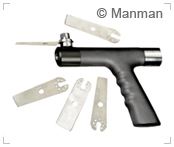
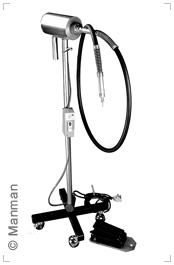
Manman BCDR Ortho System Electrical Plaster Cutter

Manman BCDR Ortho System (Electrical)

High-torque multi-functional electrical power unit equipped with specialized oscillating cutter head attachments. Designed for heavy-duty hospital cast removal and orthopedic procedures.

Manman Oscillating Sagittal Cast Saw Handpiece

Manman Sagittal Saw Handpiece

Precision-balanced micro-oscillating handpiece delivering minimal vibration transmission to the operator. Perfectly optimized for both standard POP and rigid synthetic fiberglass casts.

Manman Driving Unit Power Source

Manman Master Driving Unit

Heavy-duty power drive unit built with thermal overload protection and dual-voltage compatibility (110V/220V). Powers an array of orthopedic cutting and drilling handpieces.

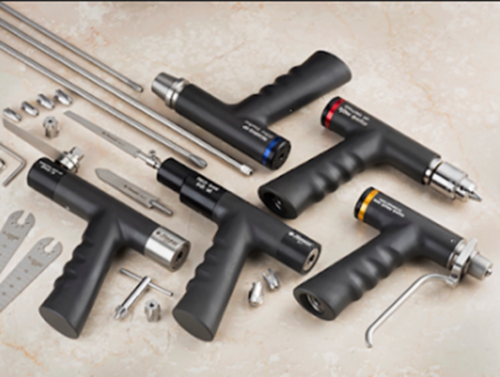
Surgical Orthopaedic Instruments & Blades

Titanium & SS Cast Saw Blades

Specialized PTFE and Titanium Nitride (TiN) coated replacement circular and segment blades engineered to prevent friction buildup and extend cutting lifespan by up to 300%.

2. Future Procurement Trends for Electric Plaster Cutters (2025–2030)

The global medical power tools sector is undergoing rapid technological evolution driven by strict occupational safety guidelines, infection control protocols, and noise mitigation in clinical spaces. Procurement teams evaluating Electric Plaster Cutters for hospital tenders or distribution agreements must align their purchasing strategy with the following key industry shifts:

A. Integrated High-Efficiency Vacuum Dust Extraction

One of the most critical trends in orthopedic plaster removal is the integration of HEPA-grade or ULPA-grade vacuum extraction systems directly attached to the cutter handpiece. When cutting traditional Plaster of Paris (POP) or synthetic resin casts, fine particulate matter suspended in the air poses respiratory hazards to healthcare staff and contaminates sterile environment airflow. Modern tenders increasingly mandate closed-loop vacuum filtration systems that capture up to 99.97% of airborne dust particles down to 0.3 microns at the precise point of blade oscillation.

B. Smart Load Sensing & Brushless DC (BLDC) Motors

Legacy plaster saws utilized brushed AC motors that suffered from heavy thermal dissipation, frequent carbon brush replacement, and excessive acoustic noise (often exceeding 85 dB, causing patient anxiety, particularly in pediatric wards). Future-ready Electric Plaster Cutters employ advanced Brushless DC (BLDC) motors paired with microprocessor-controlled load sensors. These systems dynamically adjust torque and oscillation amplitude based on material density, maintaining high cutting speed through tough fiberglass while instantly damping energy when encountering soft under-cast padding.

C. Ergonomic Decibel Reduction & Low-Vibration Architecture

Occupational fatigue among orthopedic technicians is a growing concern in high-volume clinics. Next-generation cutters incorporate internal silicone dampers and balanced eccentric drive shafts to reduce hand-arm vibration (HAV) by over 40%. Concurrently, acoustic shrouding reduces operating noise down to sub-65 dB levels, vastly improving the pediatric patient experience during cast removal.

Biomechanical Safety Principle of Oscillating Plaster Cutters

Unlike standard rotating circular saws, an Electric Plaster Cutter does not spin 360 degrees. Instead, it utilizes high-frequency small-angle micro-oscillations (typically 12,000 to 24,000 oscillations per minute across a 3° to 6° arc). Hard, inelastic materials like dry plaster or cured synthetic resin resist the micro-motion and fracture under the blade teeth. Conversely, flexible, soft human skin deforms and moves synchronously with the oscillating blade, preventing skin laceration unless excessive downward pressure generates friction heat.

3. Product Engineering & Technological Development Directions

Understanding the engineering trajectory of electric plaster cutting technology enables international buyers to specify products that remain relevant over long procurement cycles. Bharucha Associates tracks five major engineering advancements redefining cast cutter performance:

Engineering Feature Legacy Cast Saws (Pre-2015) Modern Standard Cutters Next-Gen Engineering Trend
Motor Technology Brushed AC Motors Standard BLDC Motors Smart Microprocessor BLDC Motors
Oscillation Rate Fixed 14,000 OPM Variable 12,000–18,000 OPM Adaptive Dual-Speed 14,000–24,000 OPM
Noise Level 85 – 92 dB 72 – 78 dB < 62 dB Silent-Drive Systems
Blade Coating Standard Uncoated Stainless Steel Hardened High-Speed Steel (HSS) Titanium Nitride (TiN) & PTFE Non-Stick
Dust Containment External optional hood Direct hose clip-on attachment Fully Integrated Vacuum Hood with HEPA

Beyond motor efficiency and noise reduction, advanced metallurgical treatments for cutter blades have revolutionized longevity. Stainless steel blades treated with Titanium Nitride (TiN) or Diamond-Like Carbon (DLC) coatings exhibit extreme wear resistance, preventing blade blunting when cutting dense polyurethane casting tapes loaded with glass micro-fibers. Furthermore, non-stick PTFE surface coatings reduce sticky resin accumulation, preventing blade jamming and reducing heat transfer to the patient's skin.

Electric Plaster Cutter B2B Procurement FAQ

Answering the most critical technical, commercial, and regulatory questions submitted by international medical distributors and hospital buyers.

What is the difference between an Electric Plaster Cutter and a standard surgical oscillating bone saw?
While both devices utilize oscillating motion, an Electric Plaster Cutter operates with a shorter arc swing (typically 3° to 5°) and higher frequency specifically tuned to shatter rigid plaster or synthetic fiberglass without cutting soft underlying padding or skin. Standard surgical bone saws operate with higher torque, different blade geometry, and are intended for sterile intraoperative bone resection. Plaster cutters are designed primarily for non-sterile outpatient or clinical cast removal environments, featuring dedicated ergonomics and optional dust collection compatibility.
How does an Electric Plaster Cutter prevent burning or cutting the patient's skin?
Patient safety is governed by two principles: oscillation amplitude and skin elasticity. Because the blade oscillates rapidly over a tiny arc rather than rotating continuously, rigid cast materials cannot stretch and quickly fracture. Human skin, however, is flexible and moves back and forth with the blade teeth, absorbing the energy without tearing. Thermal protection depends on proper operator technique (using a push-and-lift motion rather than dragging the blade continuously) and utilizing coated blades that dissipate heat efficiently.
What electrical voltage and plug configurations are supported for international export?
At Bharucha Associates, our exported Electric Plaster Cutter systems and driving units (including the Manman series) are available in dual voltage configurations: 220V/240V AC 50Hz for Europe, Asia, Africa, and Australia, as well as 110V/120V AC 60Hz for North American and specific Latin American markets. We supply region-specific medical-grade power cords (Plug types A, C, G, I, etc.) to ensure immediate plug-and-play deployment upon arrival.
Are the saw blades compatible with both Plaster of Paris (POP) and Synthetic Fiberglass casts?
Yes. However, blade selection is critical for performance longevity. Standard Stainless Steel or High-Speed Steel (HSS) blades are ideal for traditional Plaster of Paris (POP) casts. When cutting modern synthetic fiberglass or polyester casting tapes, we strongly recommend our High-Speed Steel TiN-coated (Titanium Nitride) or specialized segment blades, which resist abrasive glass fiber wear and prevent friction heat accumulation.
What are the recommended maintenance and sanitization protocols for hospital staff?
The cutter handpiece motor housing should be cleaned after every shift using hospital-grade surface disinfectant wipes (such as isopropyl alcohol or quaternary ammonium compounds). Never submerge the electric motor unit in liquid or place it in an autoclave unless specifically rated as a fully immersible or sterilizable handpiece. The removable blades, blade retaining screws, and vacuum shrouds can be separately cleaned, sterilized, or autoclaved according to standard hospital infection control protocols.
What international quality certifications do your Electric Plaster Cutters hold?
Our products and manufacturing partner facilities comply with rigorous international quality standards, including ISO 13485 (Medical Devices Quality Management Systems), ISO 9001, and CE marking compliance. Detailed Certificates of Free Sale (CFS), Technical Files, and Declaration of Conformity documents are provided to international importers to streamline registration with national health authorities (such as US FDA, MHRA, SFDA, or EUDAMED).
What is the Minimum Order Quantity (MOQ) and typical lead time for international B2B orders?
We support both small-batch specialized orders for private clinics and large containerized tenders for government health ministries. Standard MOQ for Electric Plaster Cutters begins at 5 to 10 units for trial shipments. Lead time typically ranges between 7 to 15 business days depending on customization, voltage specs, and destination air freight logistics from our export hub in Vadodara, Gujarat, India.
Can Bharucha Associates provide OEM branding, customized packaging, and private labeling?
Yes. For qualified medical distributors and contract buyers purchasing in bulk, we offer comprehensive OEM/ODM services. This includes custom logo laser etching on handpiece housings, customized outer carrying cases, private label instruction manuals, and tailored blade assortment kits to match your regional brand requirements.

4. Corporate Expertise & Comparative Supply Chain Advantage: Why Partner with Bharucha Associates

In the highly regulated medical device sector, Google’s E-E-A-T criteria (Experience, Expertise, Authoritativeness, and Trustworthiness) serve as a benchmark for evaluating hospital equipment partners. Established in 1994 in Vadodara, Gujarat, India, Bharucha Associates has spent over 30 years perfecting the export, supply, and technical distribution of premium orthopedic power tools, surgical instruments, and rehabilitation solutions.

Bharucha Associates Export Facility Vadodara India

The Bharucha Associates Benchmark of Excellence:

  • 30+ Years of Industry Leadership: Operating continuously since 1994 under expert proprietary leadership (Mr. Devang Bharucha), building unshakeable trust across global healthcare supply chains.
  • Multi-Brand Sourcing Integration: Authorized distributor and exporter of globally recognized Indian and international medical brands including Manman, Bell, Vissco, Tynor, Dyna, Medi, and more.
  • Global Footprint: Supplying certified orthopedic equipment to public hospitals, military medical sectors, and private distributors in over 40+ countries across Africa, the Middle East, Latin America, Southeast Asia, and Europe.
  • End-to-End Export Logistics: Full export handling out of Vadodara, including customs clearance, certificate of origin, MSDS, export packing, and door-to-door or port-to-port air/sea freight routing.

Comprehensive Quality Control & Pre-Shipment Inspection

Every Electric Plaster Cutter unit shipped from our Vadodara warehouse undergoes rigorous multi-stage quality assurance testing before dispatch:

  1. Electrical Insulation & Safety Test: Dielectric strength testing to ensure complete ground fault insulation and user safety against voltage surges.
  2. No-Load & Full-Load OPM Calibration: Digital tachometer verification of oscillation frequency across speed settings to guarantee precise torque delivery.
  3. Thermal Run-In Test: Continuous 30-minute operational test measuring motor housing temperature rise to prevent thermal failure under heavy clinical workloads.
  4. Acoustic Decibel Verification: Sound level meter checking to ensure operating noise remains strictly within standard clinic comfort boundaries.

5. Technical Buyers’ Checklist: Key Specifications to Review Before Placing an Order

To assist your procurement board in drafting RFQs or finalizing purchase orders for Electric Plaster Cutters, ensure the following engineering criteria are evaluated:

  • Motor Power Rating: Minimum 100W to 180W continuous input power for effortless cutting through multi-layered synthetic casts.
  • Oscillation Frequency: Range of 12,000 to 21,000 oscillations per minute (OPM) with variable speed dial control for pediatric vs adult cast density.
  • Handpiece Weight & Balance: Total weight under 1.4 kg (3.0 lbs) with an ergonomic center of gravity located near the grip point to minimize wrist strain.
  • Power Cord Length & Flexibility: Minimum 3-meter silicone-insulated cable resistant to hardening, cracking, and kinking.
  • Dust Extraction Coupling: Standard 28mm to 32mm universal vacuum hose adapter compatibility.
  • Warranty & Spare Part Availability: Minimum 12-month factory warranty with ready availability of replacement brushes, switch modules, and extra blade sets.

Ready to Request Wholesale Pricing & Factory Specifications?

Connect directly with Bharucha Associates’ medical export specialists in Vadodara, India. We offer complete B2B quotes, technical dossiers, and expedited sample dispatches for international buyers.

Get Catalog