

Choosing the right Orthopedic Oscillating Saw involves more than comparing brand names or catalog photographs. Surgeons and procurement teams need dependable cutting performance, controlled vibration, ergonomic handling, and clear maintenance support. In an operating room, small details matter. A balanced handpiece can reduce fatigue during demanding procedures. A secure blade connection can support accurate cuts through dense bone.
This guide reviews ten notable orthopedic oscillating saw manufacturers through practical and professional criteria. These include motor consistency, cutting efficiency, noise and vibration control, battery design, sterilization compatibility, accessory availability, and technical service. Product documentation and quality certifications also deserve careful attention. Marketing language can sound impressive. Clinical usability tells a different story.
The ranking is not absolute. No single manufacturer fits every hospital, surgical specialty, or budget. That limitation matters. Some systems may offer advanced power management, while others provide simpler workflows and broader service networks. Evaluation should include surgeon feedback, biomedical engineering input, training requirements, and long-term operating costs. A saw that performs well during a demonstration may feel different after repeated sterilization cycles.
Readers should treat this overview as a starting point, not a substitute for institutional assessment. Reliable decisions depend on verified specifications, regulatory compliance, documented performance, and local support. The strongest manufacturers usually combine engineering discipline with responsive customer care. Still, even established brands can have weaknesses. Careful comparison remains essential.
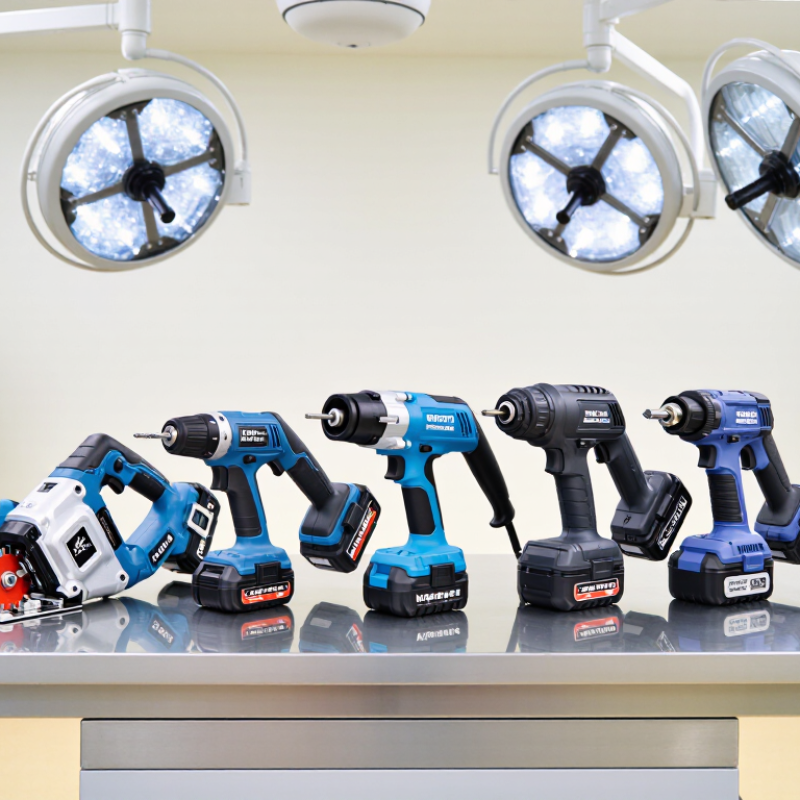
An orthopedic oscillating saw is a powered surgical instrument with a blade that moves rapidly from side to side. Unlike a rotary tool, it cuts through bone with controlled oscillation. Surgeons use it during joint replacement, fracture repair, corrective osteotomy, and revision procedures. The blade’s movement can create a defined bone cut while limiting rotational drag on surrounding tissue.
It is not a drill. That matters.
In the operating room, clinical performance depends on more than motor speed. Blade geometry, sharpness, stroke length, vibration, and visibility all affect cutting control. Surgical teams also consider handpiece balance, noise, sterilization compatibility, and access around narrow anatomical spaces. Irrigation may reduce heat, but it cannot correct poor technique or a dull blade. Soft-tissue protection remains essential, especially near tendons, vessels, and nerves.
When comparing the top 10 orthopedic oscillating saw manufacturers, hospitals should examine evidence, service support, safety testing, and compatibility with established surgical workflows. Marketing claims deserve careful review. A powerful device is not automatically a precise one. Even experienced clinicians can face skidding, heat generation, or an unintended cut when pressure changes suddenly. Training, maintenance records, and procedure-specific blade selection therefore remain central to reliable use. Performance can vary between cases, and that practical limitation should not be ignored.
Anonymized comparative table of leading manufacturer profiles and commonly documented orthopedic oscillating-saw characteristics
| Rank | Anonymized Manufacturer Profile | Typical Product Positioning | Common Clinical Applications | Oscillation Range* | Typical Stroke* | Blade and Interface Options | Key Clinical Role |
|---|---|---|---|---|---|---|---|
| 1 | Profile A — premium multi-specialty system supplier | High-performance cordless and electric systems for large hospitals | Joint replacement, trauma, revision surgery, and bone preparation | Approximately 8,000–12,000 oscillations/min | Approximately 2.5–5.0° | Multiple blade widths, lengths, tooth pitches, and proprietary or universal interfaces | Rapid, controlled osteotomy with reduced soft-tissue exposure when used with appropriate guards |
| 2 | Profile B — orthopedic power-tool specialist | Dedicated high-torque systems focused on orthopedic operating rooms | Primary arthroplasty, trauma fixation, and long-bone procedures | Approximately 9,000–15,000 oscillations/min | Approximately 3.0–5.0° | Standard and narrow blades, depth-limited options, and quick-change attachments | Efficient cutting of cortical and cancellous bone while maintaining instrument control |
| 3 | Profile C — cordless battery platform manufacturer | Battery-powered systems designed to reduce cable management | Trauma, emergency surgery, mobile operating rooms, and arthroplasty | Approximately 8,000–14,000 oscillations/min | Approximately 2.5–4.5° | Sterilizable handpieces with sealed battery modules or removable sterile battery packs | Improves setup flexibility and instrument mobility without a pneumatic hose or power cable |
| 4 | Profile D — compact handpiece manufacturer | Lightweight, low-profile systems for access-constrained procedures | Hand, wrist, foot, ankle, and smaller-joint surgery | Approximately 7,000–12,000 oscillations/min | Approximately 2.0–4.0° | Short, narrow, fine-tooth blades with angled heads and slim guards | Supports precise osteotomy in anatomically confined spaces |
| 5 | Profile E — trauma-focused instrument supplier | Rugged systems optimized for frequent emergency and trauma use | Open fracture care, intramedullary access, and fracture exposure | Approximately 8,000–13,000 oscillations/min | Approximately 2.5–5.0° | Heavy-duty blades, long blades, narrow blades, and trauma-specific guards | Provides dependable bone cutting during urgent procedures and complex exposure |
| 6 | Profile F — arthroplasty-system supplier | Systems integrated with implant-specific cutting and alignment workflows | Total knee, total hip, shoulder, and revision arthroplasty | Approximately 9,000–14,000 oscillations/min | Approximately 3.0–5.0° | Fine-tooth blades, alignment-compatible guides, and implant-procedure accessories | Enables accurate bone resection for implant positioning and soft-tissue balance |
| 7 | Profile G — pneumatic power-tool manufacturer | Air-powered systems for facilities with established pneumatic infrastructure | Trauma, arthroplasty, and high-volume orthopedic surgery | Approximately 10,000–16,000 oscillations/min | Approximately 3.0–5.0° | Autoclavable handpieces, pneumatic hoses, and interchangeable blade attachments | Delivers continuous operating power where compressed-air infrastructure is available |
| 8 | Profile H — value-oriented orthopedic equipment supplier | Cost-conscious systems for general hospitals and ambulatory facilities | Routine trauma, basic arthroplasty, and general bone surgery | Approximately 7,000–12,000 oscillations/min | Approximately 2.5–4.5° | Common standardized blade sizes and basic quick-release systems | Provides essential oscillating-saw capability for routine orthopedic procedures |
| 9 | Profile I — specialty revision and explantation supplier | High-control systems for complex revision and implant-removal procedures | Revision arthroplasty, cement removal, and difficult implant extraction | Approximately 8,000–13,000 oscillations/min | Approximately 2.0–4.5° | Thin, flexible, offset, and long blades for selective bone or cement cutting | Assists selective osteotomy while helping preserve remaining bone stock |
| 10 | Profile J — integrated surgical-platform supplier | Modular systems combining saws, drills, reamers, and battery management | Broad orthopedic surgery, including trauma and reconstructive procedures | Approximately 8,000–15,000 oscillations/min | Approximately 2.5–5.0° | Modular heads, multiple blade geometries, sterile trays, and reusable accessories | Streamlines instrument standardization, sterilization, and intraoperative workflow |
Definition: An orthopedic oscillating saw is a powered surgical instrument that moves a blade through a small angular arc at high frequency to cut bone. Unlike a rotary saw, the blade oscillates rather than continuously spinning.
Clinical role: It is commonly used for controlled osteotomy, implant-related bone resection, fracture exposure, revision surgery, and preparation of bone surfaces. Actual performance depends on the handpiece, blade geometry, bone quality, applied pressure, irrigation, and operating technique.
*Oscillation speed and angular stroke are typical industry ranges rather than specifications for a particular company or brand. Exact values should be confirmed in the relevant device instructions for use.
It is a powered surgical tool with a blade moving rapidly from side to side. It cuts bone through controlled oscillation. It is not a drill.
Surgeons may use it during joint replacement, fracture repair, corrective osteotomy, and revision procedures. Procedure needs can differ.
Blade geometry, sharpness, stroke length, vibration, and visibility affect control. Stable motion may help with dense bone.
Controlled movement can reduce rotational drag around the cut. Soft-tissue protection remains essential near nerves, vessels, and tendons.
Irrigation may reduce heat near the blade. It cannot fix poor technique or a dull blade. Technique still matters.
Compare cutting accuracy, vibration, heat, noise, torque stability, battery endurance, and sterilization compatibility. Published testing is more useful than attractive claims.
They matter during long procedures. A heavy battery may increase hand fatigue. A narrow grip may improve access in tight spaces.
Request maintenance schedules, repair records, replacement parts, response times, and training materials. Ask for documented evidence, not polished promises.
Laboratory cutting tests may miss wet gloves, crowded trays, awkward angles, and user fatigue. No evaluation is perfect.
Not necessarily. A cheaper unit may cause downtime, retraining, or inconsistent cuts. I would document assumptions and review them later.
An Orthopedic Oscillating Saw is a specialized surgical instrument designed to make controlled, rapid bone cuts during procedures such as joint replacement, trauma repair, and reconstructive surgery. This article explains its clinical role, including the importance of cutting accuracy, stable blade movement, ergonomic handling, and compatibility with sterile surgical workflows. It also presents a structured method for comparing the top 10 orthopedic oscillating saw manufacturers without focusing on brand names, using criteria such as product reliability, cutting performance, battery or power options, sterilization compatibility, safety design, technical support, and overall value.
The discussion further examines differences in motor technology, vibration control, blade systems, heat management, and user-focused design. Finally, it outlines practical factors hospitals and surgical teams should consider when selecting a manufacturer, including procedure requirements, equipment integration, maintenance needs, training resources, regulatory compliance, and long-term operating costs. Together, these points provide a clear framework for making an informed and clinically appropriate purchasing decision.