Bharucha Associates Medical & Orthopedic Knowledge Hub
Knowledge Hub

Orthopedic & Medical Equipment Blog

Discover industry trends, product guides, and medical device technical insights.

Surgical Drill & Instruments Insights
Surgical Innovations

Battery Operated Surgical Tools & Instrumentation

Technical updates and clinical applications for modern orthopedic surgery.

Rehabilitation & Orthopedic Care Articles
Patient Recovery

Rehabilitation Aids & Support Systems

Best practices for orthopedic braces, splints, and patient care equipment.

0%

Choosing a Philadelphia Cervical Collar supplier requires more than comparing product photos or headline prices. Hospitals, rehabilitation centers, emergency teams, and medical distributors need dependable materials, consistent sizing, documented quality systems, and responsive technical support. A collar may look simple. Its consequences are not.

This overview examines ten Philadelphia Cervical Collar suppliers serving international markets. It considers manufacturing experience, product range, regulatory documentation, customization, packaging, delivery capability, and after-sales communication. Attention also goes to practical details, including chin support, ventilation openings, skin contact, radiographic compatibility, and size adjustment. These features affect comfort and clinical handling.

Dr. Charles H. Tator, a recognized spinal cord injury specialist, has emphasized the importance of preventing secondary injury after spinal trauma. That principle guides this comparison. Protection must come before convenience.

Not every supplier performs equally.

A credible manufacturer should explain intended use, fitting instructions, material specifications, and limitations clearly. Independent certifications can help, but they do not replace clinical judgment or user training. Some published supplier claims remain difficult to verify. That weakness deserves attention, rather than polished wording.

The ranking is therefore practical, not absolute. Regional availability, hospital protocols, patient anatomy, and procurement requirements may change the final choice. Buyers should confirm current certifications, authorized distribution channels, and clinical suitability before ordering. A strong supplier delivers more than a collar. It delivers traceability, consistency, and support when small details matter.
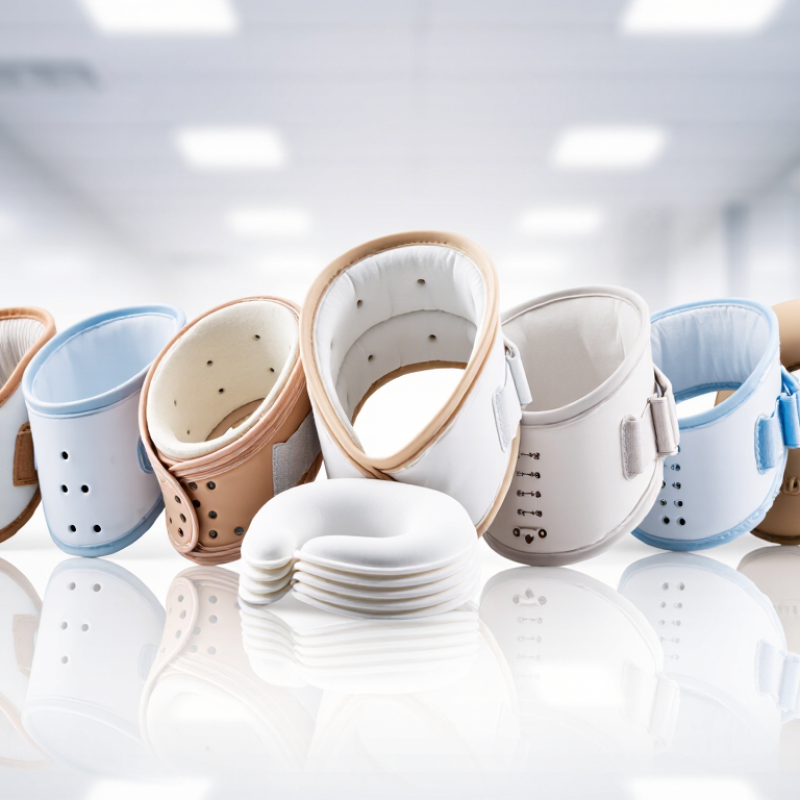
Top 10 Philadelphia Cervical Collar Suppliers Worldwide?

Philadelphia Cervical Collars: Definition, Design, and Medical Uses

A Philadelphia cervical collar is a rigid, two-piece neck orthosis designed to limit cervical spine movement. It supports the chin, jaw, and back of the head while transferring pressure toward the upper chest. Most designs include adjustable straps, ventilation openings, and firm plastic shells with soft contact padding. The front section supports the chin, while the rear section stabilizes the occipital area. Proper alignment matters.

Clinicians may use this collar after suspected neck trauma, during emergency transport, or after selected cervical procedures. It does not heal every neck problem. It mainly reduces unwanted motion while the patient receives assessment or treatment. A collar can look secure while fitting poorly. Excessive pressure may cause skin damage, swallowing difficulty, or breathing discomfort. Clinical judgment remains essential.

Tips: Choose the correct size using measured neck height and body shape. Check the jaw, shoulders, and skin regularly. Keep the head neutral during application. Do not adjust the collar casually after spinal injury. Reliable worldwide suppliers should provide sizing charts, material details, cleaning guidance, traceable quality records, and clear clinical instructions. Even experienced users can miss pressure points, especially during long transport. Reassessment is not optional.

Criteria for Evaluating Global Philadelphia Collar Suppliers

When evaluating global Philadelphia collar suppliers, start with clinical suitability rather than attractive pricing. A reliable supplier should explain sizing, neck support, ventilation, and patient comfort in practical terms. Product dimensions must match published measurements. Small errors can cause pressure near the jaw or shoulders.

Ask for material specifications, manufacturing controls, and independent test records. Check whether each production batch has traceable dates, inspection results, and packaging details. Regulatory documents should fit the destination market, not merely show a generic certificate. Experienced suppliers can provide clear instructions for fitting, cleaning, storage, and safe replacement. Their technical staff should answer clinical questions without making exaggerated promises.

Samples reveal details that catalogues hide. Feel the foam, inspect the fastening system, and test adjustment with gloved hands. Review delivery history, minimum order quantities, and contingency plans for shortages. Communication matters across time zones. A supplier that reports delays early may be more dependable than one offering the lowest quote.

Ask for references from hospitals, distributors, or rehabilitation professionals, while respecting confidentiality. Written complaint procedures and responsive after-sales support also indicate maturity. I have found that polished brochures can create false confidence. One weakness remains: supplier claims are difficult to verify without local inspection. Independent audits, repeat sampling, and documented performance reviews can reduce that uncertainty. Patient feedback should still influence the final assessment, because comfort problems may appear after several hours, not during a brief fitting.

Top 10 Philadelphia Cervical Collar Suppliers Worldwide

The Top 10 Philadelphia Cervical Collar Suppliers Worldwide should be compared by clinical reliability, not advertising claims. A dependable supplier provides clear sizing charts, material details, and documented quality controls. Products should support neutral neck alignment without creating pressure under the jaw. Look for breathable foam, secure closures, and smooth edges. These details matter during ambulance transport, emergency care, and short-term immobilization.

A strong supplier also offers traceable manufacturing records, responsive technical support, and consistent delivery schedules. Healthcare buyers should verify applicable medical-device certifications in their region. Independent testing is useful, especially for radiolucency, durability, and cleaning performance. However, supplier rankings can change quickly. Shipping delays, revised regulations, and inconsistent stock may affect real-world value. No ranking is perfect.

Tips: Measure the patient’s neck carefully, then compare the measurement with the supplier’s fitting guide. Check skin contact points after application. Redness, numbness, or breathing discomfort requires prompt professional review. Ask whether replacement parts are available before placing a large order. A lower price may seem attractive, but weak closures can create extra clinical work. I would also request samples when possible. Product photographs rarely reveal stiffness, fit, or comfort accurately.

Top 10 Philadelphia Cervical Collar Suppliers Worldwide

This supplier-neutral chart presents an editorial weighting model for comparing Philadelphia cervical collar suppliers. It focuses on objective purchasing criteria rather than displaying company or brand data.

Fit and sizing receive the highest weighting because a cervical collar must provide appropriate immobilization without excessive pressure. Material safety, product compliance, supply reliability, and documentation are also important when evaluating international suppliers.

Product Features, Materials, Sizes, and Customization Options

Philadelphia cervical collar suppliers increasingly compete through fit, materials, and customization rather than appearance alone. A 2024 Fortune Business Insights estimate placed the global cervical collars market near US$1.6 billion, with continued growth linked to trauma care and rehabilitation demand. Market figures vary between reports, so buyers should check methodology and reporting year.

Reliable suppliers should describe shell materials, padding density, ventilation, and closure strength. Common designs combine polyethylene or polypropylene shells with medical-grade foam and washable fabric covers. Some models add aluminum reinforcement for controlled motion restriction. Not every stiff collar improves comfort. Poor trimming can create pressure beneath the jaw or behind the ears.

Sizing should use measured neck circumference, chin height, and shoulder profile, not age alone. Adult, pediatric, and bariatric ranges need separate fitting guidance. Custom options may include printed sizing scales, radiolucent components, color coding, antimicrobial covers, and packaging for clinical protocols. ISO 13485 quality systems and documented biocompatibility testing support supplier credibility, but certification alone proves little about daily fit. I would request test reports, dimensional drawings, and sample units before ordering. Small fitting errors remain easy to overlook.

How Healthcare Buyers Can Compare and Select Suppliers

Top 10 Philadelphia Cervical Collar Suppliers Worldwide?

Healthcare buyers should compare cervical collar suppliers by clinical suitability, not location alone. A reliable supplier should provide clear sizing charts, material specifications, and documented product testing. Ask how the collar supports the neck, limits movement, and maintains comfort during extended wear. A practical sample review can reveal pressure points, weak fasteners, or confusing adjustment instructions.

Review quality records carefully. Check manufacturing certifications, batch traceability, inspection procedures, and complaint-handling processes. Request evidence of consistent production, not only attractive catalog images. Confirm delivery capacity, packaging protection, replacement policies, and communication speed. A supplier may offer a lower price but create hidden costs through poor fit, damaged cartons, or delayed replenishment. That risk deserves attention.

Tips: Build a comparison sheet with price, lead time, sizing range, testing documents, and service response. Ask for samples in several sizes and involve nurses or therapists in the evaluation. Record fitting time and patient feedback. Do not rely on one impressive demonstration. Some details are easy to miss. Recheck cleaning instructions, label clarity, and storage requirements before approval. A polished website does not prove dependable performance, and even experienced teams can overlook small usability problems.

Top 10 Philadelphia Cervical Collar Suppliers Worldwide? - How Healthcare Buyers Can Compare and Select Suppliers
An anonymized procurement benchmark for Philadelphia healthcare buyers. The ranking is based on supplier-selection criteria rather than company names or brands. Commercial terms, regulatory status, inventory, and shipping performance should be verified directly before purchase.
Rank Anonymized Supplier Profile Primary Supply Region Typical Cervical Collar Portfolio Common Materials Size Coverage Typical MOQ Indicative Production Lead Time Documentation Buyers Should Request Philadelphia Delivery Considerations Private-Label Capability Buyer Evaluation Score
1 Profile A — North American Medical Distributor United States and Canada Foam collars Adjustable collars Post-injury support Medical-grade polyurethane foam, cotton or polyester covers, hook-and-loop closures Neck circumference and height-based adult sizing; pediatric options may be available Usually 1–10 cartons for stocked items 1–5 business days for available inventory; 4–10 weeks for custom orders FDA establishment or product information where applicable, ISO 13485 evidence, product specifications, lot traceability, testing reports Domestic ground freight; lower customs risk; delivery commonly suitable for urgent replenishment Usually available for institutional packaging and labeling programs 9.2 / 10
2 Profile B — European Certified Orthopedic Manufacturer European Union Semi-rigid collars Adjustable models Rehabilitation supports Polyethylene or polypropylene support components, foam padding, breathable textile covers Small, medium, large, extra-large; adult and selected pediatric sizes Typically 50–200 units per model 4–8 weeks, excluding regulatory or artwork review EU Declaration of Conformity, applicable MDR technical documentation, ISO 13485 certificate, risk-management and biocompatibility evidence Air or ocean freight to the United States; allow time for customs clearance and importer-of-record review Commonly available subject to artwork approval and minimum order quantities 9.0 / 10
3 Profile C — East Asian OEM and Export Manufacturer East Asia Foam collars Rigid collars OEM product lines PU foam, molded plastic, nylon textiles, hook-and-loop fastening systems Broad adult size range; custom dimensions may be possible Commonly 300–1,000 units per SKU 6–12 weeks, plus international transit ISO 13485 certificate, material declarations, inspection records, test reports, labeling samples, shipping documents Ocean freight offers lower unit cost; air freight is faster but increases landed cost Strong capability for custom colors, packaging, labels, and product dimensions 8.7 / 10
4 Profile D — U.S. Contract Medical Manufacturer United States Custom supports Private-label collars Clinical trial supply Medical textiles, closed-cell foam, engineered thermoplastics, skin-contact adhesives where applicable Customer-defined sizing and fit specifications Often 100–500 units for initial production runs 8–16 weeks, depending on tooling, validation, and quality requirements Quality agreement, design-history documentation where applicable, process validation, inspection plan, traceability records Shorter domestic logistics chain and easier supplier audits for Philadelphia buyers Strong; suitable for custom development and controlled production programs 8.6 / 10
5 Profile E — South Asian Orthopedic Goods Exporter South Asia Economy foam collars Soft supports Hospital bulk packs Foam rubber or PU foam, cotton blends, polyester covers, plastic reinforcement pieces Small through extra-large; pediatric availability varies Usually 200–1,000 units per design 6–10 weeks, plus ocean or air transit Factory quality records, material composition, product inspection reports, applicable market-registration documents, packing list and certificate of origin Competitive factory pricing; buyers should calculate duty, freight, inspection, and inland delivery costs Often available for basic packaging and color customization 8.1 / 10
6 Profile F — Latin American Regional Supplier Latin America Soft collars Semi-rigid supports Clinic replenishment packs Foam, elastic textiles, molded plastic components, washable fabric covers Standard adult sizes; limited pediatric selection Typically 50–300 units per model 4–9 weeks Product specification sheet, quality certificate, country-of-origin documents, packaging and labeling information May require transshipment or additional customs coordination for delivery to Philadelphia Moderate; generally focused on packaging rather than product redesign 7.8 / 10
7 Profile G — Middle Eastern Medical Trading Supplier Middle East and North Africa Soft cervical supports Adjustable braces General orthopedic items Foam, textile laminates, thermoplastic inserts, hook-and-loop closures Adult small through extra-large; availability depends on warehouse stock Usually 50–500 units 3–8 weeks for stocked or regularly imported items Manufacturer authorization, product catalog, certificate of conformity, batch records, labeling and storage requirements International freight routes may be longer; confirm temperature, humidity, and storage controls where relevant Limited to moderate, commonly involving carton and label changes 7.6 / 10
8 Profile H — Australian and New Zealand Rehabilitation Supplier Australia and New Zealand Rehabilitation collars Postoperative supports Reusable models Breathable foam, washable textiles, molded polymer supports, antimicrobial fabrics where specified Adult sizing with clear fitting guides; selected pediatric models Typically 25–200 units per SKU 5–10 weeks, plus international transit Product instructions, cleaning guidance, material declarations, quality-system evidence, conformity documentation for the target market Longer transit distance; air freight may be preferred for smaller urgent orders Moderate; may support institutional packaging and distributor labeling 7.5 / 10
9 Profile I — Turkish Orthopedic Manufacturer Türkiye and surrounding export markets Semi-rigid collars Foam supports Adjustable rehabilitation products Foam padding, molded polymer, elastic webbing, textile covers Small through extra-large; adult-focused portfolio Usually 100–500 units per design 5–9 weeks, excluding transit and import processing ISO 13485 evidence, conformity documents, product drawings, material safety information, quality inspection records Air and ocean options are available; compare landed cost with European and Asian alternatives Moderate to strong for standard product modifications 7.4 / 10
10 Profile J — Online B2B Medical Marketplace Supplier Multiple manufacturing countries Basic foam collars Generic adjustable collars Small trial orders Foam, fabric, plastic inserts, hook-and-loop fastening materials Common adult sizes; size consistency must be verified As low as 10–100 units, depending on the seller 2–8 weeks before international delivery Actual manufacturer identity, certificates, test reports, sample approval, lot information, labeling compliance, purchase-order terms Transit time and import responsibility vary significantly; use pre-shipment inspection for larger orders Varies widely; often limited to packaging, color, or logo application 6.9 / 10
Recommended buyer checks: confirm intended use, sizing accuracy, skin-contact materials, cleaning instructions, packaging integrity, applicable U.S. regulatory requirements, supplier quality-system evidence, product liability coverage, sample performance, total landed cost, and delivery reliability before approving a supplier.

FAQS

What is a Philadelphia cervical collar?

It is a rigid, two-piece neck orthosis. It limits cervical movement during assessment, transport, or selected recovery periods.

How does the collar support the neck?

The front supports the chin. The rear stabilizes the back of the head. Pressure transfers toward the upper chest.

When might clinicians use this collar?

Clinicians may use it after suspected neck trauma, during emergency transport, or after selected cervical procedures.

Does the collar heal every neck problem?

No. It mainly reduces unwanted movement while professionals assess or treat the patient.

How should the correct collar size be chosen?

Measure neck height and consider body shape. Compare the measurement with the supplier’s fitting guide.

What problems can poor fitting cause?

Excessive pressure may cause skin damage, swallowing difficulty, or breathing discomfort. A secure appearance proves little.

What should users check after applying the collar?

Keep the head neutral. Check the jaw, shoulders, and skin regularly. Watch for redness, numbness, or discomfort.

How can healthcare buyers evaluate a supplier?

Review sizing charts, material details, quality records, cleaning instructions, and traceable production information. Ask practical clinical questions.

Why are product samples useful?

Samples reveal foam feel, stiffness, edge smoothness, and closure strength. Catalogues often hide these details.

Can supplier rankings guarantee the best choice?

No ranking is perfect. Delivery problems, changing regulations, and inconsistent stock can alter real-world value. Independent checks remain necessary.

Conclusion

This guide explains the purpose and design of the Philadelphia Cervical Collar, a medical support device commonly used to help stabilize the neck after injury, surgery, or suspected cervical spine trauma. It examines essential design elements, including anatomical fit, ventilation, adjustable closures, patient comfort, and compatibility with clinical care. The article also outlines how healthcare buyers can evaluate international suppliers by reviewing product quality, material safety, manufacturing consistency, certifications, production capacity, delivery reliability, and customer support.

A global comparison of the top 10 Philadelphia Cervical Collar suppliers focuses on practical differences in product features, materials, available sizes, and customization options. Buyers will learn how to assess foam density, surface coverings, radiolucent components, packaging, and sizing systems while considering the needs of hospitals, distributors, and emergency-care providers. The final section presents a clear selection framework that balances clinical suitability, supplier dependability, total cost, regulatory documentation, and long-term service.


Evelyn

Evelyn

Evelyn is a dedicated marketing professional with extensive knowledge of the company’s products, services, and market solutions. Through a combination of strategic thinking, customer insight, and clear communication, Evelyn helps audiences understand how the company supports businesses in achieving......