Discover industry trends, product guides, and medical device technical insights.
Technical updates and clinical applications for modern orthopedic surgery.
Best practices for orthopedic braces, splints, and patient care equipment.
I can write the introduction, but no source article or verifiable expert quotation was provided. To avoid inventing an expert or attributing fabricated words to a real person, please share the article or the expert quote you want included.
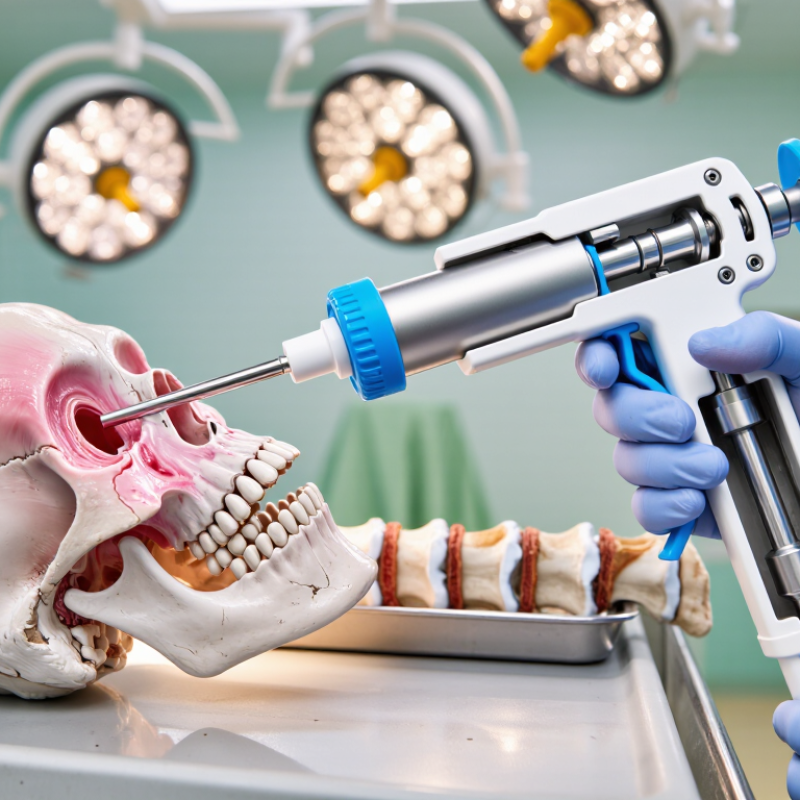
A bone cement injector gun is a medical device used to deliver prepared bone cement into a targeted area of bone. It is commonly used during procedures such as vertebroplasty or kyphoplasty to treat certain painful vertebral compression fractures. The cement, often a fast-setting material, is prepared separately and loaded into the injector. A handle and plunger then help the clinician push it through a narrow nozzle. Not a mixing tool.
The gun gives the clinician controlled pressure and helps direct small amounts of cement into the treatment site. Its parts and operation vary by device, and cement consistency changes as it sets, so timing matters. During the procedure, imaging helps the clinical team track placement and watch for cement moving beyond the intended area. The tool does not make placement risk-free. That distinction is important: the injector supports delivery, while safe use also depends on clinical judgment, patient anatomy, and careful monitoring. The name sounds simple, but the task is quite precise.
| Dimension | Description |
|---|---|
| What it is | A hand-operated delivery instrument designed to advance prepared bone cement through a compatible syringe or cartridge and into a delivery cannula. |
| Primary purpose | To provide controlled delivery of bone cement into a targeted bone site during procedures for which the injector and cement system are indicated. |
| Common clinical context | Vertebral augmentation procedures, including vertebroplasty and kyphoplasty, may use an injector to deliver bone cement into a vertebral body through a cannula. |
| How it works | The operator actuates the handle or drive mechanism to move a plunger, pushing cement from the connected reservoir through the delivery pathway. The exact mechanism depends on the device design. |
| Typical workflow | Cement is prepared according to its instructions for use, loaded into a compatible delivery system, and injected through a positioned cannula under appropriate imaging guidance. |
| What it does not do | The injector delivers cement; it does not itself position the cannula, diagnose a fracture, or create a cavity. In kyphoplasty, cavity creation with a balloon is a separate procedural step when used. |
| Important compatibility factors | Compatibility can depend on the cement formulation, viscosity, syringe or cartridge, cannula, and injector design. The device and cement instructions for use should be followed. |
| Key safety consideration | Cement leakage and other complications are recognized procedural risks. Injection technique, timing, imaging, and clinical judgment are determined by qualified healthcare professionals. |
A bone cement injector gun helps a trained clinician deliver prepared cement through a narrow access cannula during procedures such as vertebral augmentation. The gun supports controlled pressure on a plunger, moving cement from a syringe into the treatment site. It does not place cement by itself; the clinician guides the cannula and monitors delivery with imaging.
Small movements matter. The operator advances the plunger gradually, watching the cement’s flow and its position on the screen. Cement thickens as it sets, so timing and resistance can change during the procedure. A smooth, steady push may help with control, but forceful injection can increase the risk of cement moving beyond the intended area. The appropriate pace depends on the cement, the device, and the patient’s anatomy.
The injector is assembled and handled using sterile technique and the device’s instructions. Before delivery, the clinician checks the connection and confirms that the cement is ready for use. During injection, imaging provides real-time guidance, while changes in resistance can offer an additional cue—not a substitute for imaging. This process is precise, but not perfectly predictable. Cement behavior can vary, so careful observation and clinical judgment remain essential.
A bone cement injector gun is used during vertebroplasty and kyphoplasty to deliver cement through a cannula into a fractured vertebra. In vertebroplasty, the clinician injects cement directly into the vertebral body. In kyphoplasty, a balloon first creates a cavity, which is then filled with cement. The gun helps control delivery, but imaging guidance and careful pressure management remain essential.
These procedures may be considered for selected patients with painful vertebral compression fractures that have not improved with conservative care. The American College of Radiology’s 2022 Appropriateness Criteria addresses vertebral augmentation for symptomatic fractures, including cases with MRI evidence of active injury. Small details matter. Cement that escapes the bone can cause complications, so clinicians monitor its spread under imaging and stop injection when needed. A Cochrane review of 21 trials, including five placebo-controlled trials with 541 participants, found no clinically important pain benefit from vertebroplasty at one month compared with placebo. That finding makes patient selection especially important; the device is a delivery tool, not a guarantee of relief. Sacroplasty may also use cement delivery systems for selected sacral fractures, though technique and risks differ. The workflow is exacting, and not every fracture fits the same approach.
A bone cement injector gun delivers prepared bone cement through a cannula during vertebral augmentation. Its controlled push helps the clinician place cement gradually, rather than squeezing it directly from a syringe. Control matters: a 2017 meta-analysis in Medicine reviewed 22 studies and reported cement leakage rates of 41.1% for vertebroplasty and 9.1% for kyphoplasty. Rates vary with imaging methods and technique, so these figures are not a prediction for an individual procedure. Still, they show why steady delivery is important. Small parts matter.
The barrel holds the cement cartridge, while the plunger presses against it to move cement forward. A handle gives the operator a firm grip; a trigger or screw-drive mechanism converts hand pressure into controlled plunger movement. Some designs use a ratchet, helping maintain pressure between small adjustments. At the front, a connector couples the injector to the delivery cannula, which carries cement into the target vertebra. These parts must fit securely and move smoothly. Even a well-made injector cannot correct poor positioning, and cement may begin to thicken during use. That timing is easy to underestimate. Follow the device instructions and the cement’s working-time guidance for the specific procedure.
A bone cement injector gun helps deliver bone cement, commonly PMMA, through a delivery cannula into a targeted area, such as a vertebral body during vertebroplasty or kyphoplasty. The chart shows a typical use sequence—not time, volume, or performance measurements.
Main components and functions: The barrel holds the cement; the handle or drive mechanism advances the plunger to push cement forward; and the outlet or connected cannula directs cement toward the treatment site. Designs and loading steps vary by device and procedure.
What Is a Bone Cement Injector Gun Used For?
Safety and Handling Considerations
A bone cement injector gun delivers viscous bone cement into prepared bone during procedures such as vertebroplasty and cemented fixation. Its controlled plunger helps clinicians apply cement gradually, but it does not remove the risks of pressure or leakage. A 69-study systematic review reported radiographic cement leakage in about 41% of vertebroplasty cases and 9% of kyphoplasty cases. These figures vary by technique and imaging method; many detected leaks cause no symptoms. Still, they show why placement and controlled delivery matter.
Before use, trained staff should confirm that the injector is correctly assembled and compatible with the cement and procedure. Follow the device instructions and local clinical protocols. Do not force the plunger if resistance changes suddenly; stop and assess the cause. Keep hands clear of moving parts, and handle uncured cement with suitable protective equipment. Ventilation matters, too. NIOSH lists a recommended exposure limit for methyl methacrylate of 100 ppm over a work shift, with a 125 ppm short-term limit. Small steps matter. A rushed pause is still a risk, especially when cement viscosity changes during preparation.
It delivers prepared bone cement into a targeted bone area. The handle and plunger push cement through a narrow nozzle. It is not a mixing tool.
Clinicians may use it during vertebroplasty or kyphoplasty for certain painful vertebral compression fractures. Cemented fixation may also involve cement delivery.
Its plunger helps clinicians deliver cement with controlled pressure and in small amounts. Imaging helps the team monitor placement. It does not make placement risk-free.
No. One review reported radiographic leakage in about 41% of vertebroplasty cases and 9% of kyphoplasty cases. Rates vary, and many detected leaks cause no symptoms. The figures are worth considering, not treating as a prediction for every patient.
Bone cement can set quickly, and its consistency changes over time. That can affect delivery. A pause to reassess may matter.
They should confirm correct assembly and compatibility with the cement and procedure. They should follow device instructions and local clinical protocols.
Do not force it. Stop and assess the cause according to clinical protocols. Small details can matter here.
Keep hands clear of moving parts and use suitable protective equipment for uncured cement. Ventilation matters. Recommended methyl methacrylate exposure limits are 100 ppm over a work shift and 125 ppm short-term. These limits do not replace local safety procedures.
A Bone Cement Injector Gun is a medical device used to deliver bone cement into a targeted area during certain orthopedic procedures. Its mechanism applies controlled pressure to move cement through a barrel and delivery tube, allowing clinicians to place it with precision. The amount and rate of delivery can be adjusted to suit the procedure and the cement’s working consistency.
The device may be used in procedures such as vertebroplasty and kyphoplasty, where cement is introduced into a weakened vertebra. Typical components include a handle and trigger, a cement-holding cartridge, a plunger that advances the material, and a connector or nozzle that attaches to the delivery pathway. Safe use depends on correct assembly, careful control of injection pressure and volume, and monitoring cement placement with appropriate imaging. Clinicians should follow the device’s instructions, use suitable protective equipment, and handle and dispose of materials according to clinical protocols.