
Explore our CE & ISO certified orthopedic implants, joint replacement instruments, and specialized surgical sets designed for precision clinical execution.
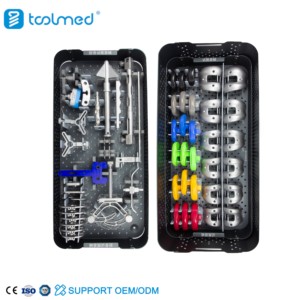
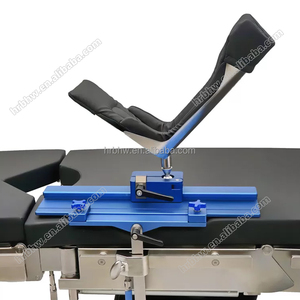
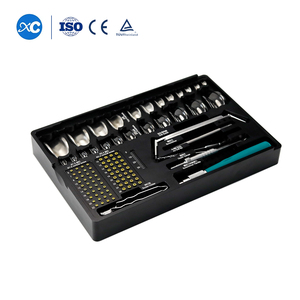
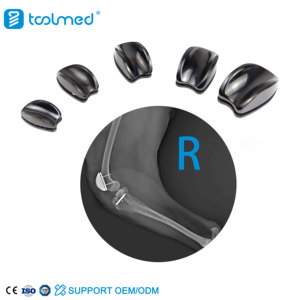
The global demand for high-precision spinal fixation systems and reconstructive orthopedic implants has experienced unprecedented growth driven by aging demographics, increased prevalence of degenerative disc disorders (DDD), complex spinal deformities (scoliosis, kyphosis), and traumatic spinal injuries. As a leading manufacturer and exporter rooted in advanced medical metallurgy, China has evolved into a global powerhouse for high-tier medical device manufacturing. Today's top-tier Chinese original equipment manufacturers (OEM) and original design manufacturers (ODM) leverage Swiss multi-axis CNC machining centers, additive manufacturing (3D printing), and micro-surface plasma oxidation to yield bio-implants that rival and frequently exceed Western regulatory benchmarks.
Modern spinal fixation requires absolute mechanical integrity, dynamic load distribution, and long-term biocompatibility. Whether implementing thoracolumbar pedicle screw systems, minimally invasive surgery (MIS) cannulated instrumentation, dynamic occipitocervical devices, or PEEK/Titanium interbody fusion cages, international clinical teams depend on high-yield endurance performance. This paper provides hospital procurement directors, orthopedic distributors, and medical device brand owners with an in-depth technical breakdown of China's spinal manufacturing engineering, material science advances, regulatory frameworks, and OEM procurement trends.
Key Insight for Procurement Officers: By standardizing procurement with direct China factories certified under ISO 13485 and European MDR (EU 2017/745), healthcare organizations lower instrument and implant acquisition costs by 35% to 50% while guaranteeing zero compromise in biomechanical tensile strength, thread shear tolerances, or fatigue resistance.
The clinical efficacy of a spinal fixation screw or rod assembly relies heavily on substrate selection. Premier Chinese manufacturing facilities utilize exclusively implant-grade certified raw materials:
Understanding the engineering mechanics behind top-performing pedicle screws, locking mechanisms, and interbody constructs.
Engineered with differential pitch profiles, dual-thread pedicle screws cut insertion time by 50% while increasing pull-out strength by over 28% in osteoporotic bone beds via micro-flute compaction.
Features spherical head articulation permitting up to 55 degrees of multidirectional trajectory flexibility. Precision friction locking prevents unwanted head-flopping during intraoperative rod seating.
Reverse buttress and square-thread locking caps direct clamping forces downward rather than splaying the tulip walls, virtually eliminating cross-threading and postoperative back-out risks.
As healthcare purchasing networks move toward value-based procurement, buyers are recalibrating their vendor matrices. Sourcing directly from top-tier Chinese spinal fixation factories is no longer merely a cost-reduction exercise; it has become a core strategy for maintaining supply chain agility and clinical competitiveness.
Surgeons globally are favoring MIS techniques over traditional open thoracolumbar procedures. Consequently, global procurement orders for percutaneous cannulated pedicle screws, extended-tower reduction screws, and specialized radiolucent carbon fiber retractor sets have grown by 18.4% year-over-year. Chinese factories have responded by integrating real-time fluoroscopy-compatible titanium guides and custom dilator kits into standard OEM offerings.
Traditional machined PEEK cages are rapidly losing market share to 3D printed porous titanium cages. Utilizing Selective Laser Melting (SLM) technology, modern Chinese production lines construct biomimetic lattice structures with controlled porosity (60-80%) and pore sizes ranging from 400 to 700 microns. This architectural blueprint mimics human cancellous bone, stimulating rapid osteointegration and vascular ingrowth directly through the matrix.
Pre-sterilized, individually packaged implants (Gamma or ETO sterilized in Class 7 cleanrooms) represent the fastest-growing logistics request among European and North American distributors. Pre-packed implants reduce hospital sterilization costs, eliminate re-sterilization degradation, and guarantee 100% material traceability back to the raw titanium ingot batch number.
OEM Customization Capability: Leading factories offer comprehensive private label services, including laser etching of custom lot numbers, custom colored anodization (gold, dark blue, magenta for sizing identification), customized tray design, and tailored surgical technique manuals.
As an industry leader in orthopedic fixation and spinal device production, our manufacturing plant operates at the intersection of metallurgical mastery, ultra-precision engineering, and stringent regulatory compliance.
Our production floor is anchored by multi-axis CNC machines from Citizen (Japan) and Star (Japan), capable of achieving micro-tolerances down to ±0.003mm. Every batch of spinal screws, locking hooks, connecters, and cervical plates undergoes rigorous mechanical and dimensional validation:
Clear answers to critical technical, regulatory, and commercial procurement inquiries from hospital groups, importers, and brand owners.
Our manufacturing facility is fully certified under ISO 13485:2016 Quality Management Systems for Medical Devices. Most of our core spinal fixation systems, pedicle screws, and cervical plates carry full CE marking (under EU MDR 2017/745) and US FDA 510(k) clearances, allowing seamless commercial entry into European, Latin American, Middle Eastern, and Southeast Asian healthcare sectors.
For standard spinal implants under existing factory designs, our MOQ starts as low as 50 to 100 pieces per specification. For custom OEM/ODM projects requiring specialized dimensions, unique drive mechanisms, or private packaging, our initial MOQ is typically 500 units per line item. Standard manufacturing lead time is 3 to 4 weeks, with expedited 14-day production runs available for urgent contract tenders.
Every batch of raw titanium (Ti-6Al-4V ELI) and PEEK material is sourced directly from accredited global suppliers accompanied by chemical composition and mechanical test certificates (Mill Test Certificates compliant with EN 10204 3.1). We assign a unique Laser Lot ID to every individual implant, maintaining 100% digital traceability from raw bar stock to final sterilized pouch.
Yes. We design, engineer, and manufacture dedicated ergonomic surgical instrument sets (including rod benders, pedicle awls, taps, screwdrivers, counter-torque wrenches, and distraction/compression calipers) housed in custom autoclavable aluminum sterilization trays. Instrument sets can be customized with your brand logo, custom color handles, and specialized tray layouts.
We offer a full spectrum of advanced surface treatments, including Type II anodic oxidation for fatigue-resistant titanium surfaces, hydroxyapatite (HA) plasma spraying to accelerate bone fusion, micro-sandblasting for optimal surface roughness, and specialized PVD (Physical Vapor Deposition) coatings for enhanced wear resistance on dynamic joint surfaces.
We support all standard Incoterms including EXW, FOB (Shanghai/Ningbo/Shenzhen), CIF, DDP, and DAP via leading international medical couriers (DHL, FedEx, UPS) as well as air freight and ocean logistics partners. All products are packaged in shockproof, temperature-stable export cartons compliant with international medical device transit standards (ISTAA certified).
Partner with China's premier spinal fixation factory. Get immediate factory-direct wholesale pricing, CAD drawings, compliance certificates, and customized OEM project evaluations within 24 hours.
Send an Inquiry