Explore our CE and FDA certified OEM wound care portfolio. Designed for gentle removal, superior exudate absorption, and prevention of wound maceration.
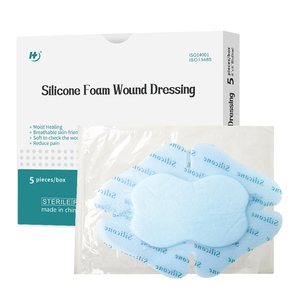
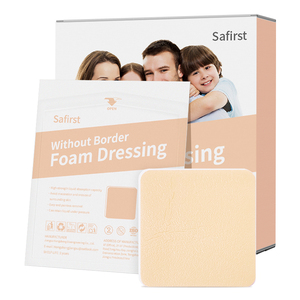
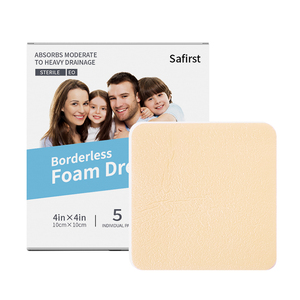
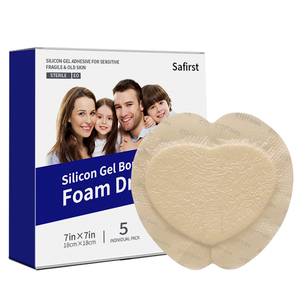
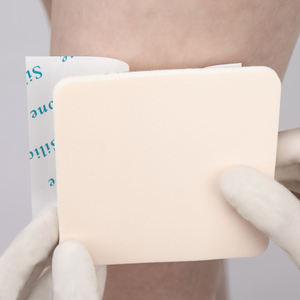
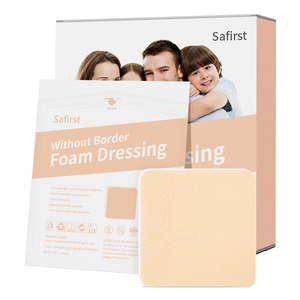
In contemporary advanced wound management, chronic exudative wounds—such as pressure ulcers (bed sores), diabetic foot ulcers (DFUs), venous leg ulcers (VLUs), and surgical incision sites—present intricate biological challenges. The primary clinical objective is to maintain an optimal moist wound healing environment while mitigating the risk of tissue maceration, peri-wound skin stripping, and bacterial colonisation.
Clinical Information Gain: Modern silicone foam wound dressings utilize a multi-layer architectural construction where the perforated soft silicone contact layer functions as an atraumatic fluid transport interface. It adheres gently to dry intact skin without anchoring to the delicate, regenerating granulation tissue of the wound bed.
Our OEM manufacturing process incorporates up to five distinct functional layers designed to optimize fluid dynamics and moisture vapor transmission rates (MVTR):
Traditional gauze or standard foam dressings often suffer from lateral fluid wicking. When fluid migrates laterally, it comes into prolonged contact with healthy peri-wound tissue, leading to maceration—a degradation of skin integrity caused by excessive moisture. Silicone foam dressings manufactured by our facility utilize vertical capillary fluid absorption technology. Fluid is pulled directly upward into the polyurethane core, sealing the edges and preventing horizontal leakage.
For B2B procurement teams, hospital purchasing groups, and private label distributors, evaluating technical metrics ensures product efficacy and regulatory compliance across target markets.
| Performance Metrics | OEM Silicone Foam Dressing | Traditional Hydrocolloid | Standard Non-Adhesive Foam | Surgical Gauze Pad |
|---|---|---|---|---|
| Absorbency (g/100cm²) | 120 - 160 g | 40 - 60 g | 80 - 110 g | 15 - 25 g |
| Epidermal Stripping Risk | Near Zero (Soft Silicone) | Moderate to High | Low (Requires tape) | High (Dries into tissue) |
| MVTR (Breathability) | 3,500 - 8,000 g/m²/24h | < 1,000 g/m²/24h | 2,000 - 4,000 g/m²/24h | Uncontrolled |
| Waterproof / Bacterial Shield | Yes (Polyurethane Film) | Yes | Varies by Backing | No |
| Clinical Wear Time | Up to 7 Days | 3 to 5 Days | 3 to 5 Days | Daily / Multiple daily |
| Atraumatic Pain Index (1-10) | 1.2 (Painless) | 6.5 (Painful) | 3.0 (Moderate) | 8.5 (Severe pain) |
As healthcare systems worldwide focus on reducing hospital-acquired pressure injuries (HAPIs) and total cost of care, global procurement strategies for silicone foam dressings are undergoing four pivotal transformations:
Hospital buyers are rapidly shifting toward Ionic Silver (Ag+) infused silicone foam matrices. Silver foam dressings provide sustained antimicrobial activity against MRSA, VRE, and Pseudomonas aeruginosa, reducing surgical site infection (SSI) readmission rates.
Single-piece NPWT silicone foam dressings equipped with integrated port connectors are gaining significant market share. OEM manufacturers capable of producing sealed port dressings are capturing high-margin surgical market tenders.
Beyond standard square pads, demand for multi-lobe sacral, heel, tracheostomy, and articular joint shapes has expanded by 34% year-over-year. Prophylactic use of silicone foam to prevent medical device-related pressure injuries (MDRPI) in ICUs is now standard protocol.
As a specialized medical contract manufacturer with decades of export excellence, we offer turnkey private label solutions tailored to global brand specifications, regional regulatory compliance, and market-specific price positioning.
We provide full custom die-cutting for bordered, non-bordered, sacral, heel, tracheostomy, and custom surgical geometry. Sizes range from 5x5 cm up to 30x30 cm, with custom foam thickness options from 2mm to 6mm.
Tuning tackiness levels (peel force 0.4 N – 1.2 N) to match clinical applications (e.g., ultra-gentle formulations for pediatric/neonatal vs. high-tack border adhesives for mobile orthopedic joints).
Cleanroom Class 100,000 processing with choices of EO (Ethylene Oxide) or Gamma Irradiation sterilization. Full custom blister packaging, pouch printing, box design, and GS1 UDI barcoding support.
Regulatory & Compliance Framework: Our manufacturing facilities maintain ISO 13485:2016 certification, full compliance with EU MDR 2017/745, FDA 510(k) clearance documentation, and ISO 10993 biocompatibility testing reports (Cytotoxicity, Sensitization, Irritation).
Partner with an ISO 13485 certified manufacturer for superior wound management solutions. Contact our engineering and sales teams today to request free product samples, technical data sheets, and competitive B2B factory pricing.