Discover our OEM/ODM certified surgical solutions, joint prostheses, and trauma management systems engineered for international hospital networks and orthopedic distributors.


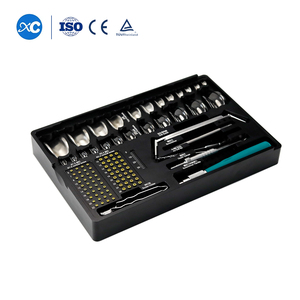
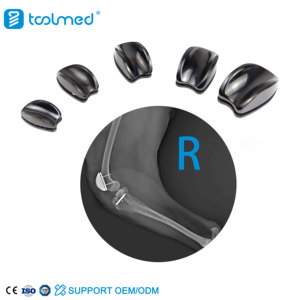
Modern orthopedic trauma surgery relies heavily on Intramedullary (IM) Nailing Systems as the gold standard for stabilizing long bone fractures of the femur, tibia, and humerus. Designed to deliver load-sharing internal fixation, IM nails allow early functional weight-bearing while preserving the periosteal blood supply. As global healthcare infrastructure expands, surgical demand for high-precision, bio-compatible, and anatomically contoured intramedullary fixation systems is accelerating at an unprecedented CAGR of 6.8% globally.
For B2B medical buyers, orthopedic brand owners, and hospital procurement managers, partnering with qualified OEM (Original Equipment Manufacturer) and ODM (Original Design Manufacturer) partners is essential. Global regulatory tightening—such as EU MDR compliance and stringent FDA 510(k) auditing—requires contract manufacturers to deliver unmatched dimensional precision (+/- 0.005mm tolerances), metallurgical purity, and comprehensive technical documentation.
Closed insertion techniques preserve soft tissue integrity and fracture hematoma, fostering accelerated callus formation and reduced surgical trauma.
Positioned along the neutral central axis of the bone, IM nails withstand high torsional, bending, and axial strain significantly better than eccentric locking plates.
Fully certified raw material lots (ISO 5832-3 / ASTM F136) combined with laser-etched UDI tracking guarantee zero-defect clinical safety.
The success of an intramedullary nailing system hinges on metallurgical selection, fatigue resistance, and geometric contouring. Medical-grade alloys must offer low elastic modulus to mitigate stress shielding while providing ultra-high tensile yield strength to endure repetitive cyclical loads.
| Material Property | Titanium Alloy (Ti-6Al-4V ELI / ISO 5832-3) | Stainless Steel (316LVM / ISO 5832-1) | PEEK Composite (Radiolucent) |
|---|---|---|---|
| Elastic Modulus (GPa) | 110 (Closer to cortical bone ~18 GPa) | 210 (Higher stress shielding risk) | 18 - 22 (Near-native bone match) |
| Tensile Yield Strength (MPa) | > 795 MPa | > 690 MPa | > 170 MPa |
| Fatigue Resistance | Exceptional (>10,000,000 stress cycles) | High (Susceptible to crevice corrosion) | Moderate (Requires continuous fiber reinforcement) |
| MRI / CT Compatibility | Minimal Artifacts (Superior diagnostic clarity) | Significant Artifact Distortions | Zero Artifacts (Fully Radiolucent) |
| Biocompatibility Profile | Outstanding osseointegration & inertness | Standard clinical safety | Highly bio-inert |
As a leading orthopedic medical equipment exporter and contract manufacturer—headquartered in Vadodara, Gujarat, India, with over three decades of operational excellence since 1994 (Bharucha Associates / Tlamelo Medical)—we provide end-to-end OEM and ODM services for global medical brand owners and purchasing organizations.
State-of-the-art multi-axis milling centers guarantee micrometer-level precision for complex locking slot geometries, thread pitches, and cannulated cores.
Type II electrochemical anodization enhances surface hardness, reduces galling friction, and enables color-coded surgical identification for varying nail diameters.
Sterile double-blister barrier packaging validated for EO (Ethylene Oxide) or Gamma Radiation, ensuring shelf-life integrity up to 5 years.
Strategic purchasing managers in hospital groups and distributor networks must anticipate technical paradigm shifts when issuing tenders or negotiating long-term contract manufacturing agreements.
Traditional steel targeting jigs obscure fluoroscopic intra-operative imaging. Procurement is rapidly shifting toward radiolucent carbon-fiber composite targeting instruments that offer uninterrupted C-arm visibility during distal screw placement.
Next-generation intramedullary nails are incorporating embedded micro-strain gauges and passive RFID sensors to wirelessly monitor micro-motion, bone consolidation, and early implant mechanical failure without invasive re-operation.
Additive manufacturing (Selective Laser Melting - SLM) allows for custom intramedullary designs for severe segmental bone defects, featuring lattice-structured porous surfaces that stimulate rapid endosteal bone ingrowth.
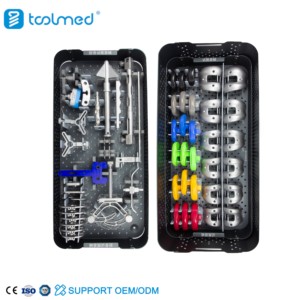
Hospitals are demanding streamlined inventory management. Modern sourcing favors universal instrument trays compatible across femoral, tibial, and humeral systems to reduce sterilizing container weights and operating room setup times.
Key technical and commercial inquiries addressed by our engineering and regulatory teams to streamline your contract manufacturing partnership.
Standard prototype development and CAD verification take approximately 2 to 3 weeks. Once production tooling and CNC programming are finalized, full-batch production (1,000–5,000 units) requires 4 to 6 weeks, including surface anodization, laser marking, and cleanroom packaging.
Our manufacturing facility strictly adheres to ISO 13485:2016 quality management standards. All raw titanium bar stock is accompanied by full mill test certificates (MTC) verifying ASTM F136 compliance. We provide complete Technical Files, Risk Analysis (ISO 14971), and Biocompatibility Reports (ISO 10993) to support your local CE, FDA 510(k), or national health authority registrations.
Yes. In addition to human orthopedic implants, we offer dedicated ODM/OEM manufacturing for veterinary orthopedics, including Patellar Groove Replacement (PGR) kits, canine femoral/tibial nails, and specialized stainless steel/titanium instrumentation designed for small animal and equine trauma care.
We provide comprehensive private label customization. Instruments can be fiber-laser etched with your brand logo, catalog numbers, and Unique Device Identification (UDI) barcodes. Surgical trays can be custom-milled from PPSU/aluminum or silicone-fitted to match your preferred surgical flow.
Elevate your medical product lineup with world-class titanium intramedullary nails, joint prostheses, and surgical power instrument systems engineered to rigorous ISO 13485 standards.
Contact Us