High-grade surgical clip appliers, prosthetic systems, and orthopedic instruments manufactured to stringent CE and ISO standards for global clinical excellence.
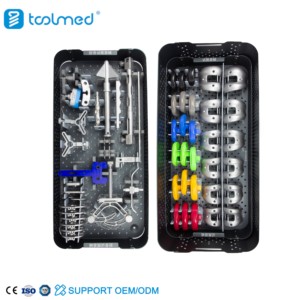
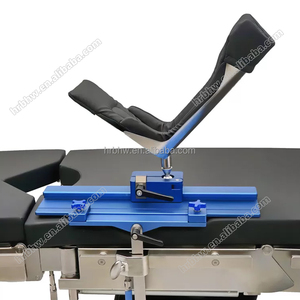
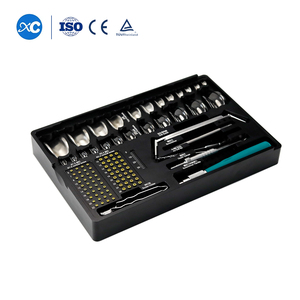
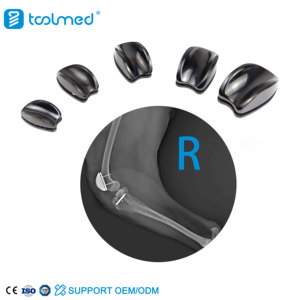
Discover how state-of-the-art OEM/ODM manufacturing elevates patient safety and surgical ergonomics.
Engineered with proprietary mechanical linkage systems that provide clear sensory feedback to surgeons, guaranteeing uniform vessel closure pressures and preventing clip displacement during tissue manipulation.
Utilizing implant-grade Titanium Alloy (Ti-6Al-4V ELI) and medical-grade acetal polymers, optimized for magnetic resonance imaging (MRI) compatibility and minimal tissue reaction post-ligation.
Integrated ergonomic rotation collars enable seamless single-finger 360-degree shaft rotation, allowing optimal angle adjustment in deep, narrow laparoscopic surgical fields.
In modern minimally invasive surgery (MIS), endoscopic procedures, and complex orthopedic interventions, rapid, reliable, and irreversible hemostatis remains a foundational requirement for clinical success. Surgical clip appliers and mechanical hemoclips serve as critical instruments across general surgery, urology, gynecology, cardiothoracic procedures, and orthopedic reconstruction.
This technical white paper examines the global procurement landscape, metallurgical advancements, structural engineering criteria, and OEM/ODM manufacturing paradigms governing high-performance surgical clip appliers. As healthcare systems globally demand higher cost-efficiency without compromising clinical efficacy, global contract manufacturers and exporters must bridge precision CNC machining with stringent ISO 13485 quality control protocols.
Surgical clip appliers are complex mechanical instruments designed to feed, position, align, and crimp metallic or polymeric ligation clips around vascular structures, ducts, and organ tissue bundles. The technical efficiency of a clip applier is evaluated based on three primary engineering pillars:
Conventional clip appliers often suffer from "scissoring" or unequal closure force, where the distal tip of the clip closes prior to the proximal hinge. This uneven closure can push vessels out of the clip jaws prior to full ligation or cause incomplete occlusion near the hinge. Advanced OEM/ODM clip applier designs feature parallel-closing jaw linkages that enforce equal downward pressure along the entire length of the clip legs. This guarantees uniform pressure distribution, ensuring zero vessel slippage and full mechanical occlusion.
During laparoscopic procedures, clip drop within the abdominal cavity presents significant operative risk and procedural delays. OEM clip appliers feature specialized groove geometry within the jaw tip and micro-embossed clip surfaces. The interaction between the applier's internal spring-loaded holding mechanism and the clip's lateral ribs ensures the clip remains securely seated in the jaw at any spatial orientation, even during rapid instrument movement.
Surgeons performing long laparoscopic or arthroscopic procedures require low actuation force to reduce hand fatigue. Modern appliers incorporate high-gear-ratio trigger linkages, reducing required grip actuation force by up to 35%. Furthermore, a smooth 360° tactile-indexing wheel allows single-handed shaft rotation, enabling precise placement perpendicular to targeted vascular structures.
| Applier Classification | Primary Material Construction | Clip Compatibility | Typical Clinical Application | Key OEM Customization Metric |
|---|---|---|---|---|
| Open Surgical Clip Applier | AISI 420 Stainless Steel / Passivated Titanium | Titanium Clips (Small, Medium, Large) | Open Vascular, General & Trauma Surgery | Jaw Angle (15°, 30°, 45°), Shaft Length (19cm–28cm) |
| Endoscopic Automatic Applier | Medical Stainless Steel + Anodized Aluminum | Multi-Fire Titanium / Polymer Cartridge | Laparoscopic Cholecystectomy, Appendectomy | Cartridge Capacity (15–20 Clips), 10mm Shaft Diameter |
| Non-Absorbable Polymer Applier | Fiber-Reinforced Polymer & Surgical Steel | Latching Polymer Clips (Hemo-Lock style) | Urology (Nephrectomy), Gynecological MIS | Latching Lock-Mechanism Force Tolerance (N) |
| Micro-Surgical Clip Applier | High-Precision Titanium Alloy (Ti-6Al-4V) | Micro-Titanium Aneurysm / Micro-Clips | Neurosurgery, Vascular Reconstruction | Micro-Jaw Alignment Precision (<0.02mm Tolerance) |
Procurement directors, hospital purchasing groups (GPOs), and medical device importers face a shifting landscape driven by supply chain centralization, strict regulatory demands, and technological innovation. Key procurement trends shaping the future include:
While traditional reusable appliers require rigorous sterilization (autoclaving) and ongoing maintenance to prevent jaw misalignment, pure single-use plastic appliers contribute heavily to bio-medical waste. The industry is rapidly adopting hybrid modular applier systems—featuring a reusable ergonomic titanium handle paired with disposable, pre-sterilized shaft assemblies. This model reduces per-procedure cost by 40% while preserving pristine jaw tolerances for every patient.
Global regulatory frameworks, particularly the European Union Medical Device Regulation (EU MDR 2017/745) and US FDA 510(k) clearances, demand complete material traceability. Procurement teams no longer accept generic stainless steel claims. OEM suppliers must provide raw material heat numbers, biocompatibility certificates (ISO 10993), and verified passivation test reports (ASTM A967) to ensure corrosion resistance during repeated sterilization cycles.
With the exponential expansion of robotic surgical consoles, clip appliers are being re-engineered to feature wristable, multi-degree-of-freedom articulation. OEM contract manufacturers are designing specialized drive interfaces compatible with robotic arm servo-motors, opening vast growth avenues for specialized exporters capable of micro-precision gearing.
Understanding tissue mechanics and clip material interactions is crucial for procurement optimization. The industry is seeing distinct evolutionary paths for clip mediums:
Since 1994, Bharucha Associates (Operating via tlamelomedical.com, based in Vadodara, Gujarat, India) has established itself as an authoritative exporter, manufacturer, and trusted supplier of medical equipment, orthopedic instruments, rehabilitation aids, and surgical tools.
Compatibility is determined by the jaw profile dimension, clip wire diameter, clip cross-sectional geometry (diamond-pattern serrations vs smooth), and lateral groove spacing. OEM manufacturers design appliers with precise tolerances (±0.01mm) to fit specific clip brands (e.g., LT200, LT300, or polymer clip series). Using non-compatible clips can result in jamming, clip dropping, or vessel shearing.
Passivation is a chemical process involving nitric or citric acid baths that remove free iron from the surface of stainless steel instruments, forming a continuous, protective chromium oxide layer. This prevents pitting, crevice corrosion, and rust formation caused by repeated exposure to blood, saline, and harsh enzymatic autoclaving cycles.
For custom OEM/ODM modifications (such as altering handle ergonomics, shaft length, or jaw angle), 3D CAD modeling and prototype sampling typically require 3 to 4 weeks. Upon prototype approval and mechanical validation, full batch production (1,000+ units) is completed within 30 to 45 days, complete with custom laser branding and packaging.
Global markets require ISO 13485 certification for Medical Device Quality Management Systems, CE Marking (under EU MDR compliance), and FDA 510(k) clearance for US distribution. Additionally, raw material certificates (Certificate of Analysis) verifying medical-grade stainless steel or titanium alloys are mandatory for customs clearance and hospital auditing.
Scissor-action closure clamps the tip of the clip first, creating a wedge angle that can inadvertently push thin-walled blood vessels out of the clip jaw prior to full lockup. Parallel jaw closure applies equal pressure simultaneously along the entire clip length, locking the proximal and distal ends evenly to ensure immediate, zero-slippage hemostasis.
When selecting an OEM/ODM supplier for surgical clip appliers and orthopedic instruments, procurement managers must look beyond unit cost. Key evaluation metrics must include mechanical repeat-cycle testing (verifying jaw integrity after 500+ autoclave cycles), tissue-occlusion testing under hydraulic pressure gauges, and supplier responsiveness.
By leveraging established manufacturing hubs like India—backed by experienced entities such as Bharucha Associates—global healthcare organizations achieve an optimal equilibrium of Swiss-grade machining precision, stringent compliance, and competitive scale economics.
Contact our technical OEM/ODM engineering team today for comprehensive product catalogs, custom branding options, and wholesale bulk quotes.