High-precision trauma orthopedic systems, unilateral frames, ring fixators, and veterinary external skeletal fixation instruments certified for global surgical procurement.
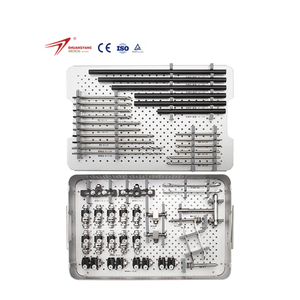
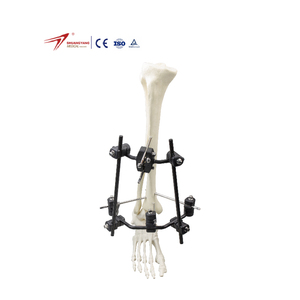
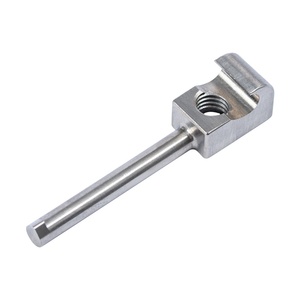
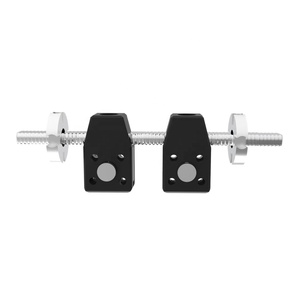
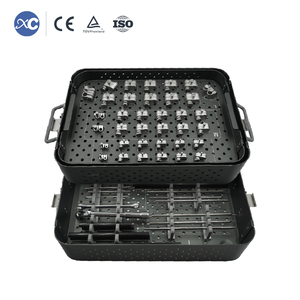
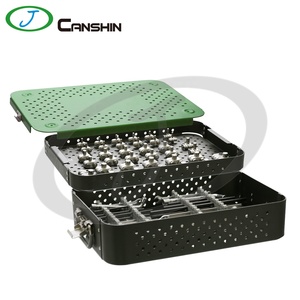
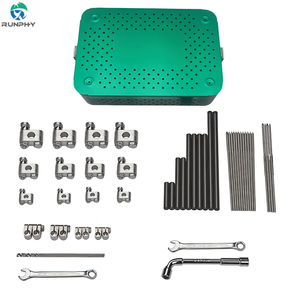
External fixation systems serve as a cornerstone in modern traumatology, limb reconstruction, and complex non-union management. As a leading China external fixator device supplier and exporter, our engineering principles align strictly with international biomechanical standards (ASTM F1541) to ensure optimal dynamic axial stability, mechanical stiffness, and minimal soft-tissue disruption.
The mechanical performance of an external fixation frame dictates the interfragmentary strain environment at the fracture gap. According to Perren’s Strain Theory, controlled axial micromotion (0.2mm to 1.0mm) stimulates robust periosteal callus formation, whereas excessive shear motion results in fibrous non-union.
Our external fixator systems achieve balanced stiffness through modular frame geometry, high-yield Schanz pins, and anti-slip pin clamps. By optimizing the distance between the fracture site and the main connecting rod, surgeons can tailor the mechanical environment to suit secondary bone healing pathways.
Clinical Advantage: Engineered clamping dynamics mitigate stress shielding while preventing early implant loosening at the pin-bone interface.
The pin-bone junction is the primary structural weakness of any external skeletal fixation construct. Micro-motion at this interface causes Thermal Necrosis during drilling and subsequent mechanical degradation, leading to pin-tract infections.
Our Schanz screws and transfixation wires feature precision CNC-ground thread profiles with sharp self-drilling and self-tapping flutes. This design minimizes insertion torque and prevents thermal damage to cortical bone micro-architecture.
Selection guidelines for hospital procurement committees, trauma centers, and orthopedic distributors.
| Fixator System Type | Primary Clinical Indications | Biomechanical Stiffness Profile | Radiolucency & C-Arm Usability | Sourcing & Cost Metrics |
|---|---|---|---|---|
| Unilateral Modular Fixators | Acute long bone fractures (Tibia, Femur, Humerus), Polytrauma emergency stabilization | High bending rigidity, moderate torsional resistance, customizable axial compliance | High clarity when equipped with Carbon Fiber Connecting Rods | Cost-effective, rapid application, low inventory complexity |
| Circular Ring Systems (Ilizarov Type) | Complex limb lengthening, bone transport, severe joint deformities, chronic osteomyelitis | Uniform multi-planar stability, dynamic axial elasticity favoring rapid ossification | Ring shadow under fluoroscopy; localized wire tracking required | Premium surgical kit; requires high surgical expertise and specialized instrumentation |
| Hexapod Computer-Assisted Frames | 3D deformity correction, multi-planar angular malunion, post-traumatic limb reconstruction | Extremely high spatial stability; 6-strut kinematic load distribution | Fully radiolucent struts with metallic radiographic marker points | High-end investment; bundled with proprietary software navigation modules |
| Hybrid & Articulated Fixators | Periarticular fractures (Distal Tibia/Pilon, Proximal Tibia), Intra-articular distraction | Combines rigid ring fixation near joints with lightweight unilateral shafts | Optimal radiolucent window surrounding articular cartilage zones | Mid-to-high tier; highly favored by Level 1 Trauma Centers |
| Micro Hand & Mini Pet Fixators | Phalangeal & Metacarpal fractures, Small animal veterinary traumatology | Miniaturized high-stiffness precision pins; sub-millimeter axial holding force | Minimal radiopaque interference due to low-profile titanium components | High turnover rate; essential for specialized veterinary & hand surgery clinics |
Strategic supply chain insights for medical device importers, hospital buyers, and regional distributors navigating regulatory shifts and clinical innovations.
Hospital procurement protocols increasingly mandate radiolucent components. Carbon Fiber Reinforced Polymer (CFRP) connecting rods permit unobstructed intraoperative fluoroscopic imaging, reducing C-arm exposure times by up to 35% during fracture reduction.
Next-generation external fixators are adopting micro-strain sensors embedded within pin clamps. These sensors transmit real-time fracture gap stiffness data to clinical teams via Bluetooth, replacing subjective X-ray interpretation with quantitative healing metrics.
Pin-tract infection remains the secondary cause of early frame removal. Global buyers are transitioning toward Schanz screws coated with Silver Nanoparticles (AgNP) and Hydroxyapatite (HA) to simultaneously inhibit bacterial colonization and accelerate osseointegration.
Additive manufacturing enables China-based OEM exporters to rapidly produce custom anatomical ring configurations and multi-pin clamps tailored to patient CT scans, reducing surgical assembly time by over 40%.
With the transition from EU MDD to MDR (2017/745), sourcing directors are consolidating vendors to compliant Chinese manufacturers offering complete Technical Documentation files, Post-Market Clinical Follow-up (PMCF) data, and ISO 13485 certification.
Veterinary orthopedic surgery is experiencing exponential growth globally. Importers are expanding SKUs to include specialized mini and micro skeletal fixators for canine and feline limb fracture management.
Over the past three decades, China’s medical device manufacturing sector has evolved from low-cost component fabrication to high-precision, state-of-the-art orthopedic systems engineering. Our partner production facilities utilize advanced Swiss 5-axis CNC machining centers, automated passivation lines, and class 100,000 cleanroom environments to deliver clinical-grade surgical instruments.
Every single Schanz pin, connecting rod, and universal clamp undergoes rigorous quality inspection. Raw materials—ranging from High-Grade Titanium Alloy (Ti-6Al-4V ELI conforming to ASTM F136) to Surgical Stainless Steel (316L conforming to ASTM F138)—are sourced strictly from certified metallurgical suppliers with full heat-lot traceability certificates.
Our quality management systems comply with ISO 13485:2016 standards. Dimensional tolerances are verified down to ±0.005mm using automated Optical Coordinate Measuring Machines (CMM).
We provide comprehensive OEM and ODM solutions for global brand owners, hospital networks, and medical device distributors. Whether you require custom laser etching, customized tray layouts, specialized pin thread profiles, or patient-specific frame geometry, our engineering team utilizes CAD/CAM finite element analysis (FEA) to transition from prototype to mass production within accelerated lead times.
Supply Chain Advantage: By leveraging China’s end-to-end industrial ecosystem, we reduce raw material lead times while offering competitive B2B pricing—allowing international buyers to achieve up to 40% cost savings without sacrificing clinical efficacy.
Detailed answers addressing regulatory compliance, mechanical performance, minimum order quantities, and custom manufacturing inquiries.
Our manufacturing facilities operate under full ISO 13485:2016 Quality Management Certification. Most of our external fixation product series carry CE Mark certification under the EU Medical Device Regulation (MDR) and maintain technical files compatible with US FDA 510(k) submissions, ensuring smooth customs clearance across European, North American, Latin American, and Asian markets.
Titanium Alloy (Ti-6Al-4V ELI) offers a significantly lower modulus of elasticity compared to 316L Stainless Steel, making it closer to human cortical bone. This reduces stress shielding and enhances micromotion-induced osteogenesis. Additionally, Titanium is MRI-compatible and significantly lighter. 316L Stainless Steel, however, offers superior yield strength in extreme bending conditions at a more economical price point, making it highly suitable for emergency temporary fixation kits.
Yes. We specialize in complete turnkey surgical kit supply. We can design and manufacture customized autoclavable Radel or Aluminum graphic sterilization trays, complete with customized silicone holders, laser-etched component labeling, and brand logo branding according to your distributor specifications.
Our external fixator clamps undergo rigorous mechanical evaluation under ASTM F1541 standards. This includes Static Bending Moment testing, Dynamic Fatigue Testing (up to 1,000,000 cycles without mechanical failure), and Torsional Slip Resistance testing to guarantee that clamps will not slip under full post-operative weight-bearing conditions.
Standard inventory items (such as standard Schanz screws, carbon rods, and unilateral clamps) can be dispatched within 7–14 working days. Custom OEM/ODM orders requiring customized tooling, specialized passivation, or sterile pouch packaging typically require 30–45 days depending on batch volume and regulatory documentation needs.
Our veterinary line uses modular sizing standardizations (Micro, Mini, Small, and Medium). While mini veterinary clamps use smaller pin diameters (1.5mm to 3.0mm), our universal coupling adaptors allow seamless integration with standard AO-type quick-coupling drill chucks and tensioners used in general orthopedic trauma suites.
All stainless steel implants and instruments undergo automated multi-stage ultrasonic degreasing, chemical passivation in nitric/citric acid solutions (compliant with ASTM A967), and electro-polishing. This forms an ultra-durable chromium oxide passive layer that resists pitting corrosion and thread galling through hundreds of steam sterilization cycles (134°C / 2.1 bar).
We offer flexible B2B ordering tiers. For standard catalog items, our MOQ starts at 10 to 20 units per component SKU or 5 complete surgical instrument sets. For full OEM custom branding and specialized packaging, MOQs are negotiated based on manufacturing setup requirements.
Upgrade your surgical product portfolio with clinical-grade trauma external fixators, custom OEM instrument sets, and global regulatory support. Contact our engineering and export team today for technical catalogs and wholesale pricing.