Featured Orthopedic Systems & Implants
Precision-manufactured titanium plates, prosthetic joint assemblies, and trauma instrumentation compliant with CE MDR and Japanese PMDA quality benchmarks.
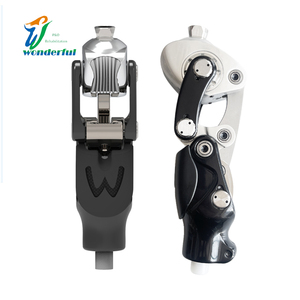
Prosthetic Leg Knee Joint Prosthetic Leg Adult Orthotics 7 Axis Intelligent Knee Joint
Inquire Now
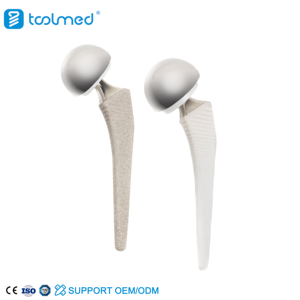
High Quality Hip & Knee Prosthesis Osteoarthritis Implants Orthopedic Prosthesis Advance Hip Knee For Orthopedic Survery
Inquire Now
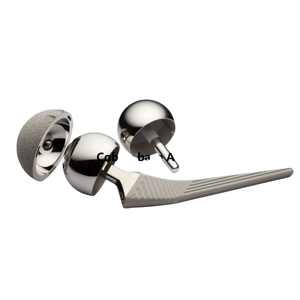
Cocrmo Alloy Total Knee Replacement Investment Casting for Medical Hip Implants
Inquire Now
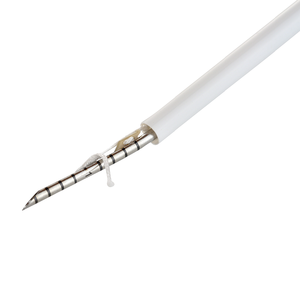
Device Suture All Inside Needle Repair Meniscus Knee Surgery Total Inner Meniscal Stapler Surgical Medical Orthopedic Instrument
Inquire Now
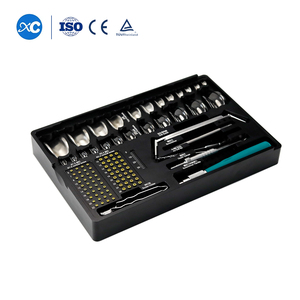
Knee Joint Tibial Instrument Set Prosthetic Leg Below Knee Knee Replacement Joint Implants Total Hip Replacement Instrument Set
Inquire Now
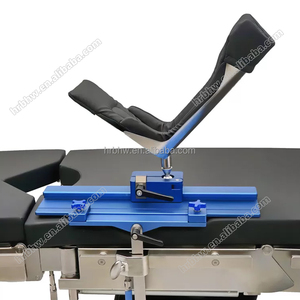
Total Knee Replacement Positioner Knee Brace for Total Knee Replacement
Inquire Now
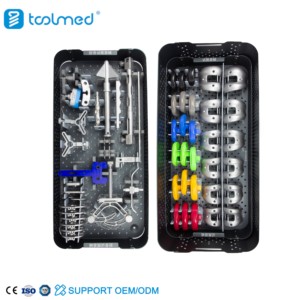
Veterinary Orthopedic PGR Instrument Set for Patellar Groove Replacement Knee Prosthesis Implantation Stainless Steel CE
Inquire Now
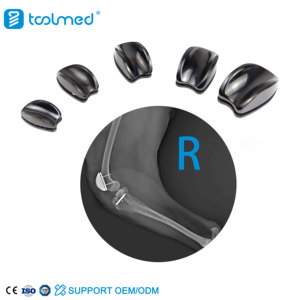
TOOLMED Veterinary Implants PGR Patellar Trochlear Groove Replacement Kit Titanium Material Fracture Bone Surgery
Inquire Now
30+
Years Manufacturing Excellence
100%
CE MDR & ISO 13485 Compliant
40+
Countries Export Footprint
500+
Orthopedic SKUs In Stock
Executive Summary: Titanium Bone Plate Supply Dynamics for the Japanese Medical Market
As Japan navigates one of the world's most advanced demographic shifts—where citizens aged 65 and older represent over 29% of the total population—the demand for high-reliability trauma fixation systems and reconstructive orthopedic implants has reached an unprecedented plateau. Japanese hospitals, trauma centers (救急医学部), and specialized veterinary surgical facilities require implants that meet strict biomechanical performance criteria, superior corrosion resistance, and verified biocompatibility standards.
This industry whitepaper evaluates the manufacturing protocols, metallurgical choices, and regulatory compliance pathways for CE Certified Titanium Bone Plates supplied to Japanese medical importers, hospital networks, and OEM/ODM healthcare distributors. By bridging global manufacturing efficiency with Japan’s stringent PMDA (Pharmaceuticals and Medical Devices Agency) quality expectations, tier-one manufacturers provide critical information gain on implant selection, stress-shielding reduction, and anatomical contouring.
Key Clinical Demands in Japanese Orthopedic Trauma Care
- Low-Profile Micro-Motion Fixation: Minimizing soft tissue irritation in slender Asian anatomical bone structures, particularly in distal radius, clavicle, and periarticular ankle fractures.
- High Fatigue Life Titanium Alloys: Utilization of Grade 5 Ti-6Al-4V ELI (Extra Low Interstitial) and Grade 4 Pure Titanium to eliminate post-operative fracture line non-union or hardware breakage.
- Type II Anodized Surface Treatment: Prevention of cold-welding between locking screw heads and plate threaded holes under high kinetic shear stresses.
- Complete Traceability & Cleanroom Packaging: Full ISO 13485 cleanroom validation (Class 100,000) with laser-etched UDI (Unique Device Identification) matrix codes compatible with Japanese hospital inventory management systems.
Metallurgical Engineering & Biomechanical Performance Analysis
The selection of medical grade titanium over conventional 316L stainless steel represents a paradigm shift in internal fixation stability. For Japanese clinical applications, titanium bone plates offer a modulus of elasticity (105–110 GPa) significantly closer to human cortical bone (15–30 GPa) than stainless steel (190–210 GPa). This substantial reduction in stiffness differential drastically minimizes the phenomenon of stress shielding, thereby encouraging natural callus formation and faster bone remodeling.
| Material Property |
Commercial Pure Ti (Grade 4) |
Ti-6Al-4V ELI (Grade 5) |
Medical Stainless Steel (316LVM) |
| Elastic Modulus (GPa) |
104 GPa |
110 GPa |
193 GPa |
| Tensile Strength (MPa) |
≥ 680 MPa |
≥ 860 MPa |
≥ 620 MPa |
| Yield Strength (MPa) |
≥ 520 MPa |
≥ 790 MPa |
≥ 310 MPa |
| Biocompatibility Score |
Exceptional (Native Oxide Layer) |
Superior High Fatigue Life |
Moderate (Nickel Sensitizing Risk) |
| MRI Artifact Compatibility |
Minimal Distortion |
Minimal Distortion |
Significant Distortion |
Our factory utilizes multi-axis CNC Swiss precision machining centers paired with automated 3D optical coordinate measuring machines (CMM) to maintain dimensional tolerances within ± 0.005mm. Every titanium locking bone plate features variable-angle dynamic compression locking holes, permitting surgeons to lock screws at up to 15 degrees off-axis in complex comminuted osteotomies.
Localized Healthcare Application Scenarios in Japan
Direct engagement with Japanese orthopedic surgeons and medical device procurement committees (用度課) highlights four key clinical application environments where titanium bone plates and power instrumentation excel:
1. Geriatric Osteoporotic Fracture Fixation (Distal Femur & Proximal Tibia)
Due to the high prevalence of osteoporosis among elderly patients in prefectures such as Tokyo, Osaka, and Kanagawa, rigid bicortical screw purchase can be challenging to achieve. Anatomically pre-contoured Titanium Locking Compression Plates (LCP) act as internal fixators, distributing mechanical loads evenly across the bone shaft without compressing the periosteum. This preserves blood supply and reduces post-operative complications in fragility fractures.
2. High-Precision Maxillofacial & Small Fragment Reconstruction
In urban trauma hospitals, micro-titanium plate systems (1.5mm to 2.0mm system series) are essential for craniomaxillofacial trauma and complex hand/wrist fractures. The ultra-low profile design prevents skin tenting and hardware palpability under thin subcutaneous tissue layers typical in Asian patient demographics.
3. Companion Animal & Veterinary Orthopedic Surgery
Japan’s thriving companion animal market has seen a rapid increase in advanced veterinary orthopedic procedures. Our Specialized Veterinary PGR (Patellar Groove Replacement) and TPLO (Tibial Plateau Leveling Osteotomy) instrument sets provide Japanese veterinary surgeons with hospital-grade titanium fixators engineered for small-breed dogs (such as Toy Poodles and Shiba Inus) prone to patellar luxation and cranial cruciate ligament injuries.
4. Surgical Power Tool Integration & Rehabilitation Ecosystems
Successful surgical outcomes rely on integrated instrumentation. Pairings with battery-operated surgical drills, sagittal saw handpieces, and intelligent prosthetic knee joint assemblies ensure a continuous care continuum—from initial intraoperative bone resection to post-acute physical rehabilitation.
Enterprise Qualifications & Japanese Market Supply Chain Assurance
Establishing long-term supply agreements with Japanese medical distributors requires absolute transparent compliance with international and local regulatory frameworks. Founded in 1994, our manufacturing infrastructure combines 30 years of metallurgical expertise with rigorous quality management systems:
- CE MDR (EU 2017/745) & ISO 13485:2016 Certified: Certified by accredited European Notified Bodies, ensuring seamless technical file auditing for PMDA Foreign Medical Device Manufacturer Accreditation (外国製造業者認定).
- Raw Material Traceability: 100% medical grade titanium bars sourced with certified Mill Test Certificates (MTC) according to ASTM F136 (Ti-6Al-4V ELI) and ASTM F67 specifications.
- Cleanroom Washing & Packaging: Ultrasonic 18-兆赫 (MHz) multi-stage deionized water washing followed by double-pouch sterile barrier packaging inside ISO Class 7 cleanroom environments.
- Japanese Logistics Strategy: Strategic air-freight corridors serving Tokyo Narita (NRT), Tokyo Haneda (HND), and Kansai International (KIX) ports, ensuring emergency inventory replenishment within 5 to 7 business days.
Frequently Asked Questions by Japanese Procurement Teams
Direct answers to technical, regulatory, and commercial inquiries raised by Japanese medical device importers, hospital purchasing agents, and OEM brand partners.
Q:
How do your CE certified titanium bone plates support PMDA registration in Japan?
We provide complete technical documentation packages, including ISO 13485 certificates, CE MDR declarations of conformity, biocompatibility test reports (ISO 10993 series), mechanical fatigue test data (ASTM F382), and raw material Mill Certificates. Our regulatory affairs team collaborates directly with your Japanese Designated Marketing Authorization Holder (DMAH / 選任製造販売業者) to expedite Shonin (承認) or Ninsho (認証) approval.
Q:
What titanium alloy grades are used for trauma plates versus locking screws?
Our contoured trauma locking plates are primarily fabricated from Ti-6Al-4V ELI (ASTM F136 Grade 5), offering high yield strength and fatigue resistance. For specific reconstructive applications requiring intraoperative manual bending, pure titanium Grade 4 (ASTM F67) is available. Locking screws are precision-lathed from Grade 5 titanium to ensure rigid thread engagement without stripping.
Q:
Can your factory accommodate custom OEM/ODM anatomical plate designs for Japanese distributors?
Yes. We offer comprehensive OEM/ODM services backed by CAD/CAM engineering and Finite Element Analysis (FEA). Japanese partners can submit CT-derived 3D anatomical models to customize plate contours, screw hole patterns, anodization color-coding, and custom laser-etched branding.
Q:
What are the Minimum Order Quantities (MOQ) and lead times for shipping to Japan?
For standard CE certified titanium plates listed in our catalog, MOQ starts at 10 units per SKU. Standard stocked items ship within 48 hours via express air cargo (DHL/FedEx/UPS), arriving at Tokyo or Osaka customs in 3–5 days. Custom OEM production runs typically require a 3 to 4 week lead time depending on order complexity.
Q:
How is surface anodization controlled to prevent thread galling?
We utilize controlled Type II Electrochemical Anodization (Ti-Sur treatment), creating a dense titanium dioxide surface layer. This process increases surface micro-hardness, eliminates cold-welding (galling) between titanium screws and plate locking holes during high-torque insertion, and enhances fatigue resistance.
Q:
Are veterinary PGR and orthopedic instrument sets supplied with sterile packaging?
We supply products in both sterile dual-pouch packaging (Gamma or Tyvek EO sterilization) and non-sterile tray containers designed for hospital autoclave cycles (134°C). Veterinary instrument sets can be tailored with surgical storage trays labeled in Japanese/English.
Initiate Procurement & OEM Partnership Consultation for Japan
Connect directly with our senior orthopedic engineering team to request sample evaluation kits, PMDA technical dossiers, wholesale factory price lists, or custom OEM manufacturing quotes.