Explore our flagship medical systems engineered for clinical excellence, superior fatigue resistance, and seamless integration into European healthcare environments.
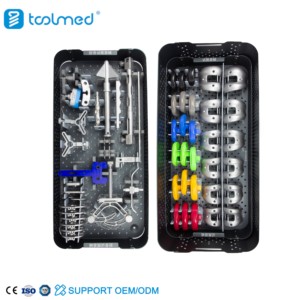
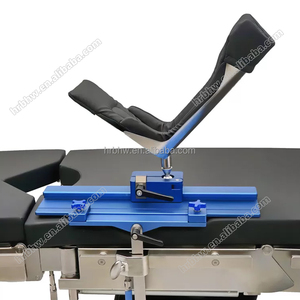
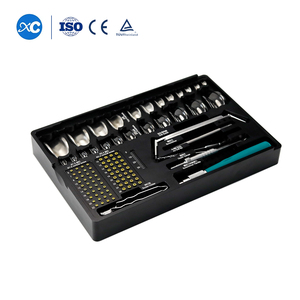
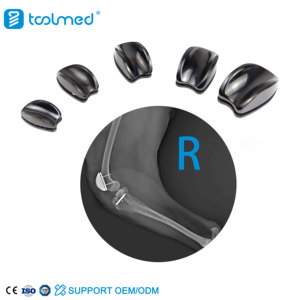
The healthcare ecosystem in the Czech Republic represents one of Central Europe’s most sophisticated medical sectors, characterized by a universal health coverage model overseen by the Ministry of Health (Ministerstvo zdravotnictví) and powered by major public health insurance funds, predominantly the General Health Insurance Company (VZP - Všeobecná zdravotní pojišťovna). As specialized spine trauma centers, university hospitals such as Fakultní nemocnice v Motole (Prague) and Fakultní nemocnice U Sv. Anny (Brno) expand their neurological and orthopedic surgical capacity, the procurement demand for high-precision, cost-effective spinal fixation systems and arthroplasty tools has surged significantly.
Spinal fixation systems—encompassing pedicle screws, cross-linkers, thoracolumbar rods, and interbody fusion cages—form the backbone of modern spine reconstruction in Czech clinical practice. With an aging demographic across Europe, age-related spinal pathologies such as lumbar spinal stenosis, degenerative disc disease (DDD), spondylolisthesis, and vertebral osteoporotic fractures are rising annually. Concurrently, high-energy trauma cases resulting from sports activities and industrial accidents demand robust internal fixation systems capable of immediate primary stabilization and long-term osseointegration.
To maintain competitiveness in the Czech market, orthopedic suppliers must navigate strict regulatory frameworks mandated by the European Union. The shift from the legacy Medical Device Directive (MDD 93/42/EEC) to the stringent EU Regulation 2017/745 on Medical Devices (EU MDR) has fundamentally restructured importer protocols. Premier Chinese manufacturers serving Prague, Brno, Ostrava, and Pilsen must not only demonstrate flawless biocompatibility (ISO 10993) and biomechanical endurance (ASTM F1717 / ASTM F2077) but also maintain absolute transparency through EUDAMED registration and rigorous Clinical Evaluation Reports (CER).
The efficacy of a spinal fixation system relies heavily on raw material purity, precision micro-machining, and surface treatment engineering. Chinese manufacturing leaders targeting the Czech market utilize advanced medical-grade alloys engineered to withstand severe multi-axial fatigue forces:
Features reduced interstitial element concentrations (oxygen, nitrogen, iron), yielding superior fracture toughness and bio-inertness. Essential for load-bearing pedicle screws and connecting rods, reducing post-operative artifact distortion during magnetic resonance imaging (MRI).
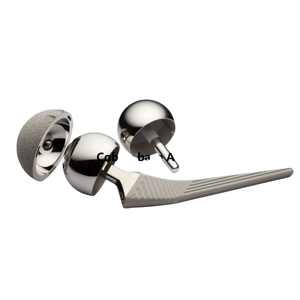
Cobalt-Chromium-Molybdenum alloys offer uncompromised wear resistance and high flexural modulus, widely used in total joint prostheses, cross-connecting clamps, and specialized load-distributing spinal constructs.
Polyetheretherketone polymers provide an elastic modulus closely matching natural human trabecular bone (~3.6 GPa), minimizing stress-shielding effects and facilitating clear radiographical monitoring of fusion progress.
| Mechanical / Design Parameter | Standard Pedicle Screw System | Advanced MIS Dual-Lead Thread Screws | CoCrMo Heavy-Duty Construct |
|---|---|---|---|
| Tensile Yield Strength | 860 MPa (Ti Grade 5) | 930 MPa (Ti-6Al-4V ELI) | > 960 MPa (CoCrMo Alloy) |
| Fatigue Resistance (ASTM F1717) | 5,000,000 Cycles @ 220 N | 10,000,000 Cycles @ 350 N | 10,000,000 Cycles @ 450 N |
| Thread Design Geometry | Single-Lead Constant Pitch | Dual-Thread / Variable Pitch (Fast Insertion) | Reverse Buttress Locking Thread |
| Polyaxial Friction Angle | ±25 Degrees Angle Range | ±30 Degrees Friction-Head Articulation | Rigid Monoaxial / Fixed Angle Option |
| Primary Czech Clinical Use | Routine Single-Level Lumbar Fusion | MIS Degenerative & Osteoporotic Spine | Deformity Correction & High Trauma |
A critical structural advancement in Chinese pedicle screw systems for European exports is the implementation of friction-head polyaxial locking mechanisms and self-tapping dual-lead threads. Dual-lead pitch allows spine surgeons in Prague operating theaters to achieve dual insertion speed per revolution without compromising pull-out strength in cancellous bone. Furthermore, low-profile screw head geometries minimize soft-tissue irritation, a key surgical priority in minimally invasive spinal procedures (MIS).
The operational demands of Czech orthopedists and neurosurgeons vary significantly depending on the clinical environment. Chinese exporters must tailor product configurations and surgical instrument sets to align with specific regional workflow requirements:
Location Benchmark: Teaching hospitals in Prague & Brno.
Clinical Focus: Percutaneous pedicle screw placement via tubular retractors. High emphasis on minimal incision length, reduced intraoperative blood loss, and rapid postoperative recovery.
Instrumentation Need: Cannulated pedicle screws, extended breakout tab screw towers, rigid guide wires (K-wires), and ergonomic percutaneous rod pass-through inserters.
Location Benchmark: Regional Trauma Centers (Pilsen, Liberec, Olomouc).
Clinical Focus: Immediate stabilization of traumatic spinal fractures, burst fractures, and dislocation injuries.
Instrumentation Need: High-torque monoaxial pedicle screws, pre-curved 5.5mm/6.0mm titanium rods, robust transverse cross-connectors, and quick-connect ratchet drivers.
Location Benchmark: Specialized Orthopedic Rehabilitation Clinics.
Clinical Focus: Total joint arthroplasty, patellar groove replacement, and sports medicine meniscus repair.
Instrumentation Need: CoCrMo tibial components, precision all-inside suture staples, PGR instrument sets, and sterilizable titanium positioner frames.
The market for spinal hardware and orthopedic prostheses in the Czech Republic is undergoing structural shifts driven by technological innovation and healthcare economics. Key trends include:
Building upon over 30 years of specialized manufacturing experience, our medical production facilities represent the pinnacle of Chinese precision engineering. Serving over 40 countries across Europe, Latin America, Asia, and the Middle East, our enterprise operates as a fully integrated research, development, and manufacturing hub for spinal fixation systems and orthopedic prostheses.
Utilizing state-of-the-art Swiss Tornos and Citizen 9-axis CNC machining centers to process raw titanium rods into micro-dimensioned pedicle screws with zero-tolerance variance.
All implants undergo multi-stage ultrasonic cleaning and are packaged within ISO 14644-1 Class 8 controlled cleanroom environments, ready for gamma-ray or ETO sterilization.
Every single batch is verified via Coordinate Measuring Machines (CMM), optical comparators, and dynamic fatigue testing under ASTM F1717 standards, guaranteeing 100% material traceability.
Streamline your medical distribution in the Czech Republic with CE & ISO certified spinal fixation hardware, custom instrument trays, and full EU MDR regulatory dossiers.
Send an InquiryChoosing the right manufacturing partner for spinal fixation systems and prosthetic implants is a pivotal operational decision for medical device importers serving the Czech Republic. By combining cutting-edge Swiss CNC metallurgy, rigorous EU MDR compliance, transparent supply chain logistics, and highly competitive factory-direct pricing, our company stands as your trusted partner for orthopedic procurement across Central Europe.
Contact our international regulatory and commercial team today to request product catalogs, sample testing kits, EU MDR compliance documentation, or a customized tender quotation.