
1. Technical Architecture & Metallurgical Rigor of Modern Cranial Plating Systems
Cranial plating systems represent the pinnacle of neurosurgical fixation technology, requiring an uncompromised convergence of biomechanical strength, tissue biocompatibility, and anatomical adaptability. In traumatic brain injury (TBI) intervention, post-craniotomy stabilization, and complex congenital defect repair, the structural integrity of the cranial vault must be re-established without inducing soft-tissue irritation or artifacts during post-operative diagnostic imaging. As an established global manufacturer and exporter serving the Chilean healthcare market, our cranial plating systems are engineered around the exact mechanical parameters of human cortical bone.
The foundation of our cranial implants rests upon medical-grade Titanium Grade 5 (Ti-6Al-4V ELI - Extra Low Interstitial) and pure Titanium (Grades 1–4), processed under stringent ISO 13485 manufacturing conditions. Ti-6Al-4V ELI provides exceptional yield strength (>795 MPa) alongside superior fatigue resistance, ensuring that micro-plates as thin as 0.4 mm to 0.6 mm maintain rigid structural stability against continuous intracranial pressure (ICP) dynamics and external tactile forces.
⚙Metallurgical Advantage for Chilean Hospitals
Our proprietary cold-working manufacturing process enhances the ductility of titanium mesh and plates, allowing neurosurgeons in Santiago and regional Chilean trauma centers to intraoperatively shape and contour the implant without sacrificing structural fatigue limits or causing elastic springback.
| Implant Specification | Standard Micro-Plating | Low-Profile Neuro Mesh | Heavy-Duty Trauma Mesh |
|---|---|---|---|
| Material Composition | Titanium Grade 2 / Grade 5 ELI | Unalloyed Titanium (Grade 1) | Ti-6Al-4V ELI Alloy |
| Plate Thickness | 0.4 mm – 0.6 mm | 0.3 mm – 0.5 mm | 0.8 mm – 1.2 mm |
| Screw Diameter Range | 1.2 mm – 1.5 mm Micro Screws | 1.5 mm Self-Tapping Screws | 1.8 mm Emergency Emergency Screws |
| Imaging Compatibility | MRI Artifact Free up to 3.0 Tesla | Minimal CT Scatter | High-Density Diagnostic Neutral |
| Primary Indication | Pediatric & Adult Flap Fixation | Comminuted Vault Fractures | Large Cranioplasty Defect Repair |
2. Localized Market Dynamics & Healthcare Framework in Chile
Chile boasts one of Latin America's most sophisticated and highly regulated healthcare ecosystems. The market operates under a dual structure: the public sector overseen by FONASA (Fondo Nacional de Salud) and the network of Servicio de Salud regional hospitals, complemented by a robust private sector governed by ISAPRE (Instituciones de Salud Previsional) and private clinic groups (such as Clínica Alemana, Clínica Las Condes, and Red Salud).
Procurement of surgical implants within the Chilean public health system requires strict adherence to national health standards established by MINSAL (Ministerio de Salud) and regulatory oversight by the ISP (Instituto de Salud Pública de Chile). Medical devices entering Chilean clinical environments must demonstrate verifiable quality certifications, clear traceability, and proven clinical safety dossiers matching FDA or CE directives.
The geographical distribution of neuro-trauma care in Chile creates distinct demand clusters. Urban centers such as the Región Metropolitana (Santiago) centralize specialized neurosurgical procedures at major facilities like Hospital Urgencia Asistencia Pública (HUAP / Posta Central), Hospital Barros Luco, and Hospital del Salvador. Concurrently, industrial hubs in northern Chile (Antofagasta, Calama) present high demands for neuro-trauma implants driven by high-altitude mining accidents, whereas coastal regions like Valparaíso and Concepción require steady supplies of standard neurosurgical trays for trauma networks.
3. Localized Clinical Application Scenarios Across Chile
To provide meaningful information gain for Chilean medical directors and purchasing committees, our cranial plating systems are designed around specific regional clinical workflows:
🏥Scenario A: High-Velocity Neuro-Trauma in Santiago Metropolitan Units
Public emergency centers such as HUAP process acute traumatic head injuries daily. In emergency decompressive craniectomies, surgical teams require self-drilling micro-screw kits and pre-shaped 3D titanium meshes that eliminate pre-drilling steps, significantly reducing operative room time and blood loss during urgent bone flap re-fixation.
⛏Scenario B: Industrial & Mining Trauma in Northern Chile (Antofagasta / Calama)
High-impact crushing injuries occurring at high altitudes in copper mining zones frequently involve complex fractures across the frontal, temporal, and orbital rims. Our low-profile cranial-maxillofacial (CMF) plating trays provide structural stability capable of resisting localized impact strain while facilitating soft tissue reattachment.
👶Scenario C: Pediatric Craniosynostosis Repair in Tertiary Children’s Hospitals
Pediatric neurosurgery units, such as those at Hospital Exequiel González Cortés, demand ultra-thin 0.4mm titanium micro-plates or resorbable fixation accessories. Our precise micro-screw thread pitch guarantees maximum tactile feedback and torque retention in thinner pediatric cranial bone.
4. Industry & Technological Trends Shaping the Chilean Medical Device Landscape
The medical device landscape in Chile is experiencing rapid modernization, driven by regulatory updates and clinical preferences for patient-specific implant solutions:
- Accelerated Adoption of Patient-Specific Implants (PSI): Surgeons across Chile are increasingly supplementing off-the-shelf mesh with custom 3D-molded titanium cranioplasty implants created from DICOM CT data scans to address large cranial defects post-tumor resection.
- ISP Traceability Mandates: Implementation of Unique Device Identification (UDI) laser-etched onto individual plate modules and screw storage caddies ensures full supply-chain transparency from our international manufacturing plant to Chilean hospital sterilization units.
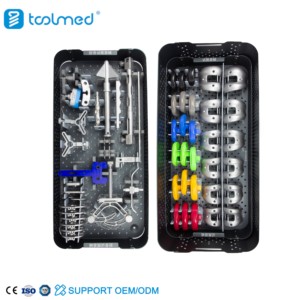
- Focus on Sterilization Efficiency: Hospital Central Sterilization Supply Departments (CESSD / Sterilization Units) in Chile prioritize anodized aluminum storage trays equipped with silicone holding inserts that endure fast-cycle steam autoclaving (>134°C) without chemical degradation.
5. Enterprise Strengths & E-E-A-T Guarantee (Bharucha Associates Manufacturing Expertise)
Established in 1994, Bharucha Associates brings over three decades of precision manufacturing, international supply chain engineering, and specialized orthopaedic & neurosurgical instrument exporting. Our facilities integrate state-of-the-art multi-axis Swiss CNC micromachining centers capable of working with sub-micron precision to manufacture micro-screws with flawless thread geometry.
Every batch of cranial plates undergoes rigorous destructive and non-destructive testing, including tensile strength verification, fatigue testing under cyclical load profiles, and optical coordinate measurement. Packaged within Class 10,000 cleanroom environments, our implants maintain non-sterile or pre-sterilized Tyvec packaging compliant with ISO 11607 validation.
🌐Global Reach & Direct Chilean Supply Chain Support
Serving healthcare distributors, private clinics, and tender applicants in Chile, we provide full technical documentation dossiers (Free Sale Certificates, ISO 13485 certificates, Certificate of Analysis, and Material Test Reports) required for rapid ISP registration and seamless clearance through Aduanas de Chile.
6. Frequently Asked Questions (FAQ) for Chilean Medical Procurement
❓What documentation is provided to support ISP (Instituto de Salud Pública) device registration in Chile?
We supply comprehensive regulatory dossiers tailored to Chilean ISP requirements. This includes ISO 13485:2016 factory certification, CE Declaration of Conformity, biocompatibility test reports (ISO 10993 standards), raw material mill certificates (ASTM F136 / ISO 5832-3 for Titanium Grade 5), and legalized Certificates of Free Sale (CFS).
❓How do your cranial plating systems handle freight & customs clearance into Chile?
We work with established global logistics partners offering expedited air-freight direct to Santiago (Arturo Merino Benítez International Airport - SCL). All export shipments come with compliant commercial invoices, packing lists with UDI batch numbers, HS code classification (typically 9021.10 for orthopaedic/surgical implants), and customs documentation to streamline clearance via Servicio Nacional de Aduanas de Chile.
❓Are your micro-screw drivers compatible with existing hospital power drills in Chile?
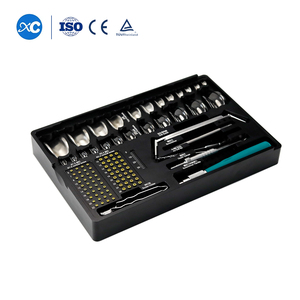
Yes. Our micro-screw drivers feature standard AO quick-coupling connectors and hex-latch fittings, ensuring seamless intraoperative interchangeability with major surgical power tool systems used in Chilean operating rooms, such as Stryker, Synthes, and Manman driving units.
❓Can we request customized screw lengths or specialized plate geometries for institutional tenders?
Absolutely. As an actual manufacturer, we support OEM/ODM configurations for institutional distributors and public healthcare tenders (Licitaciones Públicas Mercado Público). We can customize plate thickness, screw thread profiles, anodization colors (for intuitive size coding), and localized hospital tray laser marking.
Partner with a Premier Cranial Plating System Exporter
Expand your surgical distribution portfolio in Chile with certified high-precision titanium cranial implants, micro trays, and specialized instrumentation. Request a comprehensive catalog, sample tray, or export price quote today.