Explore our biomedical-grade tourniquet systems, knee prosthetic assemblies, and precision arthroscopic surgical instrumentation engineered for demanding clinical standards in Tokyo.
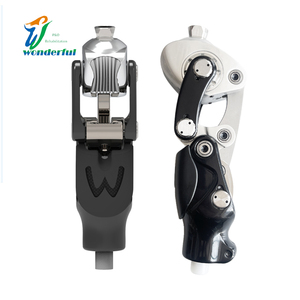
Advanced pneumatic and micro-sensor real-time gait stabilization for post-amputation rehabilitation and complex lower extremity orthotics.
Get Catalog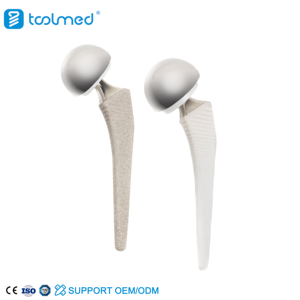
Biocompatible cobalt-chrome & UHMWPE reconstructive components designed for severe joint degeneration and osteoarthritis repair.
Get Catalog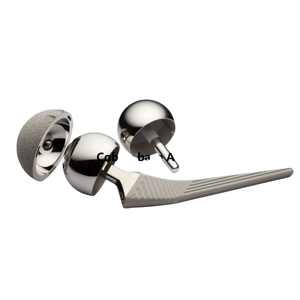
High-durability medical alloy femoral and tibial implants featuring ultra-low wear rates and superior surface polished finishes.
Get Catalog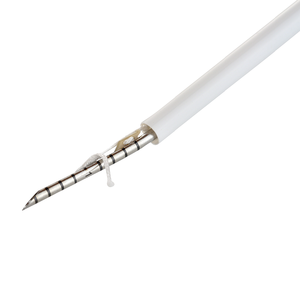
Minimally invasive arthroscopic suturing needle device engineered for rapid, secure intra-articular meniscal tear fixations.
Get Catalog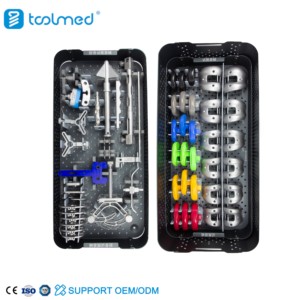
Autoclavable stainless steel alignment guides, bone rasps, and tibial trial sets built for rigorous operating room protocols.
Get Catalog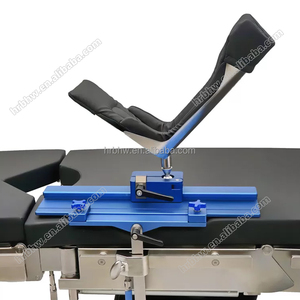
Ergonomic leg positioners maintaining optimal flexion angle during arthroplasty and postoperative recovery stabilization.
Get Catalog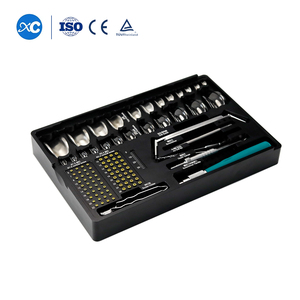
Precision stainless-steel surgical kit tailored for trochlear groove restoration and canine/veterinary joint reconstructive procedures.
Get Catalog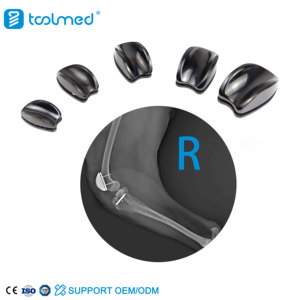
Biocompatible titanium implants and specialized surgical tools designed for complex veterinary fracture fixations and joint alignment.
Get CatalogIn modern extremity surgery—encompassing Total Knee Arthroplasty (TKA), complex open fracture re-fixations, micro-vascular tissue transfers, and sports arthroscopy—maintaining a pristine, bloodless surgical field is a primary requisite. For orthopedic surgeons operating within Tokyo’s leading university hospitals and specialized trauma hubs (such as those in Shinjuku, Bunkyo, and Minato Wards), tourniquet precision directly governs intraoperative efficiency, surgical visibility, and post-operative recovery timelines.
Legacy pneumatic tourniquets rely on manual hand-pumps or rudimentary mechanical dials that suffer from pressure drift, delayed inflation response, and imprecise pressure monitoring. Modern digital research highlights that uncalibrated pressure surges can trigger severe clinical complications, including nerve compression injuries, localized skin necrosis, deep vein thrombosis (DVT), and systemic tourniquet pain. Conversely, pressure drops cause venous engorgement and blood leakage into the operative zone, compromising bone-cement adhesion during joint replacements.
As a specialized Electronic Tourniquet Machine Manufacturer & Supplier serving Tokyo, our dual-pump microprocessor-controlled tourniquet consoles introduce continuous real-time Limb Occlusion Pressure (LOP) calculation. By automatically sensing systemic arterial pulsation and dynamically adjusting cuff pressure to the minimum effective occlusion point, our systems minimize ischemic tissue stress while providing absolute safety for patient demographics ranging from pediatric reconstructive cases to Tokyo's expanding geriatric population.
Technical comparison showcasing why Tokyo clinical procurement teams upgrade to microprocessor-regulated hemostasis hardware.
| Specification Parameter | Legacy Mechanical Pneumatic Units | Bharucha Microprocessor Electronic Tourniquet | Clinical Gain for Tokyo Hospitals |
|---|---|---|---|
| Pressure Control Mechanism | Manual aneroid gauge / analog valve | Dual Microprocessor-controlled digital sensors | Eliminates pressure drift; preserves tissue integrity |
| LOP Auto-Detection | Not available (requires manual Doppler) | Integrated automatic LOP sensor algorithm | Personalized minimal occlusion pressure per patient |
| Pressure Calibration Tolerance | ±15 mmHg to ±25 mmHg variance | ±3 mmHg high-precision digital control | Exceeds strict Japanese PMDA safety guidelines |
| Dual-Channel IVRA Operations | Single channel or manual double setup | Independent dual-port IVRA (Bier Block) mode | Enables safe bilateral & regional anesthesia procedures |
| Unintentional Leakage Safety | Mechanical release valve (prone to leaks) | Self-diagnostic safety solenoid check valves | Zero unexpected pressure loss during critical resections |
| Battery Backup Isolation | None or lead-acid (short lifespan) | Lithium-ion emergency backup (up to 6 hours) | Ensures uninterrupted operation during hospital power loss |
| Power Grid Compatibility | Generic 220V/60Hz standard | 100V 50Hz (Eastern Japan / Tokyo Grid isolated) | Plug-and-play installation without external transformers |
Customized solutions designed to meet the rigorous clinical workflows of Kanto-region acute hospitals, orthopedic clinics, and emergency centers.
In high-volume total joint arthroplasty suites (such as TKA surgeries at academic centers in Hongo and Shinagawa), our dual-port electronic tourniquets provide rapid inflation and exact pressure maintenance. This allows surgeons to execute clean bone cuts, precise alignment, and optimal cement polymerization without blood contamination.
For outpatient sports medicine and arthroscopic repair clinics in Machida, Tachikawa, and Musashino, compact tabletop electronic tourniquet units enable fast turnover between cases. Their low acoustic signature reduces operating room noise while offering precise time tracking to prevent tourniquet over-exposure.
Tokyo’s critical care trauma centers require immediate, foolproof hemostatic control for acute limb injuries. Featuring rapid battery auto-switchover and shock-resistant casing, our units integrate directly into mobile disaster response units across Metropolitan Tokyo.
Strategic analysis of Japanese healthcare policies, demographic shifts, and technology adoption drivers.
Japan possesses one of the world's most rapidly aging demographics. In Tokyo, over 28% of surgical patients present with calcified arteries, fragile skin, or compromised venous circulation. Standard pressure thresholds (e.g., blanket 300 mmHg settings) carry high risks of tissue damage. The demand in Tokyo has shifted rapidly toward Automatic Limb Occlusion Pressure (LOP) calculation, where the electronic machine adjusts tourniquet cuff inflation to the lowest safe physiological gradient.
Leading hospitals in Tokyo are standardizing digital surgical suites with centralized data logging. Modern electronic tourniquets must feature digital RS232/USB data outputs to export real-time inflation cycles, total ischemic duration, pressure waveforms, and operator IDs into hospital Electronic Medical Record (EMR) systems for rigorous medical risk management.
Eastern Japan operates on a distinct 100V 50Hz electrical supply. Importing generic medical devices built solely for 220V 60Hz without transformer adaptations introduces electrical noise and calibration drift. Our tailored manufacturing ensures full compliance with JIS T 0601-1 standards and Tokyo municipal hospital bio-engineering safety specs.
Post-pandemic infection control measures across Tokyo medical facilities demand ultra-clean equipment designs. Our tourniquet consoles support both autoclavable antimicrobial silicone cuffs and single-use contour-fit sterile cuffs featuring color-coded fast-connect pneumatic fittings to prevent misconnections.
Established in 1994 in Vadodara, Gujarat, India, Bharucha Associates has accumulated over three decades of specialized experience as a manufacturer, exporter, and global supplier of high-precision orthopedic instruments, surgical power tools, and tourniquet systems.
Proprietary brand solutions alongside global distribution of industry benchmarks (including Manman, Bell, Vissco, and Tynor) position our enterprise as a single-source partner for institutional medical procurement.

Bharucha Associates Headquarters & Biomedical Manufacturing Hub (Est. 1994)
Detailed answers regarding technical specifications, power compatibility, ordering logistics, and regulatory compliance.
Yes. All electronic tourniquet consoles exported to Tokyo and the Kanto region are custom-configured with universal medical-grade switching power supplies (100V-240V AC, 50/60Hz) with full EMI/RFI isolation, ensuring seamless operation without step-down transformers.
Our dual-channel units feature two independent micro-pumps and digital pressure sensors. During Intravenous Regional Anesthesia (IVRA), the system coordinates main and secondary cuff inflation seamlessly, preventing accidental dual-cuff deflation and minimizing local anesthetic systemic toxicity (LAST) risks.
The system incorporates multi-tiered safety protocols: visual/audible alarms for pressure deviation (>15 mmHg), pneumatic leak detection, battery charge depletion warnings, maximum ischemic time limits (up to 120 mins with 10-min reminders), and hardware self-checks on startup.
We utilize universal push-to-lock quick-connect couplings (CPC compatible). This allows Tokyo hospitals to connect our electronic console with existing reusable cylindrical, contoured, or disposable sterile cuffs without requiring custom adaptors.
We supply comprehensive technical documentation files, including ISO 13485 certificates, CE conformity mark test reports, electrical safety test data (IEC 60601-1), biocompatibility reports for cuffs, and full English operator/service manuals.
Standard production lead time is 7–14 business days from our Vadodara manufacturing hub. Air-freight shipping via major carriers directly to Tokyo Narita (NRT) or Haneda (HND) typically arrives within 4 to 6 days following dispatch.
The unit features an automated digital calibration routine accessible via a secure technician menu. Annual calibration can be performed on-site by hospital biomedical personnel using standard calibrated pressure gauges, supported by our remote technical team.
Yes. Every machine is equipped with an integrated high-capacity rechargeable Lithium-ion backup battery that automatically takes over during AC mains power failure, providing up to 6 hours of continuous pressure control.
Partner with Bharucha Associates for direct factory procurement, custom OEM configurations, and competitive B2B wholesale supply of electronic tourniquet machines and orthopedic instrumentation.