The evolution of orthopedic fixation in the United Kingdom has undergone a paradigm shift over the past two decades. The introduction of Locking Compression Plates (LCP) paired with threaded locking bone screws has fundamentally altered fracture management, particularly across National Health Service (NHS) Trust trauma hospitals and private surgical networks throughout England, Scotland, Wales, and Northern Ireland. Traditional cortical and cancellous screw systems relied heavily on friction between the plate and underlying periosteum to establish rigid stabilization. However, in osteoporotic bone constructs or complex peri-articular fractures, dynamic compressive friction often leads to micro-motion, screw back-out, and secondary loss of reduction.
For UK procurement managers, clinical directors, and orthopedic surgeons, evaluating Locking Bone Screws Manufacturers & Manufacturer in United Kingdom requires an in-depth understanding of metallurgical composition, thread pitch geometry, friction-coefficient optimization, and regulatory compliance under the UK Medicines and Healthcare products Regulatory Agency (MHRA). As NHS frameworks shift toward high-value, outcome-based purchasing models, orthopedic hardware must provide verifiable structural integrity, reduce revision surgical rates, and maintain seamless compatibility with standard surgical drill systems.
Formulated with Extra Low Interstitial elements, offering superior biomechanical fatigue resistance, optimal modulus of elasticity closer to cortical bone, and high MRI compatibility for post-operative imaging clarity.
Engineered dual-flute cutting tips eliminate the requirement for secondary tapping procedures in dense cortical structures, significantly reducing intra-operative surgical time and thermal necrosis risks.
Featuring T10, T15, and T25 hexalobular recess heads that distribute torque uniformly during insertion, virtually eliminating head stripping and cam-out during high-torque compression.
| Screw Parameter | 2.7mm Mini Locking Screw | 3.5mm Small Fragment Screw | 5.0mm Large Fragment Screw |
|---|---|---|---|
| Indication Area | Hand, Wrist, Forefoot, Distal Radius | Clavicle, Fibula, Distal Tibia, Forearm | Femoral Shaft, Proximal Tibia, Humerus |
| Core Diameter | 2.1 mm | 2.9 mm | 4.3 mm |
| Thread Pitch | 0.8 mm (Fine Pitch) | 1.25 mm (Standard Pitch) | 1.75 mm (Coarse Pitch) |
| Material Options | Ti-6Al-4V ELI / 316L Stainless | Ti-6Al-4V ELI / 316L Stainless | Ti-6Al-4V ELI / 316L Stainless |
| Torque Stripping Limit | > 1.8 Nm | > 4.2 Nm | > 9.5 Nm |
| MHRA / UKCA Class | Class IIb Medical Device | Class IIb Medical Device | Class IIb Medical Device |
The UK healthcare infrastructure demands versatile orthopedic implants adaptable to diverse clinical environments. From major trauma centers in London, Manchester, and Birmingham to specialized veterinary surgery clinics in Cambridge and Surrey, locking bone screw technology plays a pivotal role in structural bone restoration.
High-energy trauma casualties presenting with comminuted femoral or tibial shaft fractures require immediate dynamic stabilization. Titanium locking screws utilized alongside distal femoral plates provide the necessary axial stability while allowing controlled micro-motion (dynamic locking) to stimulate callus formation under early weight-bearing protocols favored by British orthopedic rehabilitation pathways.
With an aging population across the UK, fragile osteoporotic bone presents severe anchorage challenges for traditional screws. Locking screws create a fixed-angle unit that prevents toggling, pull-out, and plate displacement in osteopenic metaphyseal regions, vastly improving success rates in proximal humerus and distal radius surgeries.
In private orthopedic surgical facilities (such as those in Harley Street, London), surgeon preference favors low-profile locking mechanisms during total joint revision procedures and corrective osteotomies. Smooth head transitions minimize soft-tissue irritation and tendon friction post-fixation.
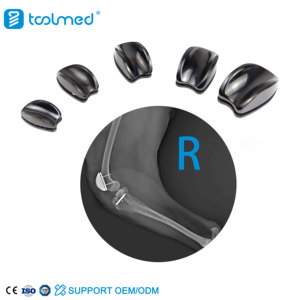
The UK's advanced veterinary surgical sector relies heavily on specialized PGR (Patellar Groove Replacement) and trochlear groove reconstruction systems. Precision mini locking screws (1.5mm - 2.7mm) are vital for small-animal fracture repairs and canine TPLO (Tibial Plateau Leveling Osteotomy) procedures.
Integration of robotic surgical assistants within NHS operating theaters demands strict dimensional tolerances (±0.01mm) on screw head geometries to allow seamless coupling with robotic driver guides.
NHS Net Zero guidelines encourage suppliers to provide recyclable aluminum graphic cases, reduced carbon-footprint freight packaging, and eco-conscious manufacturing workflows.
Synergy between custom 3D-printed titanium plates and standardized locking bone screws allows surgeons to treat anatomical deformities with exact mathematical alignment.
Building upon over 30 years of established engineering excellence (originally pioneered through global supply leaders like Bharucha Associates, established 1994), our manufacturing infrastructure combines decades of craft specialization with modern automated Swiss-type CNC turning centers. We understand the stringent demands of international healthcare procurement, delivering certified reliability across 40+ countries.
Established legacy of clinical device export since 1994.
Comprehensive quality management systems for medical devices.
Zero-defect tolerance using automated laser measurement gauges.
Tailored thread pitches, color anodizing, and private labeling.
Empower your clinical institution or distribution network with high-precision, ISO 13485 certified orthopedic implants engineered for uncompromised biomechanical performance in the UK healthcare market.