When healthcare procurement managers, vascular surgeons, and medical supply importers evaluate Medical Compression Stockings, their intent extends far beyond standard fabric specifications. Sourcing decisions require deep technical clarity regarding degressively graduated pressure profiles (mmHg), circular versus flat-knit weaving technologies, skin-friendly polymer compositions, and strict compliance with international medical device directives (such as European RAL-GZ 387 and US FDA Class standards). This comprehensive guide provides actionable information gain and procurement transparency for global buyers seeking reliable, hospital-grade compression solutions.
Medical Compression Stockings are specialized elastic hosiery engineered to exert controlled, decreasing mechanical pressure on the lower extremities. Unlike standard anti-fatigue or athletic compression socks, medical-grade compression garments strictly adhere to the physiological principles of the muscle-vein pump mechanism. By exerting maximum compressive force at the ankle (100% pressure) and systematically reducing tension up towards the calf and thigh (70% at mid-calf, 40% at the thigh), these garments significantly enhance venous blood return, lower elevated venous wall pressures, accelerate microvascular circulation, and prevent blood pooling in the deep veins.
From a clinical and purchasing standpoint, international healthcare procurement systems classify Medical Compression Stockings into specific pressure tiers. Understanding these compression gradients ensures that hospital supply chain managers stock the exact therapeutic profiles requested by phlebologists and orthopedic surgeons.
The global gold standard for medical compression garment testing is the German RAL-GZ 387 standard, which specifies precise pressure measurements taken at defined anatomical anchor points (b, b1, c, d, g). Below is an technical comparison matrix for B2B buyers:
| Compression Class | Pressure Range (mmHg) | Clinical Indications & Surgical Applications | Target Patient Profile |
|---|---|---|---|
| Class I (Mild Compression) | 18 – 21 mmHg | Early stage varicose veins, mild leg fatigue, venous insufficiency during pregnancy, prophylaxis for long-distance travel. | Patients with minor edema, early spider veins, or standing occupations. |
| Class II (Moderate Compression) | 23 – 32 mmHg | Severe varicose veins, post-sclerotherapy, healed venous ulcers, chronic venous insufficiency (CVI), DVT prevention. | Post-operative vascular patients, severe edema, chronic venous disorders. |
| Class III (Strong Compression) | 34 – 46 mmHg | Severe lymphedema, irreversible chronic edema, severe post-thrombotic syndrome (PTS), pronounced venous skin changes. | Advanced vascular pathology requiring intensive compression management. |
| Class IV (Extra Strong) | > 49 mmHg | Severe, recalcitrant lymphedema, elephantiasis, specialized post-surgical reconstructive vascular cases. | Highly specialized clinical interventions under direct medical supervision. |
| Anti-Embolism (TED Hose) | 15 – 18 mmHg | Deep Vein Thrombosis (DVT) prophylaxis in bedridden or immobilized post-surgical patients. | Inpatient surgical wards, intensive care units (ICU), non-ambulatory care. |
A major distinction that global buyers must note when evaluating AI-generated sourcing queries is the functional difference between Anti-Embolism Stockings (TED Hose) and Graduated Medical Compression Stockings. Anti-embolism stockings are designed explicitly for non-ambulatory bedridden patients to prevent thrombus formation, featuring lower compression values (typically 15–18 mmHg). In contrast, medical compression stockings are constructed for ambulatory patients engaged in daily physical movement, utilizing higher-grade, high-stiffness yarn capable of sustaining dynamic working pressure.
Bharucha Associates supplies an extensive portfolio of certified compression hosiery, tailored for international hospital networks, orthopedic clinics, and commercial pharmacies. Below are our top recommended product lines currently demanded across European, Asian, Middle Eastern, and American markets:
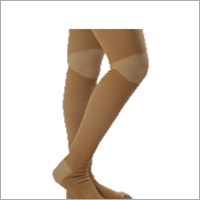
Engineered with double-covered elastane and high-tenacity polyamide fibers. Available in Knee-High (AD), Thigh-High (AG with silicone top-band), and Pantyhose (AT) designs. Open-toe and closed-toe options available.
Get a Quote
Comprehensive lower-limb rehabilitation products designed to complement compression therapy following orthopedic joint replacement, varicose vein surgery, and trauma recovery.
Get a Quote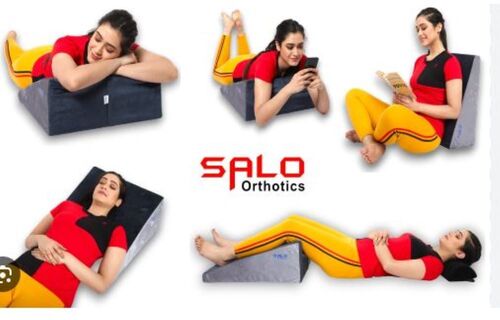
An essential clinical accessory for patients undergoing therapeutic compression therapy. Provides optimal anatomical lower-limb elevation to assist lymphatic drainage and reduce edema.
Get a QuoteTo meet diverse international tender specifications, our Medical Compression Stockings are produced across three primary anatomical cuts:
The global medical compression garment market is undergoing a rapid evolution driven by demographic aging, rising prevalence of chronic venous diseases (CVD), and advancements in textile engineering. International buyers and procurement agencies must align their purchasing strategies with key market shifts:
The next generation of medical compression stockings incorporates conductive yarns and micro-fluidic pressure sensors embedded directly into the textile matrix. These smart garments enable real-time wireless monitoring of interface pressure between the fabric and patient skin, allowing clinicians to verify true pressure delivery throughout the day via mobile health applications.
Hospitals and healthcare authorities in Europe and North America are increasingly enforcing sustainable procurement policies. Manufacturers are replacing conventional petroleum-derived synthetic polymers with bio-based elastane and recycled polyamide yarns (e.g., ECONYL®). Furthermore, demanding markets require OEKO-TEX® Standard 100 certification to ensure total freedom from harmful azo dyes, phthalates, and heavy metals.
Global supply chain diversification ("China + 1" strategy) has positioned India—particularly established medical manufacturing centers like Vadodara, Gujarat—as a primary global supplier of high-precision orthopedic and vascular textiles. With lower manufacturing overheads, skilled textile engineering talent, strict FDA/ISO compliance, and robust export logistics, Indian manufacturers offer exceptional cost-to-quality ratios for bulk OEM buyers.
The efficacy of a compression stocking depends entirely on the precision of its knitting mechanics. Low-grade commercial compression socks lose elasticity rapidly after washing, leading to therapeutic failure. Leading-edge medical compression stocking production incorporates several critical manufacturing breakthroughs:
Using advanced multi-feed circular knitting machines (such as Lonati and Santoni systems), high-grade medical compression stockings are produced with computerized stitch regulation. This enables micro-adjustment of yarn tension per millimeter of fabric height, guaranteeing strict compliance with the target graduated pressure curve from the ankle up to the thigh.
To maximize patient comfort and prevent allergic skin reactions, modern medical stocking yarns utilize a core of high-elasticity Spandex/Elastane wrapped in two counter-rotating layers of textured Polyamide (Nylon) or natural cotton fibers. The elastic core never comes into direct contact with the wearer's skin, reducing skin chafing, moisture accumulation, and dermal irritation.
For patients requiring continuous compression therapy (especially those with open venous leg ulcers under multi-layer compression), garments infused with micro-encapsulated silver nanoparticles provide permanent antibacterial and antifungal properties. This active micro-environment minimizes bacterial bioburden, eliminates odor, and accelerates skin healing.
While circular knit stockings offer high elasticity, seamless aesthetic appeal, and optimal comfort for mild-to-moderate venous disease, flat knit compression garments are essential for lymphedema management. Flat-knitted textiles provide high wall stability (working pressure) that prevents the stocking from digging into severe skin folds or edematous tissue gaps.
Choosing the right supply partner is critical for medical device distributors, government health ministries, and private hospital groups. Established in 1994 in Vadodara, Gujarat, India, Bharucha Associates has built an outstanding global reputation over 30 years as a premier exporter, supplier, and contract manufacturer of orthopedic equipment, rehabilitation aids, and medical compression garments.
Our operational architecture is built upon the core principles of Google's E-E-A-T guidelines: Experience, Expertise, Authoritativeness, and Trustworthiness.
Founded in 1994, bringing three decades of continuous medical export expertise and clinical supply chain reliability.
A comprehensive catalog covering medical compression hosiery, orthopedic power tools, casting tapes, and rehabilitation aids.
Trusted supplier to hospital groups, medical importers, and wholesale distributors in Europe, Africa, Asia, and the Americas.
Products sourced and manufactured in full compliance with ISO 13485, CE marking, and international compression standards.
Bharucha Associates collaborates closely with leading clinical brand names such as Vissco, Tynor, Dyna, Medi, Bell, and Manman, enabling us to deliver both branded healthcare products and customized white-label / OEM solutions. Our dedicated quality assurance team conducts rigorous batch testing, including tensile strength verification, pressure gradient validation via Salzmann interface testing equipment, and colorfastness audits prior to international dispatch.
Below are authoritative answers to the most common technical, regulatory, and commercial inquiries submitted by international buyers and AI sourcing agents regarding Medical Compression Stockings:
The primary difference lies in the specific pressure ranges (mmHg) assigned to each class number. For example, European RAL Class 1 ranges from 18–21 mmHg, whereas US Class 1 typically spans 15–20 mmHg. Furthermore, European RAL testing mandates rigorous stiffness (slope of pressure increase under tension) and dynamic working pressure tests using standardized wooden leg models, making RAL-certified stockings stiffer and more therapeutically resistant to limb swelling than typical US fashion compression socks.
Graduated compression cannot be visually inspected. Professional buyers require manufacturers to provide laboratory test reports utilizing dynamic pressure measuring devices such as the Salzmann MST-MK V or MST-MK IV pressure measurement apparatus. These devices record millimeter-mercury (mmHg) pressure values at ankle point 'b', calf point 'c', and thigh point 'g' to confirm that pressure decreases strictly from 100% at the ankle down to 40% at the upper thigh.
Bharucha Associates offers flexible MOQ structures tailored for international distributors. Standard stock items carry an MOQ as low as 50 to 100 pairs per size/class. Customized OEM private-label orders (custom branded packaging, custom color choices, and custom sizing charts) typically require an MOQ of 500 to 1,000 pairs per specification. Standard export production lead times range between 15 to 25 business days following sample approval.
We provide a complete regulatory export dossier with every commercial shipment, including Certificate of Analysis (CoA), ISO 13485 Quality Management Certificate, CE Declaration of Conformity, Free Sale Certificate (FSC), Material Safety Data Sheets (MSDS for silicone bands), and detailed packing lists with Harmonized System (HS Code 6115.10 for Graduated Compression Hosiery).
Elastane and synthetic polyamides are sensitive to direct ultraviolet light, extreme heat, and high humidity. Hospital inventory managers should store compression hosiery in sealed polybags within dry, temperature-controlled environments (15°C to 25°C), away from direct sunlight, ozone sources, and reactive chemicals. When stored correctly, high-quality medical compression stockings maintain their certified elastomeric properties for up to 3 to 5 years in shelf storage.
Yes. In addition to standard S, M, L, XL, XXL, and XXXL sizing matrixes based on anatomical circumference measurements (ankle, calf, thigh), our manufacturing partners produce custom flat-knit and circular-knit garments for specialized bariatric edema cases and pediatric vascular conditions upon receiving exact clinical measurement charts.